Poland is moving towards coordinated railway network planning to improve freight capacity with industry leaders calling for faster border procedures and infrastructure upgrades to support growing intermodal traffic.
Speaking at the 17th Development of Polish Railway Infrastructure conference in Warsaw, panellists examining the challenges facing the network through to 2035 highlighted the need to align investment with transport demand.
For freight operators, the challenges extend beyond the tracks, said Marek Słomka, President of the Management Board of infrastructure manager Cargotor. “Slow document processing by customs is one of the bottlenecks that we need to address. We have to increase the speed of exchanging documents so as to not restrict the movement of cargo.”
He said barriers are either infrastructural or regulatory but both categories are an easy “glass ceiling to break”.
“With targeted investment and better coordination between stakeholders, these are very easy challenges to overcome.”
According to Słomka, it is just as important to look at infrastructure investment that can accommodate longer and heavier freight trains. As an example, he cited an 18km rail movement on the network currently taking about an hour to complete. During that movement, another train cannot enter the section, limiting throughput.
“This is not rocket science,” he said. “We need more automated systems, infrastructure that can handle heavier axel loads and faster border processes but, most importantly, we need a system that brings together all operators that use the infrastructure to work together to deliver solutions.”
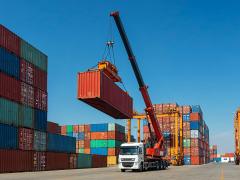
He said, with the increased mix of cargo being moved, the focus has to move to intermodal solutions that, in turn, place an increasing need on rail operators to not only invest in new infrastructure but also adapt historical infrastructure.
Maciej Kaczorek, Management Board Member and Director: Strategy and Development at PKP Polskie Linie Kolejowe, said Poland is moving away from reactive, ad hoc infrastructure planning towards an integrated approach. Cooperation between the Ministry of Infrastructure and the organisations involved in railway development is enabling more coordinated planning across high-speed, interregional and regional connections.
Poland plans to move to speeds of 250km per hour next year, making it the 18th country in the world to operate trains at that speed.
Wider discussion during the opening sessions of the conference focused on a shift from selecting individual projects for railways to first defining what the railway network needs to deliver to the country and the region.
According to Grzegorz Patera, Group Business Development Manager for Luma Automation, for freight, this means considering train lengths, axle loads and throughput as part of an interconnected system. Investment decisions should follow the required network performance with refurbishment of existing infrastructure also considered where it could meet operational needs.
He said capacity, punctuality and speed are not only imperative for rail success but need to be addressed together. Increasing throughput alone will not deliver an effective railway if services remain unreliable or journey times are uncompetitive.
Digital transformation is similarly framed as a means of improving operational performance. Better information should enable faster decisions while automation could help release capacity from existing infrastructure.
Professor Marianna Jacyna, Dean of the Faculty of Transport at Warsaw University of Technology, emphasised the railway’s role as a strategic backbone of the economy, serving passengers and cargo.
“A strong railway is necessary for a strong economy. We have to take a coordinated and integrated approach to deliver the solutions required for Polish railways.”