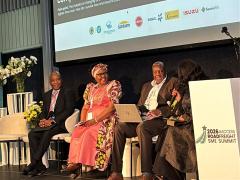
Long payment cycles are tying up road freight small and medium enterprise (SME) working capital, limiting their ability to fund deliveries and take on additional loads, delegates at the fourth Annual Road Freight SME Summit heard on October 21.
Operators must pay for fuel, wages and other expenses before receiving payment for completed deliveries, said Jonathan McDonald, Vice Chair of the South African Freight and Logistics Association.
Invoice acceptance procedures, month-end cut-offs and payment terms can extend the wait, leaving operators to finance the gap between completing a job and being paid.
“At the end of the day, you’re funding a massive gap,” McDonald said.
Every additional 30 days without payment ties up working capital that could otherwise be used to put another truck on the road, he said. Payment delays can therefore constrain operations even when loads are available.
In addition, working directly with cargo owners does not necessarily produce better returns than working through intermediaries, McDonald cautioned.
“We should not be making the assumption that working directly with cargo owners is always more profitable,” he said. “Freight forwarders and brokers can bring customers and, in some cases, help bridge cash flow gaps.”
The discussion came as speakers highlighted opportunities for South African businesses to expand into African markets.
“South Africa’s exports offer greater opportunities across the African continent and beyond local markets,” said Paulina Mamogobo, Chief Economist at The Automotive Business Council (NAAMSA).
Mamogobo pointed to the African Continental Free Trade Area (AfCFTA) as an opportunity to expand exports while stressing the need to address logistics inefficiencies and prepare smaller operators to participate.
The concentration of automotive trade within Southern Africa illustrates the scope for broader market access. According to NAAMSA’s Automotive Trade Manual 2026, automotive exports to Africa were worth R49.5 billion in 2025 with 85.1% of that value destined for the Southern African Development Community.
“An AfCFTA opportunity still remains,” Mamogobo said.