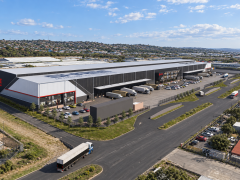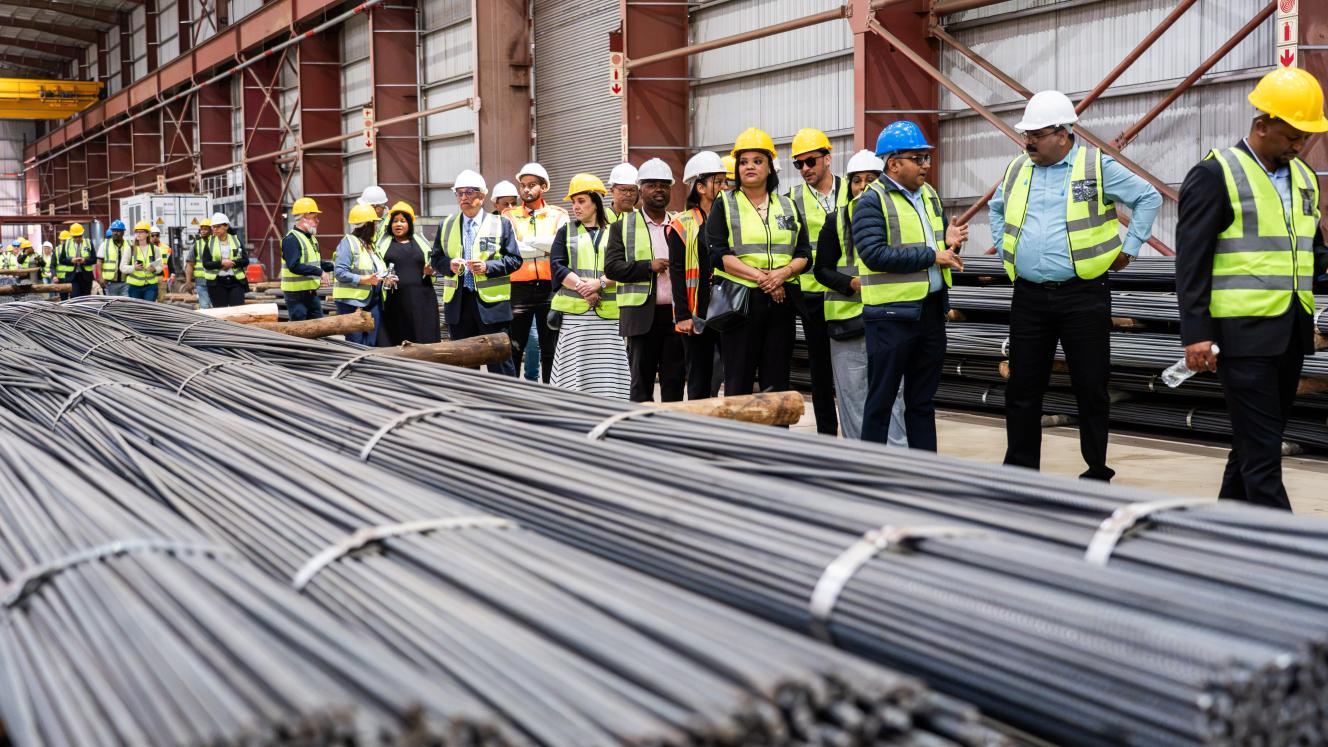
Coega Steels has inaugurated a R360 million rolling mill in Nelson Mandela Bay, enabling it to process steel billets into finished products on site and supply Eastern Cape and coastal markets directly.
The mill is part of a R500 million expansion that includes additional refining processes at the company’s existing melting facility. The development brings total investment at its premises in the Coega Special Economic Zone to R1.5 billion, according to the company.
With annual production capacity of 150 000 tonnes, the mill will produce reinforcing bars, angles, squares, round bars and flat bars for construction, manufacturing, engineering and infrastructure markets.
The absence of a local rolling mill previously limited the company’s competitiveness in certain domestic markets because of the cost of transporting billets to processing facilities elsewhere, Coega Steels Director Amit Saini said.
“With the rolling mill, we can supply the Eastern Cape market and the coastline directly from Nelson Mandela Bay.”
The Eastern Cape previously relied heavily on finished steel products supplied from other parts of the country, Saini said. The new facility gives Coega Steels the option to sell its billets or process them into finished products.
The company began producing billets from recycled scrap metal in 2014, backed by an initial R400 million investment.
The rolling mill, which has been in development since March 2024, is undergoing production trials. It currently operates a 12-hour shift. A move to 24-hour production is planned for the coming weeks.
MSC South Africa and Indian Ocean Islands Chairman Captain Salvatore Sarno attended the inauguration. According to Coega Steels, the shipping company has supported its international exports.
The steelmaker is also expanding its renewable energy capacity to reduce reliance on coal-based electricity. It has approximately 8MWp of installed solar capacity and plans to add a further 19.8MWp by the end of 2027.
A 50MWh battery energy storage system has been installed and is expected to become operational by the end of October.
Reducing emissions is important to customers in domestic and export markets where demand for lower-carbon products is increasing, Saini said.