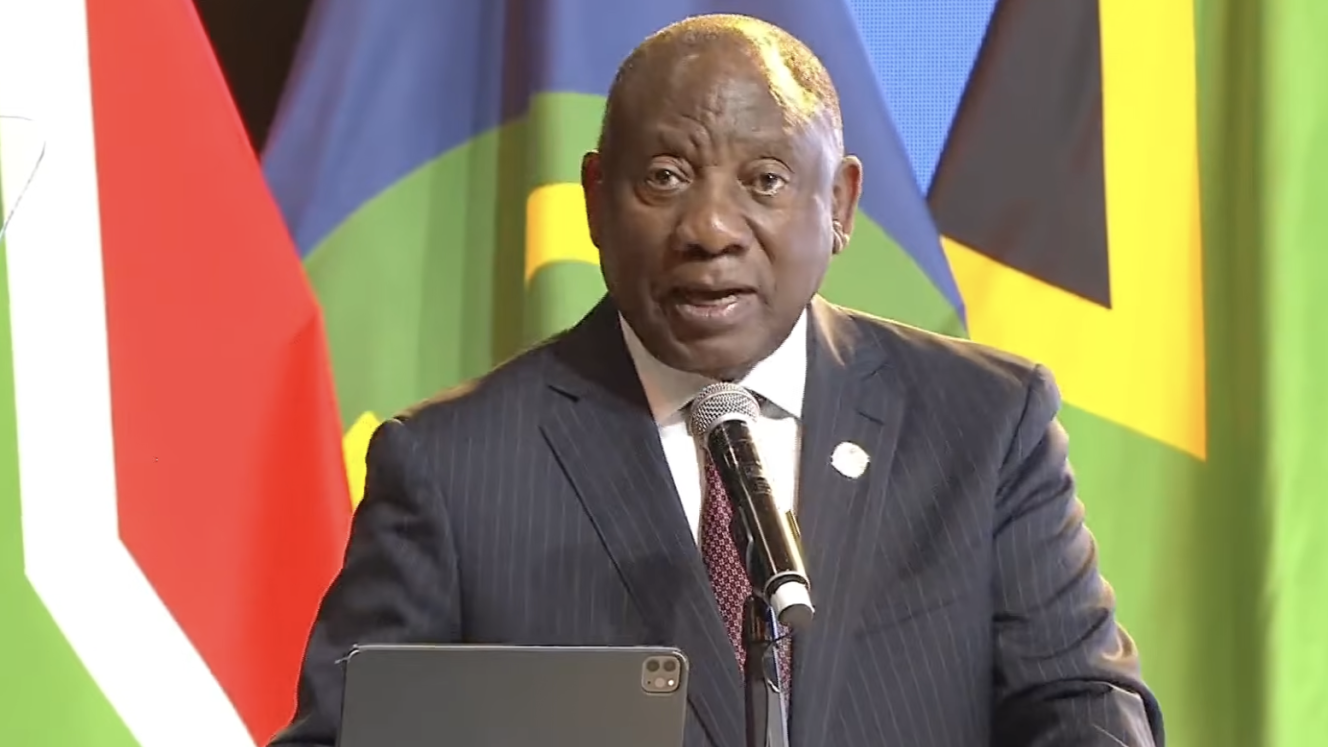
Southern African countries must accelerate regional integration and turn their shared borders into channels for trade, said President Cyril Ramaphosa after assuming the chair of the Southern African Development Community (SADC).
Addressing the 46th Ordinary Summit of SADC Heads of State and Government in Durban on Monday, Ramaphosa called for closer economic cooperation across the 16-member bloc.
“We gather at this summit to give practical meaning to its promise: to transform borders into bridges, national economies into a shared market, and geographical proximity into shared prosperity.”
The summit focused on resilient, sustainable and inclusive industrialisation supported by infrastructure development, agricultural transformation and critical-mineral value chains.
The region needed to process more of its minerals and agricultural commodities locally instead of continuing to export largely unprocessed resources, said Ramaphosa.
“The minerals and agricultural commodities of our region must become the foundation of Southern African manufacturing. We must process more of what we mine, add value to more of what we grow and manufacture more of what we consume.”
He added that regional integration needed to produce tangible benefits through infrastructure, industrial development and employment.
“Our communities must become construction sites, factories, power lines, water systems, laboratories and businesses, and create jobs for our young people. Regional integration must be seen and felt in the daily lives of our people.”
United Nations Economic Commission for Africa executive secretary Claver Gatete said global economic pressures and supply-chain disruptions had strengthened the case for regional industrialisation.
“Business as usual cannot continue. Industrialisation built on infrastructure, agriculture and critical minerals is an economic necessity if we are to create productive jobs and add value to our resources.”
He pointed to the gap between Africa’s mineral resources and the value generated from them, noting that the continent held about 30% of the world’s reserves of critical energy-transition minerals.
“So we have the resources. The question is: how do we transform these resources into greater prosperity for our people?”
Outgoing SADC chairperson and Zimbabwean President Emmerson Mnangagwa also called for greater domestic resource mobilisation and investment in regional processing, refining and manufacturing capacity.
“The primary goal of this theme is to ensure that we add value to our heritage-based resources and move away from exporting raw materials by building local processing, refining and manufacturing capacities across Southern Africa.”
While external partnerships remained important, the region needed to strengthen its own financial and industrial capabilities to support sustainable growth, added Mnangagwa.
African Union Commission chairperson Dr Mahmoud Ali Youssef said closer alignment between the AU and regional economic communities was essential to achieving the continent’s integration objectives.
“A strong African Union needs strong economic communities, and strong regional economic communities need an African Union capable of ensuring continental coherence and advancing our common priorities.”
Seychelles President Patrick Herminie said global disruptions had demonstrated how the resilience of individual member states depended on the strength of the wider region.
“As an island nation, we experience the effects of global disruptions in the cost of food, fuel and essential goods. Yet, this is not the experience of Seychelles alone,” he said.