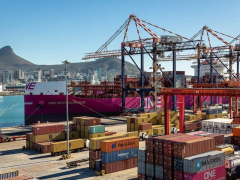
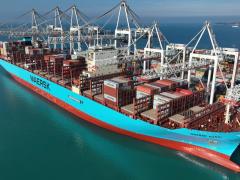
The past few years has seen the emergence of modern-day “Leviathans”, i.e. giant vessels which should bring high economies of scale to their owners, writes Nikos Roussanoglou in Hellenic Shipping News Worldwide. Leading global conglomerates have pioneered the investment in those types of vessels, ranging from Maersk Group to Brazil’s mining group of Vale and its so-called Valemax dry bulk carriers. The results so far have shown the teething problems that day-to-day management of these ships poses. In a recent report, shipbroker Intermodal said that “in the case of shipping, economies of scale translate to bigger ships, which promise enhanced productivity by lowering transport costs per unit of cargo”. So in the case of larger vessels, in theory they should work pretty great for their owners. Reality however is often cruel and can alter even the best thought out plans. According to George Bassakos of Intermodal: “Having to satisfy the insatiable appetite for raw materials and finished goods around the world, ship designers had to come up with innovative ideas, while most of the times navigating through uncharted territories in order to find the right balance between size, safety and efficiency. “Maersk was the first to introduce the concept of mega-containers, in line with the supertankers of the 70s. The Emma-Maersk, able to accommodate about 15 500 teus, was launched in 2006 as the biggest containership ever built - that is up until very recently. A couple of weeks ago however, she suffered from severe flooding in her enormous engine room, which idled her inside the Suez Canal while loaded with 13 500 boxes. Despite the ship being in no danger of sinking, she has been forced to withdraw from the market for repairs for several months. Maersk continues betting on even bigger vessels, with the latest order of 10 x triple-E class containerships, scheduled to be delivered between this year and 2015, which will have the ability to carry in excess of 18 000 teus!” He added that “this also brings to mind the story of the widely advertised Vale Beijing, one of the 400 000dwt behemoths ordered by Brazil’s Vale, to transport iron ore from Brazil to China. It was not only that China banned her and her sisters from entering Chinese ports, but she also suffered severe cracks in her hull, during her first loading operation in Ponta da Madeiera, and had to leave action for several months for repairs at STX South Korea. The ban from China, forced Vale to invest in alternative solutions such as transhipment hubs in the Philippines and Malaysia, with the use of floating cranes and transhipment vessels - do you see any economies of scale in this transport chain?” So, does size matter in today’s market? What about in the future? “I remind you the 550 000 tonne deadweight supertankers of the 70s had to be scrapped, since the market couldn’t afford them at that time. What happens if, say if, such a trend is repeated today? Are we going to see the triple-Es or the Valemaxes heading to the scrapyards before their time? “Don’t really think so, since demand is much healthier than back then, but the shipping community has to reconsider its stance against the current global circumstances and adjust accordingly as we definitely need to be taught from the past if we want to survive in the years to come” Bassakos concluded.
Modern-day ship “Leviathans” suffer from teething problems
Comments | 0
© Now Media. This content is protected by copyright and may not be adapted or republished. If you would like to discuss cooperation opportunities, please contact: editor@freightnews.co.za.