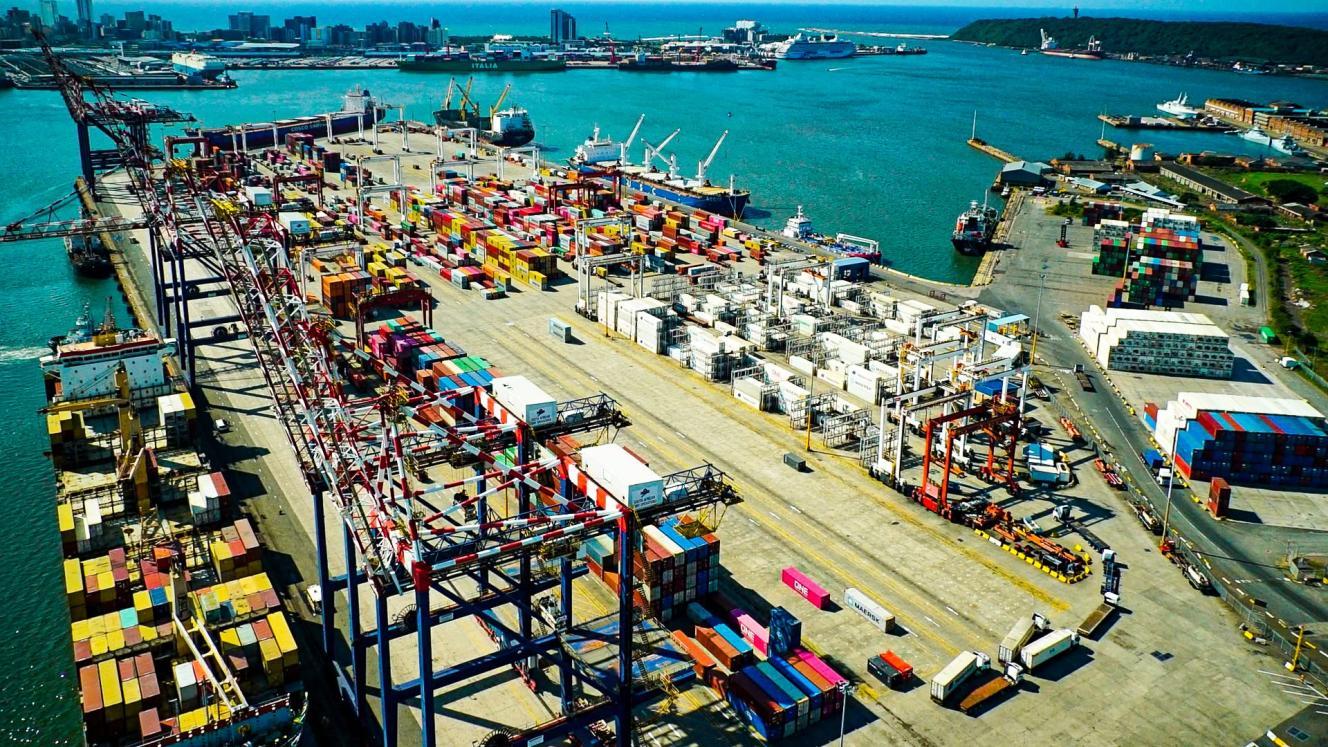
Recovery at the Durban Gateway Terminal (DGT) remained fragile on September 1 as overall stack occupancy increased to 73.8%, according to the South African Association of Freight Forwarders (SAAFF).
Occupancy remained below the recent peak of 89.2% but increased from the low recorded on Friday, August 28, SAAFF said in an operational update.
The terminal had 5 766 road import containers on hand while nine vessels were waiting at anchorage and four were working. No additional vessels were reportedly due to arrive.
According to SAAFF, two shipping lines held vessels back to give the terminal time to recover.
Congestion has been building since approximately August 7, before the NAVIS N4 system cutover, and the migration subsequently compounded existing yard, equipment, booking and landside evacuation constraints, the association said.
SAAFF members reported containers remaining in stacks without usable bookings and individual container movements taking between 12 and 18 hours in some instances.
“The immediate issue is therefore not NAVIS alone – it is restoring fluidity across the entire terminal system,” SAAFF said.
Reefer pressure eases
Reefer stack occupancy improved from 108% to 92% while plug utilisation stood at 84%. However, ground slot occupancy remained high at 99%.
SAAFF said the terminal recorded 2 012 gate moves during the preceding 24 hours, comprising 1 251 imports and 761 exports. A further 259 containers were evacuated by rail.
Some export stack capacity was also restored. The latest stack plan showed firm openings for SPIL Kartika and reefer-only stacks for MSC Barbara and MSC Long Beach VI.
SAAFF said this indicated that export stack capacity was beginning to recover although it remained controlled.
The association identified the immediate priorities as restoring booking and evacuation capacity, rehabilitating the stacks and bringing additional equipment and operational capacity into the system.
It also called for Pier 1 and the Multi-Purpose Terminal to be used where practicable and for rail evacuation to be strengthened.
According to SAAFF, waterside inflows might need to be moderated temporarily to allow the landside system to recover, accelerate the evacuation of import containers and progressively restore export stack capacity.
The group import release process showed some movement but remained constrained by equipment availability, SAAFF said.