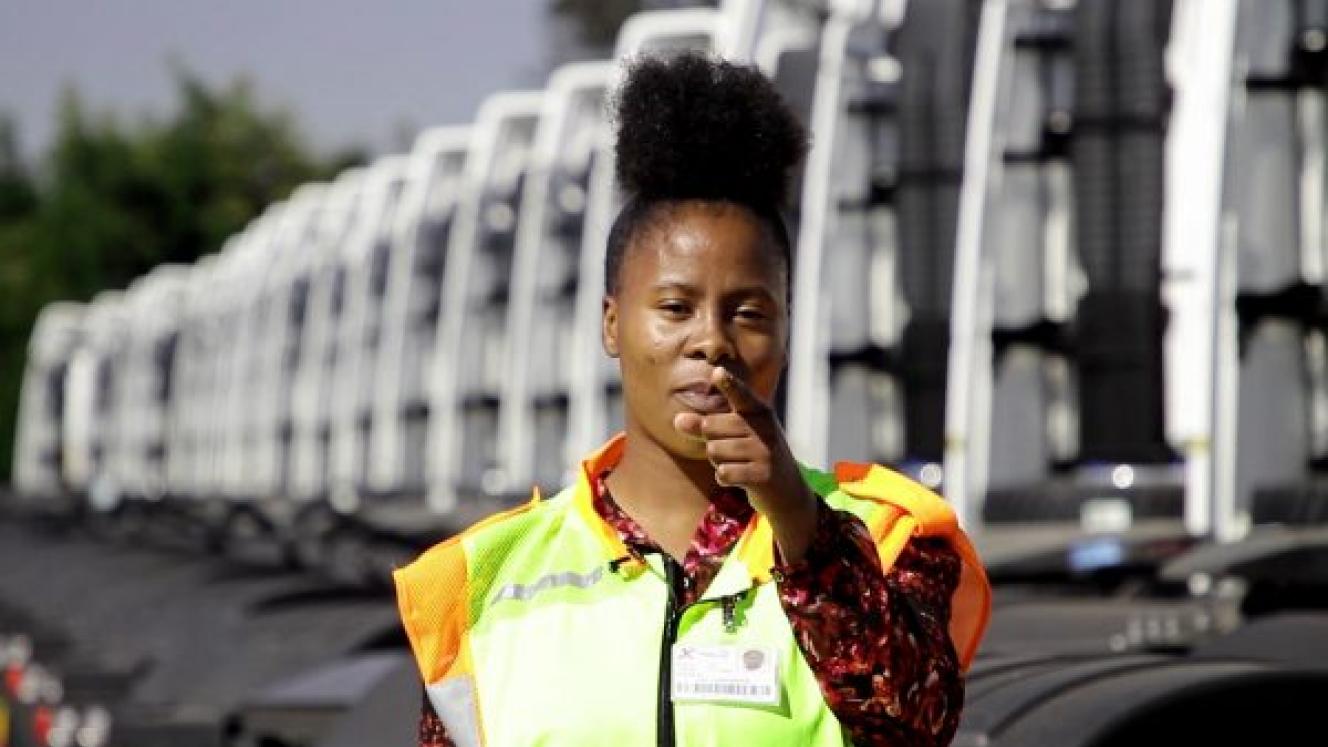
Women have increased their representation among truck drivers operating on the N3 but safety concerns, training costs and limited employment opportunities continue to restrict their participation in road freight.
Commercial Transport Academy (CTA) CEO Nicci Scott-Anderson told the Chartered Institute of Logistics and Transport South Africa Women Empowerment Conference on September 18 that women now constitute about 4.5% of drivers in the corridor.
“There wasn’t even 1% in 2019,” she said.
Scott-Anderson said one of the financial barriers arose before women could enter the industry as obtaining an extra-heavy vehicle driving licence could cost between R8 000 and R12 000.
Families are often more likely to fund a male relative’s training because they believe he stands a better chance of finding employment, she said.
Training alone is also insufficient to secure lasting careers in road freight for women. Scott-Anderson said programmes need to prepare participants for the operational realities of the industry and provide a route into workplace experience and employment.
CTA’s initial work with Volvo Trucks, under the Iron Women programme, focused on helping women obtain heavy commercial vehicle licences. This subsequently developed into broader initiatives supporting women entering transport as drivers, entrepreneurs and logistics professionals.
Scott-Anderson said women trained through these programmes are already operating in demanding areas of the industry, including the transportation of dangerous goods across regional borders.
“Some of the women drive dynamite all the way into East African countries. They cross several borders and operate on very difficult roads,” she said.
New training project planned
CTA is preparing a project to develop women for abnormal load and cross-border transport operations although Scott-Anderson did not disclose details about partners, funding, intake or the implementation date.
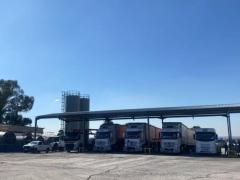
She said increasing women’s participation in long-distance freight requires the industry to consider conditions along the entire transport corridor, including drivers’ access to secure overnight facilities.
Safety concerns at truck stops and along freight routes could make long-haul work particularly difficult for women. Some drivers have resorted to keeping buckets in their vehicles because it is unsafe to leave their cabs at certain locations, she said.
The recently launched National Truck Stop Framework includes provisions intended to improve security, sanitation and driver wellness facilities along South Africa’s freight corridors. It also identifies the shortage of suitable facilities for women as a barrier to their participation in commercial driving.
Scott-Anderson said greater representation will require collaboration with transport operators and male colleagues already working in the industry.
“The men have been some of their biggest advocates,” she said. “We work with men to achieve things in this industry.”