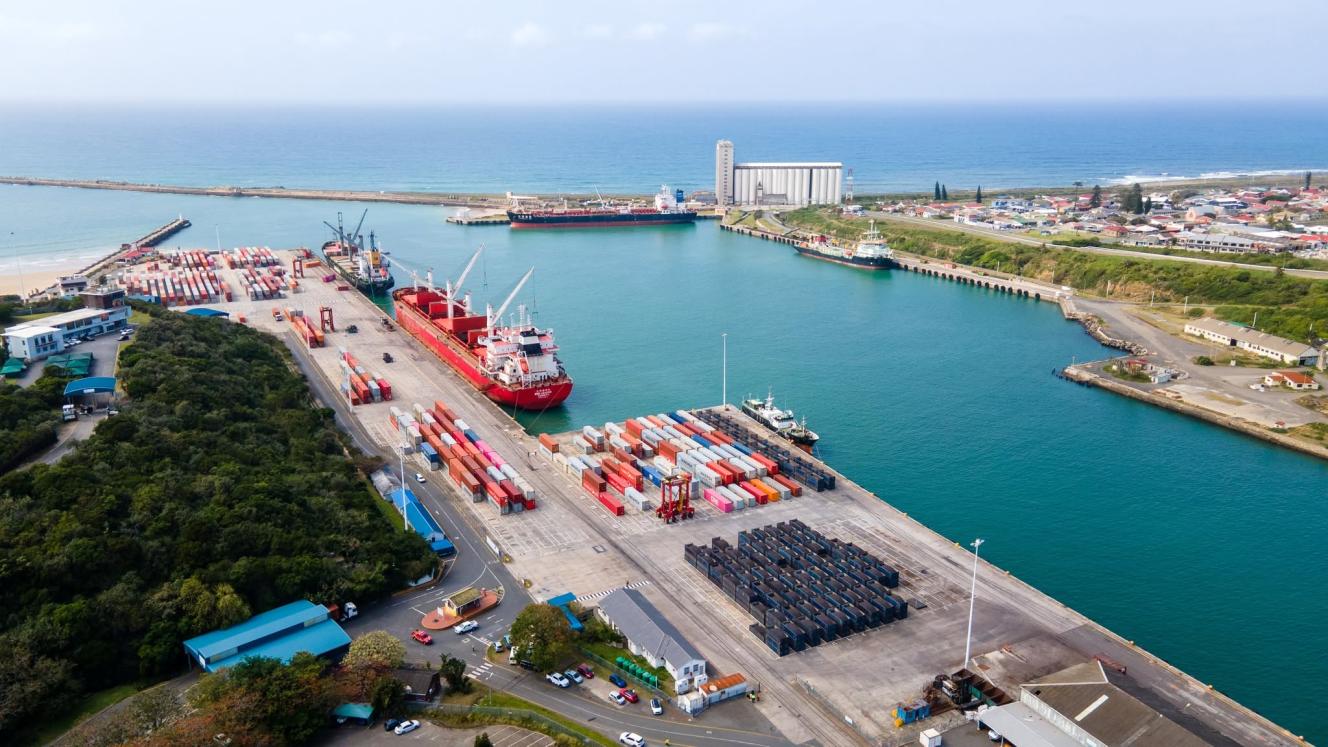
Transnet has begun the process of selecting a private-sector partner to upgrade the rail route from the Northern Cape manganese fields to Ngqura and develop a new export terminal at the port.
The project could require investment of R30 billion-R44bn over a proposed 25-year partnership, according to Transnet’s request for qualification (RFQ), issued on September 23.
The Ngqura Manganese Export Corridor links Hotazel in the Northern Cape to the Port of Ngqura in the Eastern Cape over approximately 1 100 km of rail.
The project formed part of a programme to attract private investment, improve freight services and expand capacity, Transnet said in a statement.
The RFQ is the first stage of selecting a partner. Applicants will need to demonstrate that they have the financial resources and technical and operating experience required. Those that qualify will be invited to submit detailed proposals.
Estimated investment includes R10bn-R20bn for rail infrastructure, approximately R16bn for the new manganese terminal and around R4bn for train operations and rolling stock, according to the RFQ. These amounts remain indicative, with final requirements to be confirmed during the proposal stage.
The corridor would initially target the movement of approximately 12 million tonnes of manganese a year, potentially increasing to 16 million tonnes as demand and investment allow, the document states.
The planned terminal would have capacity to handle approximately 14.7 million tonnes a year initially, with provision to expand to around 16 million tonnes. This is the terminal’s handling capacity, distinct from the initial volume targeted for the corridor.
Manganese export activities currently spread across the Nelson Mandela Bay port system would gradually be brought together at the new facility, according to Transnet’s plans.
This consolidation was expected to reduce road congestion, cargo handling movements and dust emissions, Transnet said.
The proposed partnership would use two separate companies, with different responsibilities.
The first would develop and operate the terminal and manage rail freight services, including trains and customer relationships. Transnet would own 51% of this company, while the selected private consortium would hold 49% through a holding company, according to the RFQ.
The second would be wholly owned by the consortium’s holding company and would finance, repair and maintain the rail infrastructure. It would be paid under an agreement with the Transnet Rail Infrastructure Manager (TRIM), linked to making the infrastructure available at agreed performance standards.
Ownership of the rail infrastructure would remain with TRIM. The proposed ownership arrangements, investment requirements and partnership term may still be refined during the procurement process, the RFQ states.