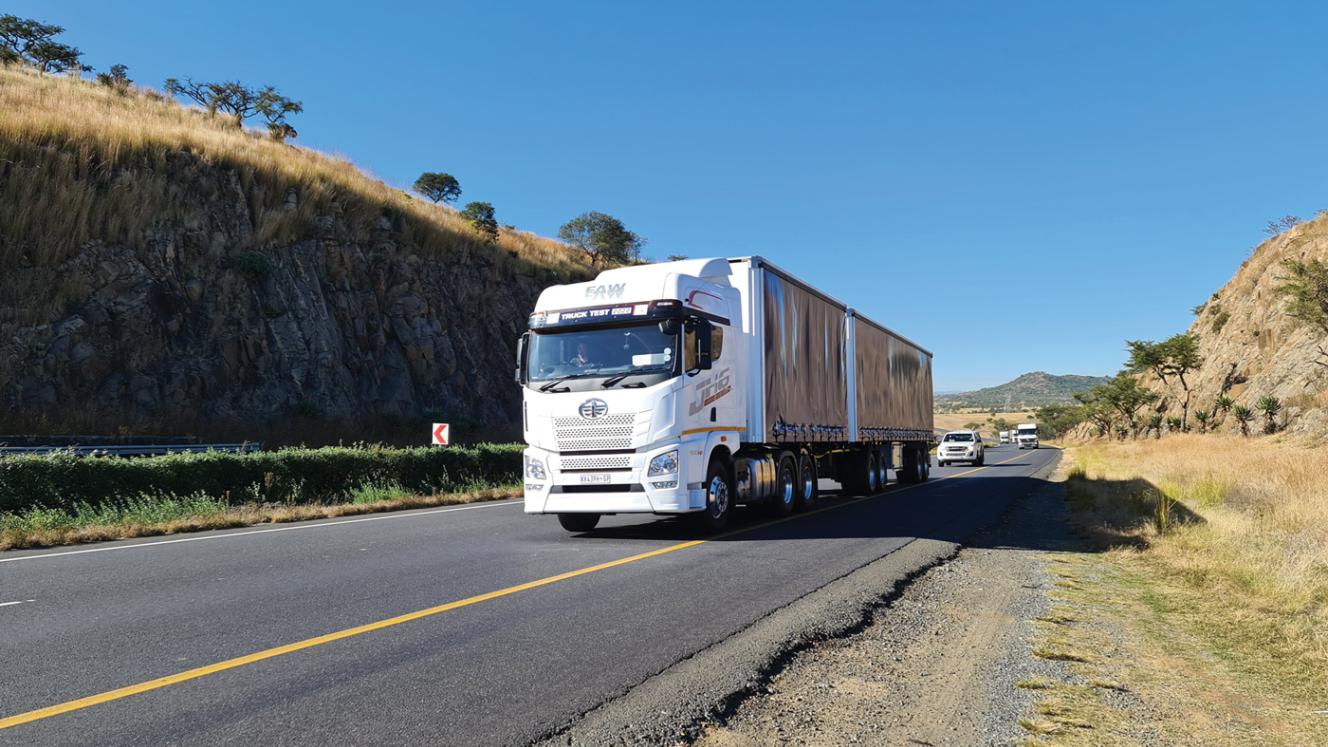
Infrastructure, operational and regulatory hurdles will need to be addressed before truck platooning can be introduced on major South African freight corridors, according to industry and technical experts.
The technology involves electronically linking trucks so that they can travel together in a coordinated formation. The level of driver involvement depends on the system, with more advanced forms potentially allowing a human-driven lead truck to guide automated following vehicles.
The N1, N3 and N4 could provide a foundation for future deployment because of their freight volumes and strategic importance, Lwando Mahlasela, media relations manager at the South African National Roads Agency (SANRAL), told Freight News.
Successful implementation would, however, depend on creating a more predictable and connected road environment, including reliable communications, real-time monitoring, clear lane markings and infrastructure capable of supporting automated vehicle operations, he said.
“Further research, pilot testing and corridor-specific analysis would be required before implementation,” Mahlasela added.
On the N3 between Durban and Johannesburg, steep gradients, including Van Reenen’s Pass, combined with heavily laden vehicles, would create additional challenges for maintaining synchronised platoons during climbs and descents, said Road Freight Association (RFA) CEO Gavin Kelly.
The corridor’s mix of trucks, passenger vehicles and minibus taxis presents another difficulty. Vehicles cutting into formations could disrupt platoons and reduce their efficiency, he told Freight News.
Security would be an additional consideration, particularly in configurations with fewer drivers or unmanned following vehicles, Kelly said.
“Minimally staffed or unmanned following vehicles could be vulnerable to hijackings, forced stops and roadside attacks, while toll plazas and other congestion points could also disrupt formations,” he said.
South African road networks were not designed around autonomous vehicle technologies, making it unrealistic to expect platooning to work effectively within the current operating environment, said Mathetha Mokonyama, who leads transport systems and operations at the Council for Scientific and Industrial Research (CSIR).
“Telecommunications challenges are likely among the easier problems to resolve, with the more significant obstacles lying in physical infrastructure design,” Mokonyama told Freight News.
Deployment on selected corridors will require infrastructure and intelligent transport system upgrades, supported by route-specific testing, according to SANRAL.