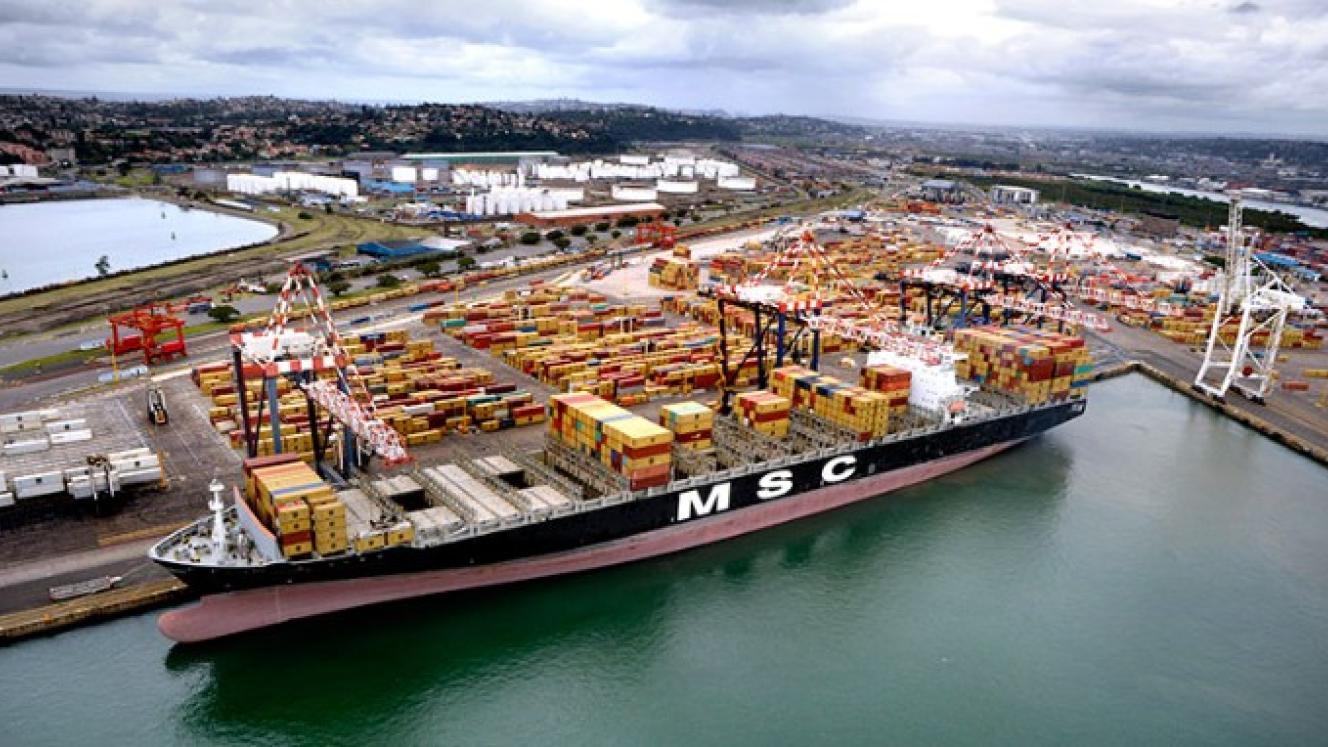
Container throughput, bulk cargo and vehicle exports from South Africa’s ports all increased in 2025 by relatively significant margins if past performance metrics for the country’s ocean freight network are taken into account.
This is especially the case for vehicle exports.
The first Cargo Movement Update (CMU) for 2026 shows 4 473 TEU containers were handled in 2025, up by 3.2% year on year (y-o-y), while bulk cargo totalled 221 million tonnes, up by 4.4% y-o-y.
As for vehicle exports, 899 094 units were shipped – an increase of 15% y-o-y.
In addition to above-average throughput in the car manufacturing sector, the Durban Auto Terminal announced that it had reached its budgeted volumes well before the financial year end, and continued to outperform its targeted volumes frequently, the CMU says.
Compiled by the South Africa Association of Freight Forwarders and Business Unity SA, the weekly update, released every Friday, also recorded a week-on-week decrease in TEU throughput.
Compared to 7 405 twenty-foot boxes handled for the first week in 2026, TEU movement decreased to 6 189 for the second week in January.
This could be attributed to bad weather.
According to the CMU, “port operations were significantly impacted by weather delays across the eastern and western regions, with KwaZulu-Natal receiving the knock-on effect of their scheduled vessels being delayed at other ports”.
In relation to capacity, the CMU reports that “most terminals reported a steady rate of equipment availability throughout the first two weeks of the year”.
But crane deployment could be improved as non-operational units were noted “in some instances on empty berths”.
Looking further afield, the CMU says: “Container volumes remain resilient despite weak seasonality. Global container throughput continues to outperform expectations y-o-y, even as freight rates remain materially below 2025 levels.
“Structural overcapacity persists, constraining pricing power, although early-2026 rate increases reflect short-term operational and seasonal factors.
“Regionally, sub-Saharan African imports remain a relative bright spot, while exports have softened. Operationally, tentative recovery in Suez transits, selective capacity deployment, and weather-related port disruptions underscore the industry’s continued emphasis on resilience, diversification and risk management at the start of the year.”