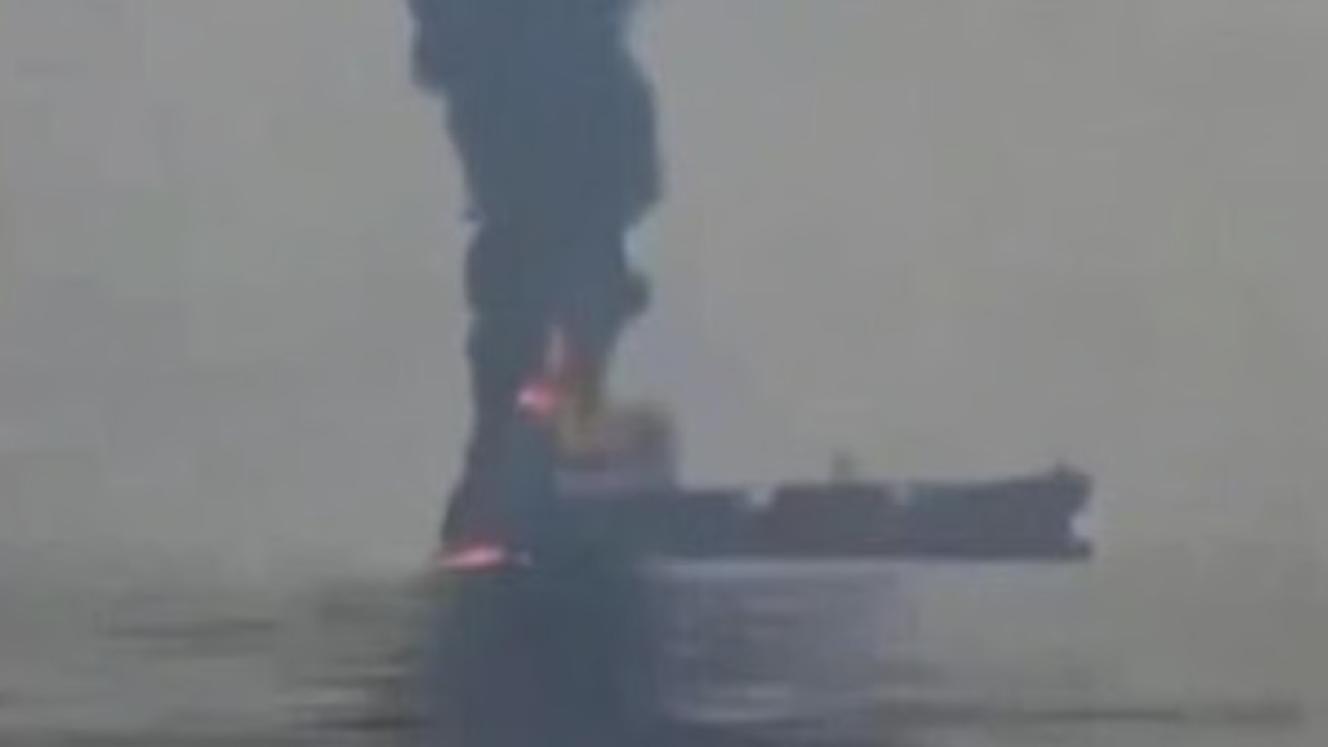
About 170 maritime vessels, including oil and liquefied gas tankers, had by Monday morning dropped anchor on either side of the Strait of Hormuz after three tankers were damaged by retaliatory missile strikes from Iran.
One of the tankers, the MKD VYOM, lost a crew member when it was struck as it was sailing off the coast of Oman on Sunday.
"The vessel suffered an explosion and subsequent fire after being struck," vessel manager V.Ships Asia said in a statement.
Reuters reports that “risk to commercial shipping has surged in the past 24 hours” since the US and Israel launched a combined military offensive, Operation Epic Fury, on Saturday.
Not long after various cities and critical installations across Iran were struck by a barrage of missiles, the government in Tehran warned that the Strait of Hormuz would be closed off and that no vessel safety was guaranteed.
By Sunday morning, Reuters reported that Iran had “closed navigation through the critical waterway”, responsible for as much as 50% of global crude supply.
Iran’s pressure on the Strait prompted “Asian governments and refiners – key buyers – to assess oil stockpiles”.
Commenting on shipping lines announcing that they will continue to reroute around the Cape of Good Hope, Jakob Larsen, chief safety and security officer at the Baltic and International Maritime Council, said: “The US-Israeli attack on Iran dramatically increases the security risk to ships operating in the Persian Gulf and adjacent waters.”
Although it remains unconfirmed who is responsible for attacks launched on commercial vessels in the Gulf, President Donald Trump has said that nine naval ships belonging to Iran have been destroyed by the US military.
Larsen warns that “ships with business connections to US or Israeli interests are more likely to be targeted, but other ships may also be targeted deliberately or in error”.