South Africa’s Border Management Authority (BMA) has appealed for patience, compliance and progressive cooperation from cross-border road freight operators during a pilot phase for cargo processing improvements on the N4 into Mozambique.
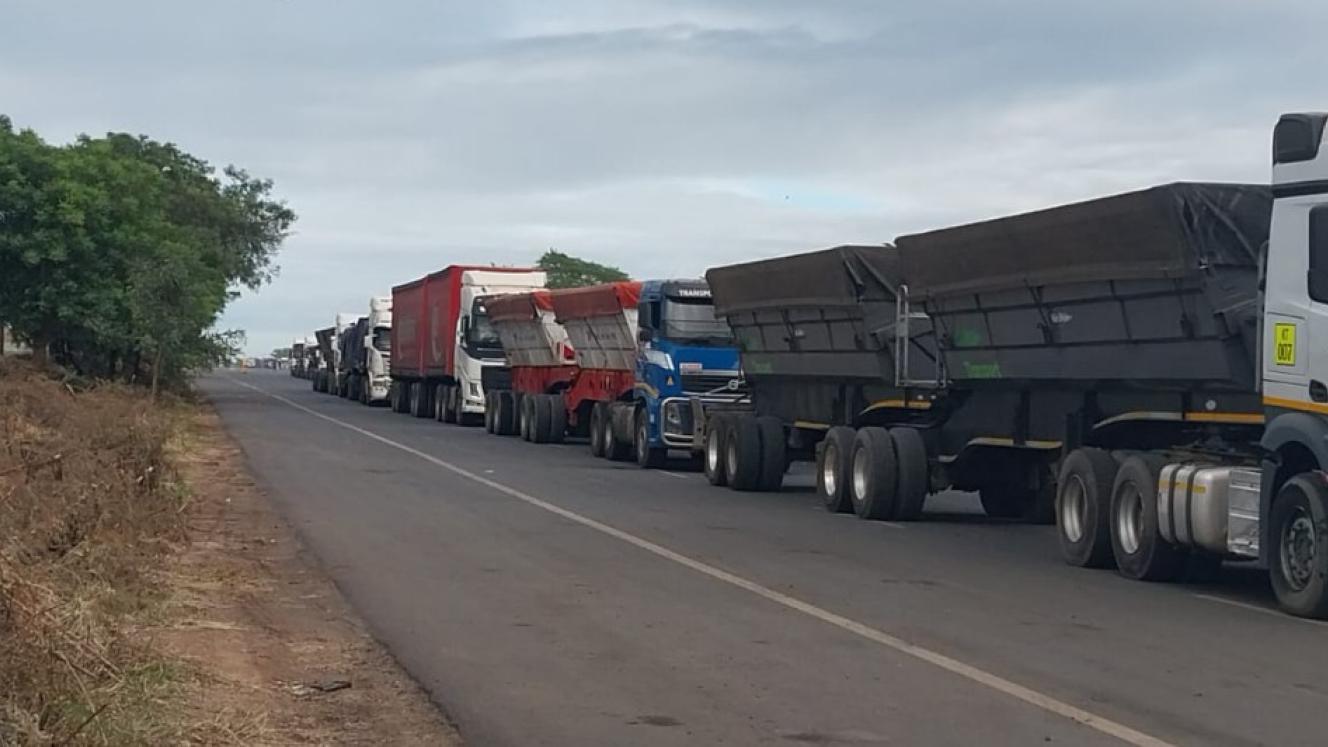
In an interview with Freight News on Tuesday, February 17, BMA commissioner Dr Michael Masiapato acknowledged that on the first day of the pilot phase, the under-staffing of immigration officials had caused trucks to bottleneck.
Ideally, the requisite number of officials should have been four – two from each country – but Mozambique only sent through one official to Kilometre Seven (KM7), the truck-staging area where the pilot phase is taking place.
Industry also complained that trucks rejoining the highway at the border from the old runway of KM7, caused bottlenecking because of another procedure – ‘marked-for-arrival’ (MfA).
Adding to the situation at the control zone gate of Lebombo Border Post is the crisscrossing of trucks with minibus taxis and informal freight passing through.
Masiapato said the BMA was aware of these frustrations but appealed for support from industry as it would be worth it in the end.
“The ultimate objective is to process trucks not only for immigration but also for customs, so that when they leave KM7, they can drive straight through into Mozambique without stopping.”
He said this part of the pilot had required planning and buy-in from Trans-African Concessions (TRAC), the toll fare consortium responsible for the N4 corridor.
In a separate interview, Mike Fitzmaurice of the Transit Assistance Bureau, confirmed that TRAC had established a diversion road from the N4 and also refurbished the Runway to accommodate truck traffic for enhanced processing.
He said Runway was ideal for implementing one-stop border procedures to fast-track trade through the transit towards the Port of Maputo.
But initial hiccups to test at least one element of improved processing, namely immigration control, was proving trickier than anticipated, said Masiapato.
“There will always be some confusion and yesterday that resulted in a queue (of trucks).”
One transporter said yesterday’s backlogging reduced business by at least half, and that the BMA must understand that cross-border operators are still trying to recover from bottlenecking and profit loss in the recent past.
Masiapato said: “Our intention remains to see this pilot phase through until Friday when we will assess the impact. Eventually, we hope to reduce waiting time at Lebombo.”
He said the immigration official who had left his post was an early red flag of concern for collaboration between the BMA and peer personnel in Mozambique, but that both governments were on board to harmonise processes at the border.
“We’re also working on this model with the CBRTA (Cross-Border Road Transport Authority) to help split the queue into different kinds of consignments,” Masiapato said.
He said the ultimate objective was to separate general freight, minerals and dangerous cargo to hopefully bring about supply-specific export flows into Mozambique.
As for ruling out MfA checking at the canopy gates of Lebombo, Masiapato said it was an exit process that was meant to prohibit transporters not complying with the cargo processes at Runway.
“And it only takes a second or so to see whether compliant operators have been marked for arrival. If they haven’t gone for the normal procedure, this is where we stop them.
“There is no way the system will allow them to be marked for exit without being marked for arrival at KM7.”
However, industry stakeholders such as Fitzmaurice point out that this is a procedural anomaly, adding to hold-ups of truck traffic at a border that is often painstakingly slow.
Masiapato maintained that it was early days for streamlining at Lebombo.
What was being piloted at the moment would eventually benefit industry, he said.