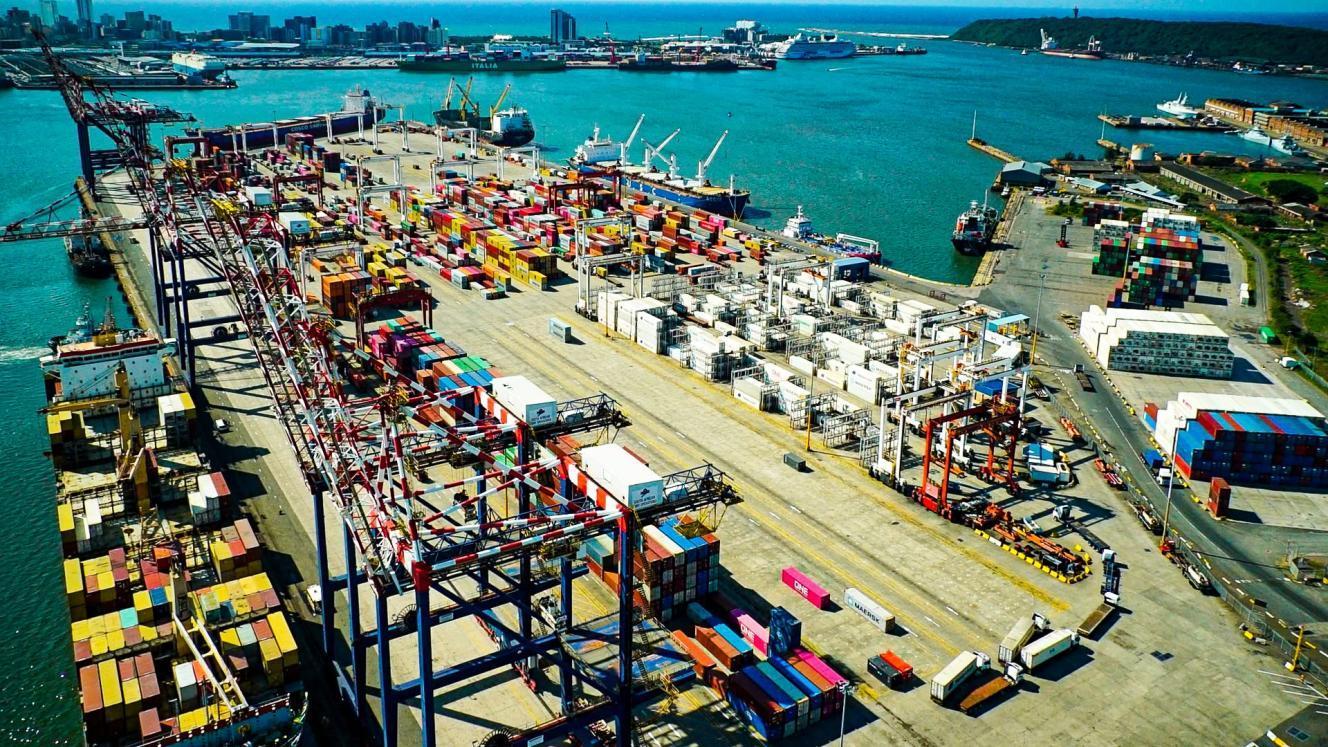
South African manufacturers are facing mounting costs as congestion and persistent vessel delays at Durban Gateway Terminal (DGT) disrupt supply chains, forcing businesses to reduce margins, switch to air freight and consider alternative suppliers.
Production at Zoeller Waste Trucks stopped in recent weeks while the company waited for six containers aboard two vessels that were at anchorage outside the Port of Durban for more than a month, according to Managing Director John Bowman.
The company assembles refuse trucks using flat pack kits imported from Germany and Poland at its manufacturing facility in Sebenza, Edenvale.
“This has been the worst we’ve been hit,” Bowman said, explaining that, without components to feed the first stage of the company’s seven-stage production line, work at the remaining stations also stopped.
The second vessel to arrive might take its cargo to the Port of Port Elizabeth for offloading and road transport to Gauteng although this has not yet been confirmed, he said.
The company ships the flat pack kits every four weeks. Its next batch is expected to arrive soon.
Air freight adds to costs
Containers delayed at the port for weeks prompted customers to consider cancelling contracts and forced a switch to air freight, said a representative of a supplier to the food and beverage, energy and transport manufacturing sectors, speaking on condition of anonymity.
“Financial impacts are that we prefer to air freight items and lower our margins to account for the increased price because sea freight just takes far too long,” he said.
Customers prefer the faster delivery offered by air freight but are unhappy with the higher prices, he added.
The company absorbs some of the additional costs or seeks local alternatives although these do not always meet the technical specifications of the imported products, he said.
Extended discharge delays are affecting businesses across supply chains, resulting in plant closures and production delays, said South African Freight and Logistics Association Maritime Consultant Dave Watts.
Limited access to DGT’s operational data, including truck turnaround times, waterside volumes and average vessel waiting times, makes it difficult to assess performance, he said.
There is also a discrepancy between DGT’s reported 11 vessels at anchorage and the eight reported by marine operations. Apparently DGT includes vessels that are in port but not alongside in its anchorage count, said Watts, who has raised the matter with both parties.
Recently reported gate moves of around 2 219 are below a previous key performance indicator of more than 3 000, he said.
The lower gate activity could reflect focus on waterside operations, insufficient equipment or relatively low volumes although active berthing schedules appear inconsistent with the latter explanation, Watts said.
Some signs of improvement in landside operations are evident but these are difficult to confirm without accurate truck turnaround times, he added.
Backlog continues to weigh on supply chains
The terminal has made some progress in clearing import containers from the yard but transporters continue to face limited truck slots, long depot waits and rising labour and standing costs, said Aven Naidu, Chairman of PFS Container Division.
DGT’s landside dashboard for the first half of October showed the terminal consistently below its daily move target with approximately one in four trucks waiting more than two hours to enter the yard, he said.
Diverting cargo to alternative ports, such as the Port of Port Elizabeth, could ease terminal pressure while adding costs for cargo owners, Naidu said.
“That cargo must then be trucked more than 1 000 km to Gauteng at extra cost and time,” he said.
The terminal is handling four vessels at berth with 11 waiting at anchorage and stack occupancy at 66.6%, according to the latest DGT Daily Operations Report.
More stable conditions within the terminal, with stack occupancy easing to 55.3%, are reflected in the South African Association of Freight Forwarders (SAAFF) statistical update dated October 22, 2026. However, waterside pressure persists with 10 to 12 vessels at anchorage, said Jacob van Rensberg, SAAFF’s Head of Research and Industry Intelligence.
Throughput of approximately 3 300 moves per day, close to the 3 400-move target, is largely absorbed by incoming vessel demand, leaving little scope to reduce the backlog, according to SAAFF’s 2026 assessment.
Approximately 18 additional days through affected supply chains are indicated by SAAFF’s modelling. Even a sustained rate of 4 600 moves per day would take about a month to clear the existing queue, according to the association.
DGT outlines recovery and investment plans
The transition to the Navis N4 operating system presented initial operational challenges for stakeholders, acknowledged Javier Lancha, CEO of DGT, which assumed operational control of Durban Container Terminal Pier 2 in January 2026.
The platform has since stabilised and is supporting improved operations following engagement with terminal users to refine processes and strengthen system performance, he said.
An operational recovery programme focusing on improving cargo flow, reducing congestion and improving customer service through extended storage arrangements and enhanced landside processes has been prioritised, Lancha said.
Operational recovery remains an immediate priority, he said, although he did not provide the requested details on equipment currently operational at the terminal.
“The company has committed more than R2 billion in capital investment over the next three years to modernise equipment, upgrade infrastructure and strengthen terminal capabilities,” Lancha said.
The investment programme includes the acquisition of new and second-hand, original equipment manufacturer-certified straddle carriers as well as a planned transition towards hybrid rubber-tyred gantry (RTG) operations, beginning with an initial phase of 16 hybrid RTGs, he said.
Infrastructure upgrades are also planned to expand capacity, improve operational resilience and support South Africa’s future trade requirements, he added.
“These investments intend to address existing capacity constraints while building the foundations for a more reliable, efficient and competitive terminal over the long term,” Lancha said.
“DGT recognises that the terminal plays a critical role in South Africa’s logistics network and that operational performance has a direct bearing on customers, businesses and the wider economy,” he said.