South African cherry exports to China cannot begin until Chinese authorities complete a facility verification process, according to the Department of Agriculture.
The outstanding process is urgently needed by exporters assessing a limited early season opportunity to supply China before larger Chilean volumes enter the market.
A list of production units, packhouses, cold storage facilities and fumigation treatment facilities is being prepared for submission to China’s General Administration of Customs (GACC), the department’s Director of Media and External Communication, Moses Rannditsheni, told Freight News.
GACC indicated that it intends to conduct the compliance inspection remotely once it receives the list, under Article 8 of the export protocol signed in September, he said.
No fumigation requirements remain outstanding, according to the department, which did not provide a deadline for the list.
Finalising fumigation points remains an implementation challenge, Tru-Cape Media and PR Manager Lucille Botha told Freight News. The company could not provide further details at this stage, she said.
South Africa has completed its verification of farms and packhouses but China’s verification remains outstanding, Hortgro’s Karien Bezuidenhout told Freight News.
Beyond the approval process, access to China could provide an opportunity for South African exporters to diversify their markets. China imported 586 900 tonnes of cherries worth US$3.3 billion in 2025, according to Bezuidenhout.
South Africa’s cherry season begins earlier than Chile’s, potentially allowing local exporters to supply the market before larger Chilean volumes arrive. However, commercial viability depends on securing competitive prices and sufficient volumes, Bezuidenhout cautioned.
Approximately 20% of South African cherry exports went to the Far East and 70% to Europe during the 2025/26 season, according to Hortgro.
“China could provide another destination for fruit currently exported to Europe but the window to establish early season trade is limited,” Bezuidenhout said.
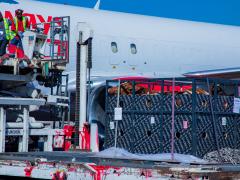
Transport costs also influence the opportunity. Early season cherries are typically transported by air with exporters likely to shift towards sea freight as Chilean volumes enter the market, Bezuidenhout said.
Sea freight transit times from Cape Town to China are approximately 25 to 32 days compared with six to eight days for shipments moving by air, she said. Airfreight could cost up to 10 times more, making shipment timing and transport choice important commercial considerations.
“Once the facility list has been submitted, the department will begin coordinating the compliance inspection with Chinese authorities,” Rannditsheni said.