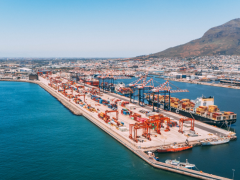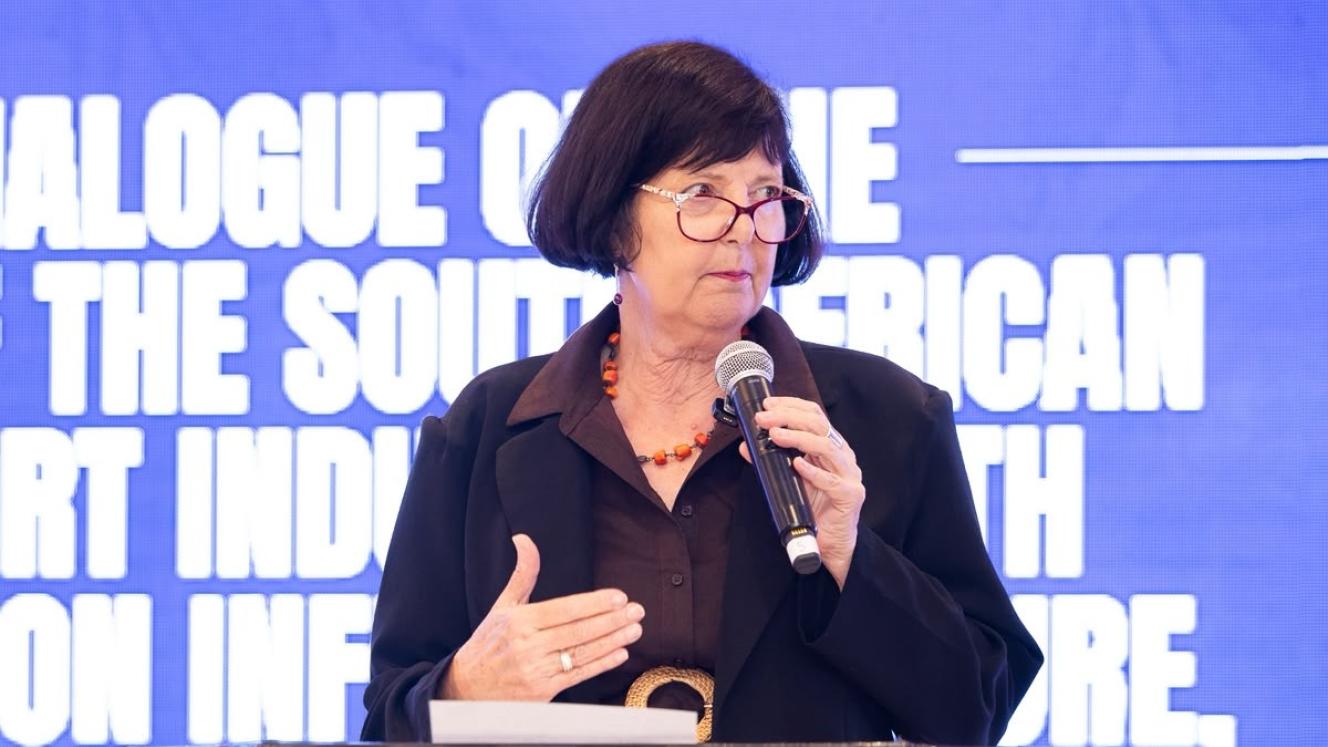
The timing of the transition at Durban Gateway Terminal (DGT) contributes to congestion while the terminal is expected to return to its former operational performance levels between December 2026 and February 2027, Transport Minister Barbara Creecy said on Thursday, October 29.
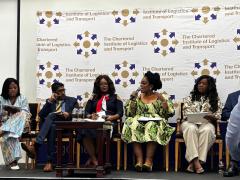
Business concerns about the performance of DGT, the new operator of Durban’s Pier 2, were addressed by Creecy and Transnet Group Chief Operating Officer Solly Letsoalo at the Frank Dialogue on the State of the South African Transport Industry in Umhlanga.
The discussion focused on infrastructure, investment and public-private partnerships. Concerns about congestion were acknowledged alongside work underway to improve port operations.
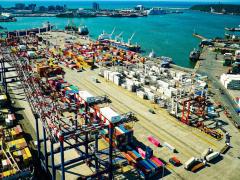
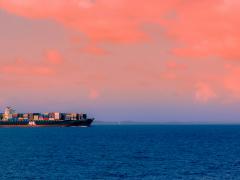
Reflecting on her arrival in KwaZulu-Natal, Creecy said she had a “heart attack” after counting 39 ships waiting at anchorage off the coast of Durban. This prompted her to contact Transnet leadership who advised that only eight of the vessels were waiting to enter DGT at the time. The others were destined for other terminals in the port.
Responsibility for operations rests with DGT’s private operator, International Container Terminal Services Inc, which has operational control. However, Transnet, as a partner in the facility, also has to accept that the transition contributed to the backlog, Creecy said.
Transnet Board Chairperson Andile Hesperus Sangqu and Letsoalo visited the terminal the previous day, she added.
“I think consensus is that the timing of the transition was not good. It’s creating a backlog. The terminal operators are running the terminal well but it is going to take time for that backlog to clear. The terminal operators are introducing new equipment in December,” Creecy said.
“The truth of the matter is that we got those partners because that whole port needs to be recapitalised. It all needs new equipment,” she said.
Equipment investment and recovery
More than R2 billion has been committed over the next three years to modernise equipment, upgrade infrastructure and strengthen terminal capabilities, DGT CEO Javier Lancha told Freight News on Wednesday, October 28.
The investment included the acquisition of new and second-hand original equipment manufacturer-certified straddle carriers, he said.
A planned transition towards hybrid rubber-tyred gantry (RTG) operations will begin with an initial phase of 16 hybrid RTGs. Infrastructure upgrades are also intended to expand capacity and improve operational resilience, Lancha added.
“We’re satisfied that appropriate steps are being taken to fix the problem,” Creecy said.
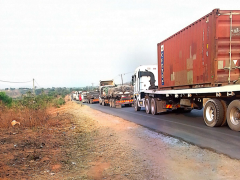
Congestion at DGT has placed pressure on local manufacturing supply chains, as reported by Freight News on Wednesday, October 28. It also led independent container transporters to challenge congestion-related charges at the Competition Commission and prompted industry concerns about container dwell times, extended vessel waits at anchorage and truck-slot allocation.
The delays at DGT were acknowledged by Letsoalo who said private-sector participation will increase investment that will support better performance.
Rail revival and corridor investment
Turning to national freight strategy and structural reform, the revival of rail remains central to the country’s economic development, Creecy said, noting that no nation successfully industrialised without it.
Transnet’s three-pronged strategy focuses on fixing existing assets, implementing private-sector partnerships and growing the economy through the rail network, Letsoalo said.
Preparations are underway to introduce 11 new train operating companies, which will own rolling stock, locomotives and warehouses and operate licensed freight services alongside Transnet Freight Rail.
Broader corridor concessioning and investment initiatives include:
- Concessioning the manganese line in the Northern Cape to allow private investment in rail rehabilitation, rolling stock and port operations
- Inviting private-sector investment in the Richards Bay dry bulk terminal
- Commissioning an intermodal integration project along the Gauteng-Durban container corridor, linking rail tracks, properties, landside terminals, manufacturing facilities and farms to improve connections between trucks, trains and ports
Road transport remains a vital part of the transport system, Creecy said in response to questions from the floor about heavy freight vehicles.
“Trucking is a significant, important and permanent part of a transport ecosystem. It must be in the right place in the ecosystem, which is bringing the commodity from where it is mined to where it needs to be collected and transported,” she said.
Maintenance limits rail performance
The rail network has sufficient installed track capacity with theoretical capacity of up to 250 million tonnes a year compared with roughly 170 million tonnes handled last year, Letsoalo said.
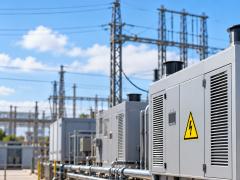
The main challenge is poor maintenance of tracks, signalling and electrical power supply systems, he explained.
Vandalism and copper cable theft, alongside manual signalling systems that require drivers to coordinate stops and starts by phone, frequently halt trains mid-journey, Letsoalo added.
High-speed passenger rail also faces financial constraints, Creecy said.
“We haven’t yet found a way to get the train fare between Johannesburg and Polokwane or between Johannesburg and eThekwini cheaper than the airfare,” she said.