Regional integration across Special Economic Zones (SEZs) and trade corridors is essential for unlocking African economic growth, with state freight utility Transnet positioning itself as a primary enabler of cross-border trade.
Speaking at the Second International SEZ Conference in Durban during a panel discussion themed "Cross-Border Collaboration through Spatial Development," industry leaders highlighted that African economies must move away from domestic competition and focus on unified trade ecosystems.
Automotive Business Council (naamsa) CEO Shinny Gobiyeza said Africa should view itself as "one platform" rather than 54 individual markets to maximise regional manufacturing strengths.
“No single country can produce every component for the vehicles they produce,” Gobiyeza said.
CRA Global Development CEO Saveshen Pillay reinforced the need to shift SEZ operating models from purely local incentives to regional integration hubs.
“Currently, SEZs are focused on investment attraction and having various incentives around keeping investments there. But I think it needs to shift beyond that and focus on transitioning into regional trade integration hubs,” Pillay said.
Director for Trade in Services, Investment, IPR & Digital Trade at the AfCFTA Secretariat, Emily Mburu-Ndoria, advocated for a collaborative "corridor approach" across the continent.
“South Africa will not be able to compete with China just as South Africa, but when we come together as Africa, we shall be able to compete with the rest of the world,” Mburu-Ndoria said.
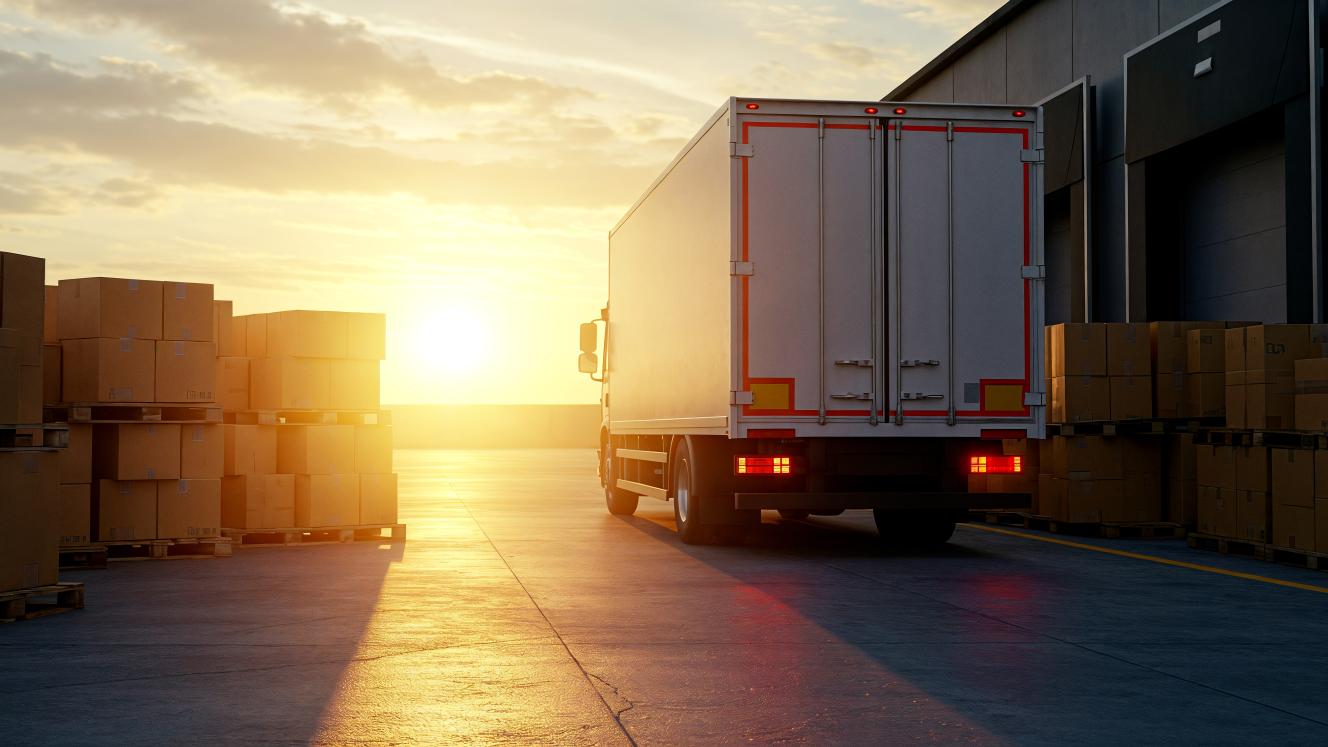
Underpinning this regional vision is the requirement for seamless transport and port logistics.
Transnet Group CEO Michelle Phillips highlighted that the utility had aligned its business model directly with the objectives of the African Continental Free Trade Area (AfCFTA).
Reinventing growth
“We talk about creating a single African market, and as Transnet, we've aligned with the goals of the AfCFTA. We've positioned ourselves as an infrastructure enabler of regional trade programmes, and in our strategy we call it reinventing growth,” Phillips said.
She added that Transnet's "reinventing growth" approach stemmed from the realisation that “Transnet could not remain the Transnet of five or 10 years ago”.
“There is so much opportunity. Our strategy prioritises investments, partnerships that enable that free flow of goods, including components, vehicles and machinery between South Africa and its regional neighbours,” she said.
She added that enhancing rail, port and road interoperability across national boundaries was a critical priority to achieve this.
“We want seamless movement of freight between South Africa and our neighbours,” Phillips said.
Inland hubs
To reduce heavy vehicle congestion at critical border crossings, Transnet is looking to develop inland hubs.
“We want to develop dry ports, transit goods nodes and to shift more carbon from road to rail and ease the congestion that we see at the border posts,” Phillips said.
MozParks CEO Onório Manuel pointed out that cross-border logistics depended heavily on effective gateway infrastructure.
“Mozambique is not merely a country (but) a gateway to the region. We need to create facilitation among our SEZs, work on an integrated system, and simplify visa processes so that trade among the region and the continent becomes more efficient,” Manuel said.
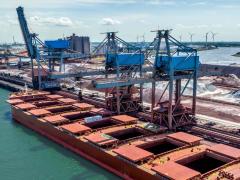
Phillips said Transnet was similarly strengthening the Port of Durban to serve as a high-capacity regional gateway, integrating private-sector participants to improve operational efficiency in its port and rail networks.
Echoing the overarching sentiment of the panel, Phillips urged African economies to focus on collaborative growth rather than competing for existing market volumes.
“We must be mindful of displacing (due to competition) because when we displace volume from one area to another, nobody grows. We can actually all grow together if we integrate and we collaborate,” Phillips said.