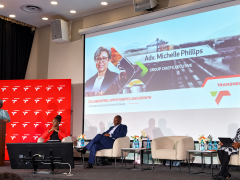
Transnet is using procurement and localisation requirements to rebuild domestic rail capability and draw more South African suppliers into its supply chain. According to Transnet Engineering chief procurement officer Colette Yende, the decline in the country’s rail sector has been accompanied by a loss of local manufacturing capability and capacity that now needs to be restored. “This is not something we talk about often enough,” said Yende. “We have been visiting provinces across the country, sharing information about the opportunities available and preparing suppliers to participate. It is about partnering and working together.” Participating in a panel discussion at the annual SAPICS Conference in Cape Town earlier this year, Yende said Transnet had an enterprise and supplier development strategy aligned with the country’s public procurement regulations. Specific procurement goals were used to promote empowerment, while multinational companies partnering with Transnet could be required to ensure that certain components were manufactured locally. “This is about making sure that money stays in the country, and it starts with procurement,” she said. “If we want the country to grow, we have to be intentional. These obligations must be implemented, monitored and measured, which is why we incorporate them into our supply management principles and contract management.” However, the shortage of specialist skills remains a challenge. Yende said organisations were drawing from the same limited pool of expertise, with skilled employees frequently moving between businesses and even between Transnet divisions. While this movement is not necessarily negative, it highlights the need to develop a larger skills base. Yende said Transnet was using experienced employees to transfer knowledge and strengthen the capabilities of other staff members. The company is also training employees in a range of disciplines through the Transnet Academy. Skills remain a major concern in the logistics sector. According to Michelle Meiburg, director of contract logistics at CEVA Logistics, keeping pace with changing requirements is just as challenging. “Skills require ongoing attention, considering that those needed in the logistics sector five years ago are very different from those required today,” she said. The introduction of artificial intelligence is adding to this challenge. “There is no denying the capabilities that technology brings to logistics, but managing change among employees can be very difficult, particularly when the necessary knowledge is lacking,” said Meiburg. She said organisations also needed to address employees’ concerns that AI could threaten their livelihoods, along with the fear created by a limited understanding of the technology and how it would be used in the workplace. Yende said discussions about skills development should form part of the broader effort to strengthen domestic capability and increase localisation. “The skills issue does not begin only when somebody identifies a particular need,” she said. “It starts within organisations, where we need to share knowledge, learn and develop our own people and then translate that experience into effective models for institutions.” She said South Africa needed to examine its existing capabilities and determine how these could be developed to support greater localisation and improve logistics services. LV
Vital need to develop larger skills base
Comments | 0
© Now Media. This content is protected by copyright and may not be adapted or republished. If you would like to discuss cooperation opportunities, please contact: editor@freightnews.co.za.