South Africa’s economy contracted by 0.2% quarter on quarter in the second quarter as imports grew considerably faster than exports, weakening net exports on the expenditure side of GDP.
The contraction ended six consecutive quarters of growth and followed downwardly revised growth of 0.4% in the first quarter, according to Statistics South Africa (Stats SA).
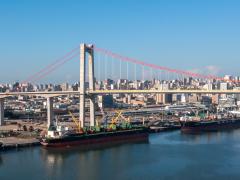
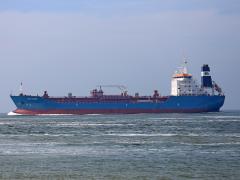
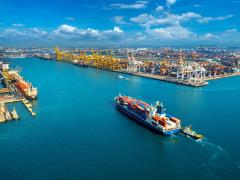
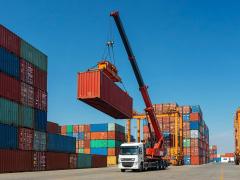
Imports increased by 4.9% during the quarter, driven largely by machinery and electrical equipment, as well as mineral products. Exports rose by a more modest 0.9%, supported mainly by shipments of pearls, precious and semi-precious stones and precious metals.
The trade imbalance was the main factor behind the decline in expenditure on GDP, the Nedbank Group Economic Unit said.
“Expenditure on GDP declined by 0.2% quarter on quarter – the first contraction since the third quarter of 2024 – due to a sharp decline in net exports as imports rose faster than exports,” the unit said.
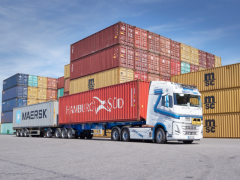
Transport activity provided some support on the production side of the economy. Stats SA reported that the transport, storage and communication industry had expanded by 0.9%, primarily because of increased land transport activity.
Seven industries recorded growth during the quarter, although this was insufficient to prevent the overall contraction. Construction expanded for a second consecutive quarter, while agriculture recorded its seventh successive increase as horticultural and field-crop production rose.
However, gross fixed capital formation declined by 0.2%, marking its second consecutive quarterly decrease.
Nedbank warned that instability in the Middle East posed further risks to global supply chains and inflation.
“Our key concern is that the war in Iran could again lead to a global supply-side shock, potentially disrupting supply chains and further driving up oil and other commodity prices, which, in turn, could stoke more inflation and force the central bank to tighten monetary policy further,” the unit said.
Higher transport and fuel costs had also constrained economic activity during the quarter, FNB and WesBank senior economist Thanda Sithole said.
“The escalation of the Middle East conflict resulted in a sharp increase in international oil and domestic fuel prices, raising transportation and production costs across the economy,” Sithole said.
He added that tighter financial conditions following the South African Reserve Bank’s 25-basis-point increase in the policy rate in May had placed further pressure on interest-sensitive areas of domestic demand.
However, Sithole pointed out that the second-quarter contraction did not necessarily signal a sustained downturn.
“The moderation in GDP growth during the quarter was broadly anticipated and reflects, to a significant extent, the impact of several temporary shocks that affected economic activity during the quarter,” he said.
The figures also revealed a sharp decline in trade activity, alongside contractions in manufacturing and mining output, Standard Bank macroeconomic analyst Christelle Grobler said.
The economy could still record growth comparable with the 1.1% achieved last year, although risks to the outlook had increased, she said.