The decline in US import cargo volumes at the nation’s major ports, due to the impact of tariff adjustments and ongoing trade policy uncertainty, is expected to continue in 2026.
This is according to the latest Global Port Tracker report released by the National Retail Federation and Hackett Associates.
“Stores are stocked up and ready for a record holiday season but there is still a great deal of uncertainty about what will happen in 2026 with trade policy,” said Jonathan Gold, NRF Vice President for Supply Chain and Customs Policy.
“Regardless of what develops, retailers will adjust their supply chains accordingly and strive to ensure that consumers have affordable options when they shop.”
The US administration has recently reduced tariffs on some food products, but the future of other tariffs imposed under the International Emergency Economic Powers Act rests with a challenge currently being considered by the Supreme Court. Even if the tariffs are struck down, the administration is likely to seek to reinstate them under other trade authorities.
The effect of rising tariffs on global trade is unlikely to end soon, said Hackett Associates Founder, Ben Hackett.
“We are seeing the results of the tariffs in weakening cargo demand going forward from the fourth quarter of this year and likely into the first half of next year.
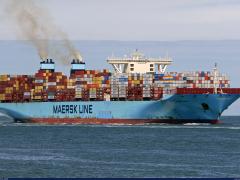
“Container shipping rates are already declining on both coasts due to less need for cargo space for goods from both Asia and Europe.”
The developments come as the NRF is forecasting record holiday sales of over US$1 trillion for the first time, up between 3.7% and 4.2% over 2024.
US ports covered by Global Port Tracker handled 2.07 million in October, although the Port of Charleston has not yet reported its data. That figure was down 1.8% from September and down 7.9% year-on-year.
Ports have not yet reported numbers for November, but Global Port Tracker projected the month at 1.91 million TEU, down 11.6% year over year. December is forecast at 1.86 million TEU, down 12.7%. Following July’s peak of 2.39 million TEU, November and December would be the slowest months of the year. And December would be the slowest month since ports handled 1.83 million TEU in June 2023.
According to the report, many retailers imported cargo earlier than usual this year to avoid tariff hikes.
The first half of 2025 totalled 12.53 million TEU, up 3.7% year-on-year. The full year is forecast at 25.2 million TEU, down 1.4% from 25.5 million TEU in 2024.
Cargo is expected to see its first month-on-month increase in six months in January, with a forecast of two million TEU but this would still be down 10.3% year-on-year, the report noted. February is forecast at 1.86 million TEU, down 8.5% annually, March at 1.79 million TEU, down 16.8% and April at 1.97, down 10.9%.