Thirteen maritime vessels have come under attack since the United States and Israel went to war against Iran on February 28, sparking numerous retaliations by the Islamic Revolutionary Guards Corps (IRGC).
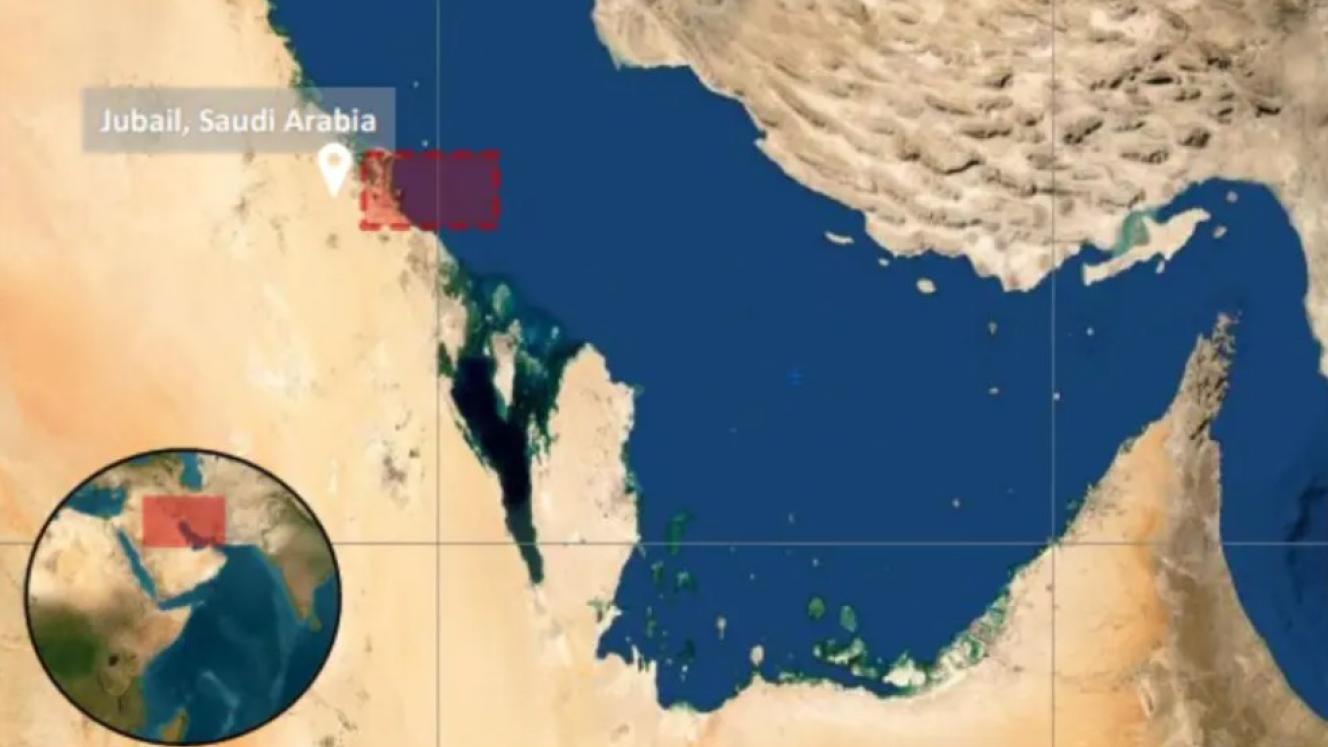
The most recent attack targeting ocean cargo was on Saturday, when a suicide drone struck the Louis P about 10 nautical miles north of Jabail on Saudi Arabia’s Persian Gulf coast.
Turkey’s state-run news agency, Anadolu Agency, reported that the IRGC had claimed responsibility for the attack, declaring that the product tanker was a US-linked asset, although the carrier is registered in the Marshall Islands.
Of all the commercial vessels targeted so far, 10 have been in or near the Strait of Hormuz, the narrow Gulf waterway responsible for about 20% of global crude supply, 50% of which goes to China.
However, the Louis P attack proves that Iran is not over-concentrating its maritime assault strategy in the Strait.
Lars Jensen, chief executive of sea intelligence consultancy Vespucci Maritime, has said: “It shows that vessels anywhere within the Gulf are potentially at risk as three vessels inside the Gulf, far away from the Strait of Hormuz, have been attacked in the past week.”
While most tankers and box ships are avoiding the Strait, anchored to the south on either side of Oman’s Musandam Peninsula and off the UAE’s coast, at least six commercial vessels transited through Hormuz over the weekend.
One was the KSL Hengyang, a bulk carrier operated by Chinese line Nanjing King Ship Management.
Norwegian service provider Maritime Optima reported that the carrier “departed King Fahd Industrial Port Dry Bulk Terminal in Saudi Arabia on March 4 and safely exited the strait westward, heading toward Libya, with an estimated arrival around March 25.
“This was one of only six vessels recorded passing that day, including three tankers, one Iranian container ship, one general cargo vessel and the KSL Hengyang”.
Jensen pointed out that the situation in the Red Sea remained safe for the moment, with no assaults on commercial traffic by Yemen’s Houthi rebels, a proxy militia supported by Iran.
“This means for the regional carriers, Red Sea transits continue as before the US-Iran war, with only the global carriers Maersk and CMA CGM having pulled back,” he said.