Whistle-blowers are
increasing facing
victimisation at border
posts for reporting
inefficiencies and
corruption.
“I sent a query to the
Customs head office about
the news
from the
border that
all truck
drivers had
to carry copies of
invoices and customs
declaration forms
in case the border
wanted to do a ghost
inspection – which is
totally against the systems
modernisation we were
being sold. But the border
officials say they don’t have
access to the documents
uploaded via the system,”
explained the roadfreight
director of a cross-border
transport company.
He told FTW that he had
sent his queries to the head
office confidentially “yet
the nice guys sent it to the
border for comment and I
was thrown under the bus”.
He said he couldn’t prove
that he had been targeted
but the number of stops
had increased against him,
as had the number of
R500 fines for “ just
about anything under
the sun”.
“It’s a fight for
survival just to keep
the wheels turning
and many transport
operators
do not
comply with
the rules
and regulations, leaving
them open to bribery to
ensure they still meet their
targets,” the group CEO of a
logistics company told FTW.
This affected all the other
transporters who faced
delays along the queue while
the negotiations were taking
place, he added.
“Time is money and we
all have to pay in some
form or another to fasttrack
our goods,” he added,
adding that bribery was the
“easier route” over ensuring
compliance.
And yes, you were
targeted if
you refused
to pay bribes,
he said. And
targeted too
if you are
a foreignowned
operator
(from South
Africa for
example)
entering a
neighbouring
country.
The owner of a small
courier company said he
had recently been forced to
re-think his policy of not
paying bribes after one of
his drivers was threatened
with jail if he did not pay a
bribe.
David Lewis, CEO
of Corruption Watch,
commented that if there
was to be an end to the
corrupt practices at the
borders, drivers should take
a firm stance and blow the
whistle repeatedly.
“When
employees
are
confronted
with
bribery and
corruption
at the border
posts, they
must make
an effort to
obtain the
names of
the guilty
officials and report the
incidents,” he insisted.
The incidents should
also be reported to the
police, the government
department in which the
guilty border guard or
official is employed and
the committee coordinator
responsible for that port of
entry.
“But there needs to be
an understanding that
these kinds of reports
are kept confidential and
action taken against those
supervisors who breach
the confidentiality,” said
transporters.
A transport consultant
questioned the practicality
of reporting irregularities
at border posts. “Unless
everyone takes a stand and
refuses to participate and/
or reports every incident,
the scourge will continue
and those that do take a
stand against this will
continue to be targeted,”
he said.
He suggested full
visibility at border posts
with cameras capturing
everything the officials
do, along with the
establishment of an
independent specialist task
tem to, amongst others,
conduct frequent raids.
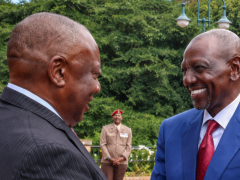
INSERT & CAPTION
Drivers should take
a firm stance and
blow the whistle
repeatedly.
– David Lewis