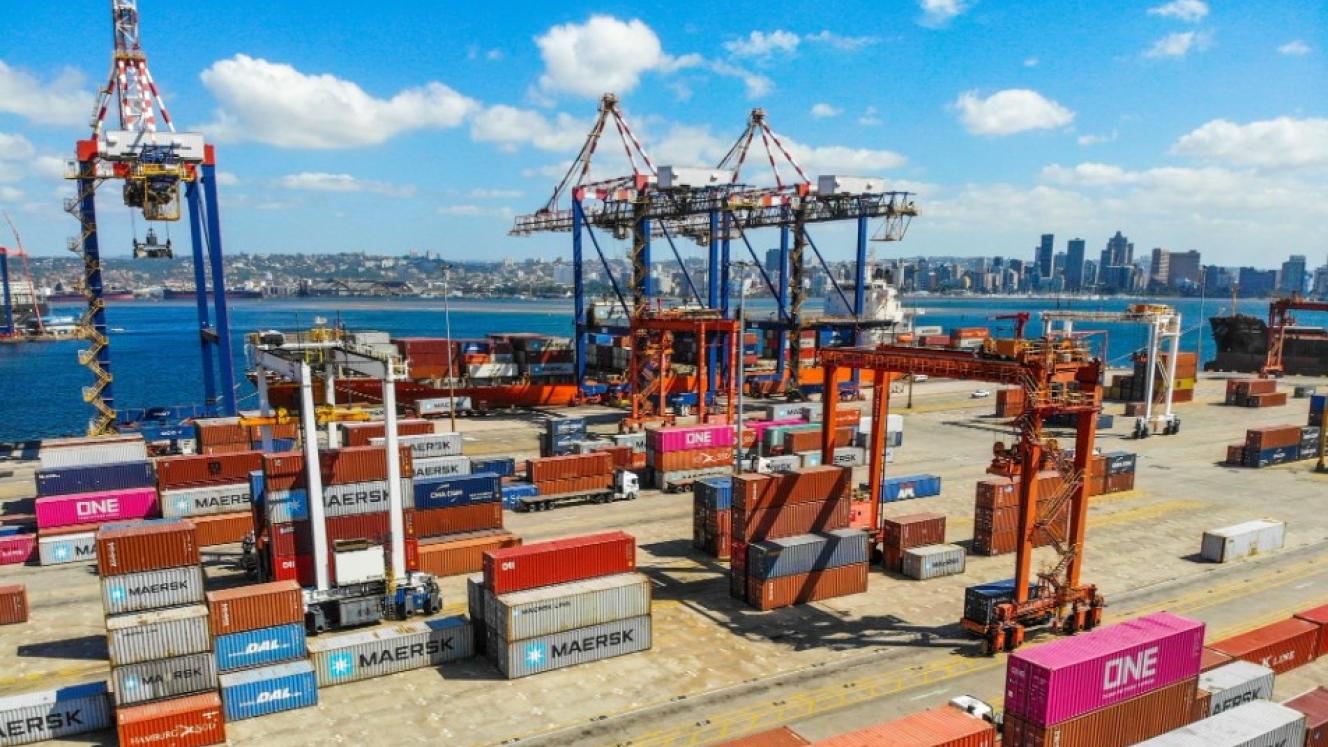
Shipping industry stakeholders have expressed mixed reaction regarding the scale of the impact of a ‘fuel neutrality charge’ introduced by Transnet Port Terminals (TPT) on container handling.
Intended to recover rising diesel costs for its equipment, triggered by fuel price hikes linked to Middle East conflict, the surcharge index starts at R52 per container in May but could increase depending on coastal diesel prices, according to a recent TPT customer advisory.
“The Department of Mineral and Petroleum Resources announced fuel increases with effect from April 1. TPT’s diesel-powered equipment, such as straddle carriers, hauliers, RTGs (cranes) and generators, is directly impacted by this increase,” Michelle van Buren Schele, TPT general manager, said in the advisory.
She said the charge would ensure recovery of fuel-related operating costs. The index will be reassessed on the 7th of every month and applied to all containers on vessels berthing from the 1st of the following month.
The fuel surcharge is only applicable when coastal diesel prices reach R20 per litre or more and is payable according to the following tiered structure:
• R25 per container: R20-R23.49/litre
• R52: R23.50-R26.99/litre
• R78: R27-R30.49/litre
• R104: R30.50-R33.99/litre
• R131: R34-R37.49/litre
• R157: R37.50-R39.99/litre
• R176: R40/litre and above
South African Association of Ship Operators and Agents (SAASOA) chief executive Peter Besnard highlighted the ripple effect of the surcharge from importers and exporters to transporters and consumers.
“The Transnet Port Terminals (TPT) fuel neutrality surcharge is a cost-recovery measure introduced to offset fluctuations in fuel prices. While it helps port operators manage rising fuel costs, it has notable effects on both the logistics supply chain and consumers,” Besnard said.
“Within the logistics supply chain, the surcharge increases the cost of moving goods through ports. These added expenses are passed on from shipping lines to freight operators and ultimately to importers and exporters. As a result, overall logistics costs rise, reducing profit margins and making South African goods less competitive in global markets.”
He added that the charge exacerbated existing port challenges.
“The surcharge also contributes to inefficiencies, as businesses are required to pay more despite ongoing challenges such as port delays and infrastructure limitations. This places additional financial strain on logistics companies and disrupts the smooth flow of goods.”
For consumers, he warned of downstream effects.
“Businesses pass increased logistics costs down the supply chain, leading to cost-push inflation. Everyday goods, especially essentials, become more expensive, placing pressure on household budgets. In some cases, higher costs may also reduce product availability.”
However, maritime consultant Dave Watts described the initial R52 charge as minimal.
“What’s R52? When you’re looking at trucking costs that have gone through the roof, it’s about 1.1% of the terminal handling charge. Transporters have got much bigger problems to worry about.”
He said the direct impact of the surcharge was limited compared with the higher diesel price and overall logistics costs truckers must pay to transport cargo hundreds of kilometres by road to the port.
Watts said the surcharge set no major precedent if it remained strictly tied to diesel prices, noting its temporary nature linked to the fuel index. However, he highlighted wider concerns of rising shipping costs because of global rerouting around the Cape due to Middle East disruptions, which are already inflating freight and product prices.