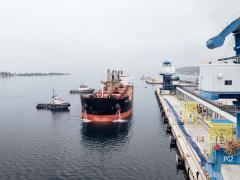
An energy firm has launched a High Court bid to overturn Transport Minister Barbara Creecy’s directive granting 25-year operating rights at the Island View Precinct in Durban’s port.
The precinct handles about 75% of South Africa’s petroleum imports, with the country bringing in about 13 billion litres of crude oil and 19 billion litres of finished petroleum products each year.
Business Day reports that Capricorn Petrochemicals has filed review proceedings in the Gauteng High Court (Pretoria), targeting Creecy’s 2025 Section 79 directive. The directive authorised Sasol Oil, Engen, Astron Energy, TotalEnergies, Bidvest Tank Terminal, the Central Energy Fund and other operators to run liquid bulk and chemical terminals for a quarter of a century.
Government said the move was needed after leases lapsed and operators ran on short-term extensions that deterred investment.
Creecy argued long-term certainty would boost investment, secure fuel supply and advance sector transformation, while including third-party access rules and capacity for new entrants via the Central Energy Fund.
The company, however, claims the directive is “unconstitutional, unlawful and invalid”. It wants the court to set aside both the directive and any agreements signed under it.
Capricorn argues the decision amounts to a major reallocation of strategic port infrastructure that should have been put out to competitive tender under Section 56 of the National Ports Act, not a ministerial instruction. It accuses Creecy of misusing the exceptional Section 79 power – meant for narrow national or strategic interests – to sidestep constitutional procurement rules requiring fairness, transparency, competitiveness and cost-effectiveness.
The founding papers contend the minister exceeded her authority, failed the jurisdictional test for invoking Section 79, and provided no public notice or meaningful chance for affected parties to comment. Instead, the process involved only incumbent operators.
Capricorn says the directive locks in existing stakeholders, many on legacy arrangements, limiting opportunities for new entrants and undermining transformation in fuel storage and logistics.
The applicant is pushing for an expedited hearing, warning that once the long-term deals take effect, reversing them will become practically impossible.
“This is not merely a legal dispute but seems more like a confrontation over whether South Africa’s energy system will be governed by law or by entrenched power,” a Capricorn representative said.