Namibian rail company TransNamib is focusing on its core business, which is to move goods by rail. Sister state company Namrail is responsible for maintaining and expanding the infrastructure, which leaves TransNamib to concentrate on moving freight. “We want to focus on running trains. The business is ours to take. Given that one train can move the freight equivalent of 30 road trucks at once, there is no way that we should be more expensive than road,” says TransNamib chief executive officer Johny Smith. Benefits of the new approach are already being felt, with TransNamib reporting a 6% growth in volume and 8% on revenue year-on-year (the best in 10 years). A business plan approved by the Namibian cabinet in December aims to double revenue and volumes in the next five years, with TransNamib moving into
profit in two to three years’ time. As part of the business plan the company closed down its OPX (overnight parcel express) division, and will “be out” of roadfreight by the end of the calendar year. It will only operate trucks that service its own needs, he says. “To grow the company, we have
to focus on one thing. We cannot have an interest in road as well. There is too much invested in rail,” he adds. Finances and resources will be freed up to restore and upgrade the existing fleet of locomotives while the process of acquiring new ones is being followed.
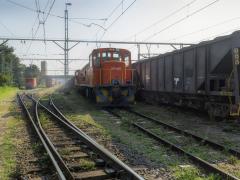
Admitting that the fleet is “old,” Smith says the first objective is to ensure that the existing fleet is used efficiently. The company has reintroduced 24-hour-a-day operations (previously trains stopped at night) and is working over weekends. This has had the effect of doubling the fleet without purchasing any new equipment. “The advantage rail has over road is that trains do not have to stop at night or for driver rest breaks.” TransNamib is also looking for private public partnerships to resuscitate smaller stations along the rail routes. “As a state-owned enterprise it is our responsibility to create business opportunities in the smaller towns,” he says. Many of the out-of-the-way towns are costly to service by road, and Smith believes rail can be used for the long haul, with distribution centres at the stations handling the local distribution for both inbound and outbound freight.
TransNamib focuses on core business
Comments | 0
© Now Media. This content is protected by copyright and may not be adapted or republished. If you would like to discuss cooperation opportunities, please contact: editor@freightnews.co.za.