The cost of scanning containers
for customs clearances at
the Port of Cape Town has
continued to escalate and
port users are now lobbying
Transnet Port Terminals (TPT)
to intervene.
The issue around the
movement of containers to and
from the customs scanner has
been a point of contention since
the introduction of the new
high-tech scanner last year.
Shippers are claiming
substantial cost increases
saying the average cost of a
scanned container is now
estimated to be anywhere
between R7 000 and
R15 000.
This has to do with the
containers having to be moved
to and from the scanner by the
shipping line. This is in line
with legislation that calls for the
shipping line to retain control
of all cargo until such time as it
is released by customs.
Industry, however, says that
haulage fees charged by the
shipping lines are far higher
than other transporters. They
are also of the opinion that
TPT could undertake these
movements to and from
the scanner easily enough at a
far more reasonable price.
“It also means that we
would pay lower lift on, lift off
charges, depot charges and the
like because TPT can transfer
the container back to the stack
after scanning,” said an FTW
source. “Shipping lines are
charging much higher rates
than the average hauliers. Also,
once the container is scanned
one is either obliged to continue
using the shipping line’s
transporter at an increased
cost or the container needs to
be taken to a depot where the
transporter of choice picks up
the cargo for delivery. All of
this comes at a cost.”
Industry says the gripe
is not with
the customs
process or the
introduction of
the scanner.
“The system
works and it
works well,”
said one
shipper. “This
entire thing
has nothing
to do with
customs really.
It is not about the containers
being scanned or physically
searched. The fact is the
scanner works very well and
it is quicker and faster.
We have seen containers
released within 25 minutes –
but that is when the problems
start. Despite the container
being released at the
scanner it cannot be moved
to the final
destination
because the
cost of the
shipping line’s
haulier is
just too high.
Getting it on
another truck
also comes
with increased
costs. It’s the
transport
aspect of this process that
simply does not work.”
Industry maintains the
solution lies with TPT.
“TPT moves containers
to and from vessels anyway,
despite the legislation saying
shipping lines are in charge
of containers until released
by customs. So why can TPT
not just move the containers
to the scanner and back to
the stack from where they can
be picked up as usual?” said
another source.
The Cape’s Port Liaison
Forum (PLF) has undertaken
to take up the issue with
TPT management and has
called on TPT to investigate
whether they could move
containers to the scanner and
back rather than relying on
shipping lines’ hauliers.
INSERT
It’s the transport
aspect of this process
that simply does not
work.
CAPTION
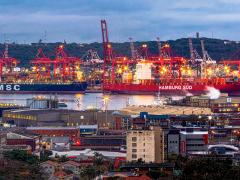
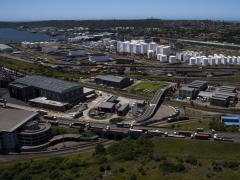
Port of Cape Town.
TPT holds key to reducing scanner-related cost escalation - port users
Comments | 0
© Now Media. This content is protected by copyright and may not be adapted or republished. If you would like to discuss cooperation opportunities, please contact: editor@freightnews.co.za.