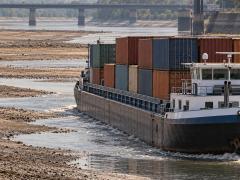
The dry bulk supply-and- demand balance remains supportive in 2026 but is expected to weaken in 2027, albeit from a relatively strong baseline. According to Filipe Gouveia, shipping analysis manager at Bimco, continued disruption to vessel transits through the Strait of Hormuz has created significant uncertainty for both the global economy and the dry bulk market. “The dry bulk supply-and- demand balance remains supportive in 2026, but we expect it to weaken in 2027,” he said in the company’s latest dry bulk market outlook. A memorandum of understanding signed in June and a three-week ceasefire between the United States and Iran earlier this year allowed shipping activity through the strait to recover partially. Conditions have, however, since deteriorated again. Under normal market conditions, approximately 4% of global dry bulk tonne-mile demand passes through the Strait of Hormuz. Persian Gulf countries have attempted to use alternative routes for their exports and imports, but these have not been able to accommodate pre- war cargo volumes. According to Gouveia, if the strait remains effectively closed, dry bulk ship demand growth is forecast between 2.5% and 3.5% in 2026. This would be supported by stronger grain and coal shipments, as well as an increase in average sailing distances. Next year, however, growth is expected to slow to between 0.5% and 1.5% in 2027 under this scenario. El Niño could also support dry bulk tonne-mile demand over the next 12 months. The Panama Canal has announced restrictions on daily vessel transits from September in response to declining water levels, which could force some bulk carriers to use longer alternative routes. A weaker monsoon season in India could also support demand for imported coal, said Gouveia. The outlook would be stronger if the Strait of Hormuz reopened towards the end of the third quarter this year. Under this scenario, Bimco forecasts ship demand growth of between 3.5% and 4.5% in 2026 and between 2% and 3% in 2027. Bimco has not factored a return to the Red Sea into either of its scenarios. Gouveia said a full return to the route could reduce dry bulk tonne-mile demand by approximately 2% because vessels would no longer need to take longer diversions. However, the Houthis’ earlier announcement of a blockade of Saudi Arabia’s Red Sea ports has increased uncertainty over when commercial shipping might fully return to the region. LV
Strait of Hormuz tension weighs on dry bulk market
Comments | 0
© Now Media. This content is protected by copyright and may not be adapted or republished. If you would like to discuss cooperation opportunities, please contact: editor@freightnews.co.za.