Bulk carriers sailing under flags seen as non-aggressor countries to Iran are managing to exit the Persian Gulf through the Strait of Hormuz, the sea supply choke point that has experienced a decrease of at least 90% in transits since the start of the current conflict.
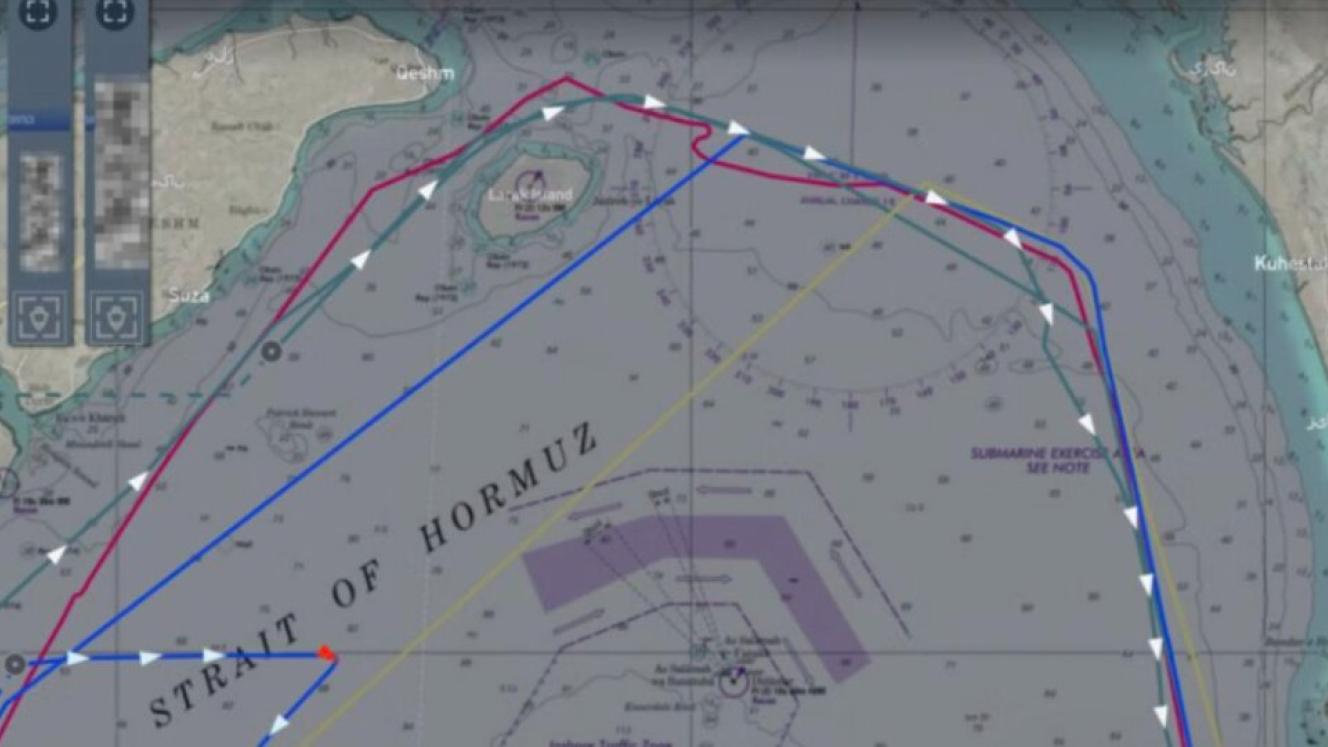
According to Windward, bulkers “sailing eastbound to exit the Gulf are re-routing through Iranian territorial waters to navigate the Strait, circumventing shorter, normal international navigation channels”.
The predictive analytics platform for the maritime sector says it tracked at least five ships using the Iranian waters route over March 15 and 16.
“The new route, which allows allies and supporters to transit, illustrates how Iran’s selective blockade has evolved,” Windward says of Tehran’s decision to extend safe passage privileges to trading partners with whom it has good relations, predominantly China and India.
On Thursday morning, March 19, it emerged that Tehran had told Pretoria that similar arrangements could be made for tankers and other vessels carrying South African cargo.
“The bulk carriers tracked eastbound through the Strait had, in nearly all cases, previously called at Imam Khomeini port in Iran,” Windward says.
The site’s senior intelligence analyst, Michelle Wiese Bockmann, says they have tracked vessel movement in the Strait, clearly showing that moveable sailings are conducted outside the waterway’s actual channel.
“The new route illustrates how Iran’s selective blockade has evolved to allow allies and supporters to transit. In addition to bulk carriers, two liquefied petroleum gas carriers have sailed through in the past 36 hours.”
She adds that these of course are ships with their AIS (automated identification system) switched on.
However, other vessels, especially Iranian-linked tankers, are going through dark, immobilising satellite tracking to avoid detection.
“Eight ships, excluding Iranian-flagged vessels, were tracked through the strait with their AIS on March 16, nearly double the number seen earlier this week,” Bockmann says.
She adds that, although evidence is lacking of the presence of Iranian sub-surface mines in the actual channel, the threat essentially means that the channel is effectively closed.
It boils down to the following working theory of Iran’s Hormuz strategy: “Allow 'friendly' vessels to exit and enter via your territorial waters, with a route that hugs the Iranian coastline to avoid the usual international navigation route which may or may not be mined.”
Lars Jensen of Vespucci Maritime says: “Irrespective of what anyone might think of the Iranian regime, if this is their new playbook it is strategically a very strong move by Iran.
“Iran can simultaneously deny access to enemies and allow friendlies to go through.
“It is a good demonstration that you do not need to fully control a body of water in order to deny its usage to others.”
The consultancy’s founder and chief executive points out that it provides Iran with a geopolitical ‘card’ to play: “Distance yourself from US and Israel and you might be allowed to go through.”
Windward’s tracking serves to support the growing notion that the US and Israel may be outplayed in the Strait of Hormuz.
Jensen says that, although the US could retaliate through tit-for-tat attacks on vessels transiting in Iranian waters, it’s unlikely.
“That would be a major escalation as they would be attacking vessels linked to India, Turkey and China presently,” Jensen says.