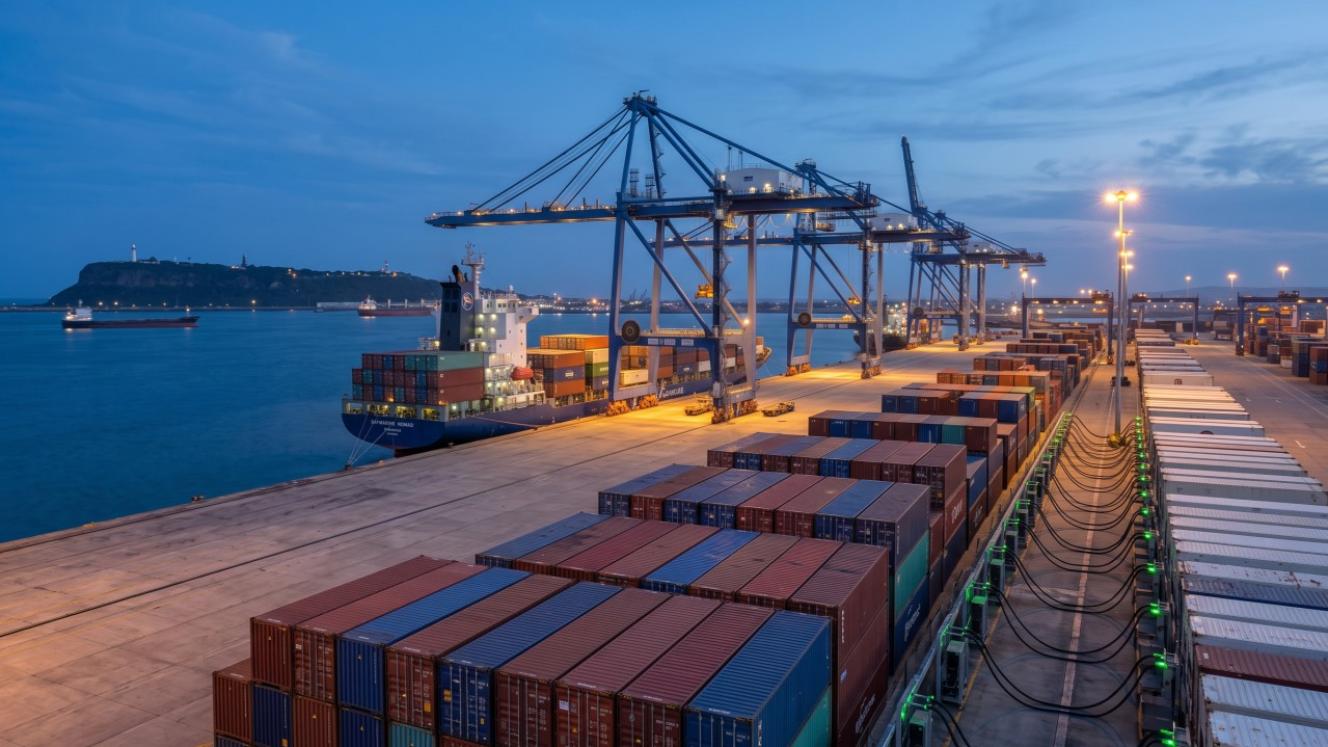
The National Consumer Commission (NCC) is moving to tighten import compliance through its new track-and-trace system and a strategic partnership with the South African Revenue Service (Sars).
The intervention, outlined in the NCC’s 2026/27 Annual Performance Plan, introduces a major shift toward digital, real-time enforcement at ports and across domestic supply chains.
According to the NCC, a Memorandum of Understanding signed with Sars focuses on non-compliant imports, tax and customs compliance and the protection of consumers from unsafe and substandard goods. It provides for joint investigations, information sharing and coordinated awareness initiatives, and strengthens oversight of e-commerce imports, where the NCC says the risks of mislabelling and regulatory non-compliance are high.
The MoU also provides for collaboration on contraventions of Section 26 of the Consumer Protection Act, including the failure to issue invoices or the issuing of invoices that do not comply with statutory requirements, such as the omission of VAT registration details. It also establishes mechanisms for the NCC to report suspected contraventions of tax and customs legislation, including failures to register for tax or customs purposes.
“This partnership enhances our capacity to detect and act against non-compliant imports and tax evasion. It enables and aligns with the President’s announcement in SONA on the launch of the National Illicit Economy Disruption Programme that brings together key state agencies and other stakeholders, including the private sector,” said Sars Commissioner Johnstone Makhubu.
How it works
Asked how the track-and-trace system would integrate with existing operations at ports, Sars, and the Border Management Authority to improve real-time detection of illicit or non-compliant imports, NCC spokesperson, Phetho Ntaba, told Freight News it was envisaged the system would operate “as an integrated enforcement and compliance mechanism across the NCC and other regulatory authorities”.
“The system is expected to complement existing legislation, such as Section 24 of the CPA, which relates to the labelling of goods and Section 60 of the CPA that deals with product recalls, customs declaration systems, and cargo reporting systems,” Ntaba said.
“Through digital tracking, shared databases and real-time information exchange, enforcement authorities will be better positioned to identify suspicious consignments, counterfeit products, misdeclared imports, and illicit trade patterns before goods enter the domestic market.”
Ntaba explained that the system was expected to differentiate between compliant and illicit goods through a combination of digital product identifiers, customs declarations, supply-chain verification and real-time data analytics.
“Goods that are properly declared, traceable and supported by valid permits and documentation would be identified as lower-risk consignments and will be released to suppliers for sale. However, non-compliant goods, missing traceability information, counterfeit indicators, or unusual trade patterns may trigger inspections or enforcement interventions,” Ntaba said.
“Importantly, the framework is intended to support smarter and more targeted enforcement rather than blanket delays at ports. The use of integrated digital processes is aimed at facilitating the movement of compliant cargo while directing enforcement resources toward non-compliant goods.”
Phased roll-out
On the issue of expected compliance costs and timelines for importers to adapt to the new tracking and tracing framework, the Ntaba said it was still engaging with stakeholders regarding the detailed implementation framework, timelines, and compliance requirements.
“However, it is anticipated that legitimate importers may incur transitional compliance costs associated with upgrading internal systems, integrating digital reporting capabilities, improving labelling standards, staff training, and maintaining traceability records,” Ntaba said.
“The NCC is mindful of the need to balance enforcement objectives with trade facilitation and economic growth; therefore, implementation is expected to follow a phased and consultative approach, allowing industry participants sufficient time to adapt.”
The system is expected to enhance market transparency, support product recalls, strengthen consumer protection and improve overall regulatory certainty within import and manufacturing sectors. “In the long term, this should encourage investment, promote lawful trade practices, protect jobs within local industries such as CTFL manufacturing (clothing, textiles, footwear and leather), and support economic growth by reducing the impact of the illicit economy,” Ntaba said.
Estimates from Sars indicate that illegal trade costs the economy R100 billion annually, with illicit cigarette trade alone costing the fiscus approximately R18 billion in 2022.