At leading South African marine services company AMSOL it is important that everything done to develop a robust talent pipeline amongst its 640 seagoing and shore-based employees has impact: on people, on potential and on performance.
This is especially true for the maritime industry, where scarce seagoing and technical support skills as well as long development timelines require a strategic approach.
Having recently published the 2025 AMSOL Sustainability Report, this positive impact is underpinned by continued business growth and service expansion.

“We report annually to hold ourselves accountable for living our company purpose – ‘Empowering people through sustainable solutions’ – and while the data tells us we are on a journey of continuous improvement, the impact we are having on the lives of employees and their families is tangible,” says AMSOL’s Human Capital Executive, Nceba Mfini.
The 2025 facts speak for themselves:
- More than R16 million spent on training and development.
- 26% invested in the development of women, who comprise 19% of the workforce.
- 33% invested in the development of youth (employees under 35).
- R2.6 million invested in Cadetships, Internships and Trainee Programmes.
- R1.2 million invested in the AMSOL Bursary Programme for Marine Engineering and Maritime Studies.
Career progression is the result of AMSOL’s dedicated focus on developing the specialist skills the South African maritime industry needs to move forward and continue to grow.
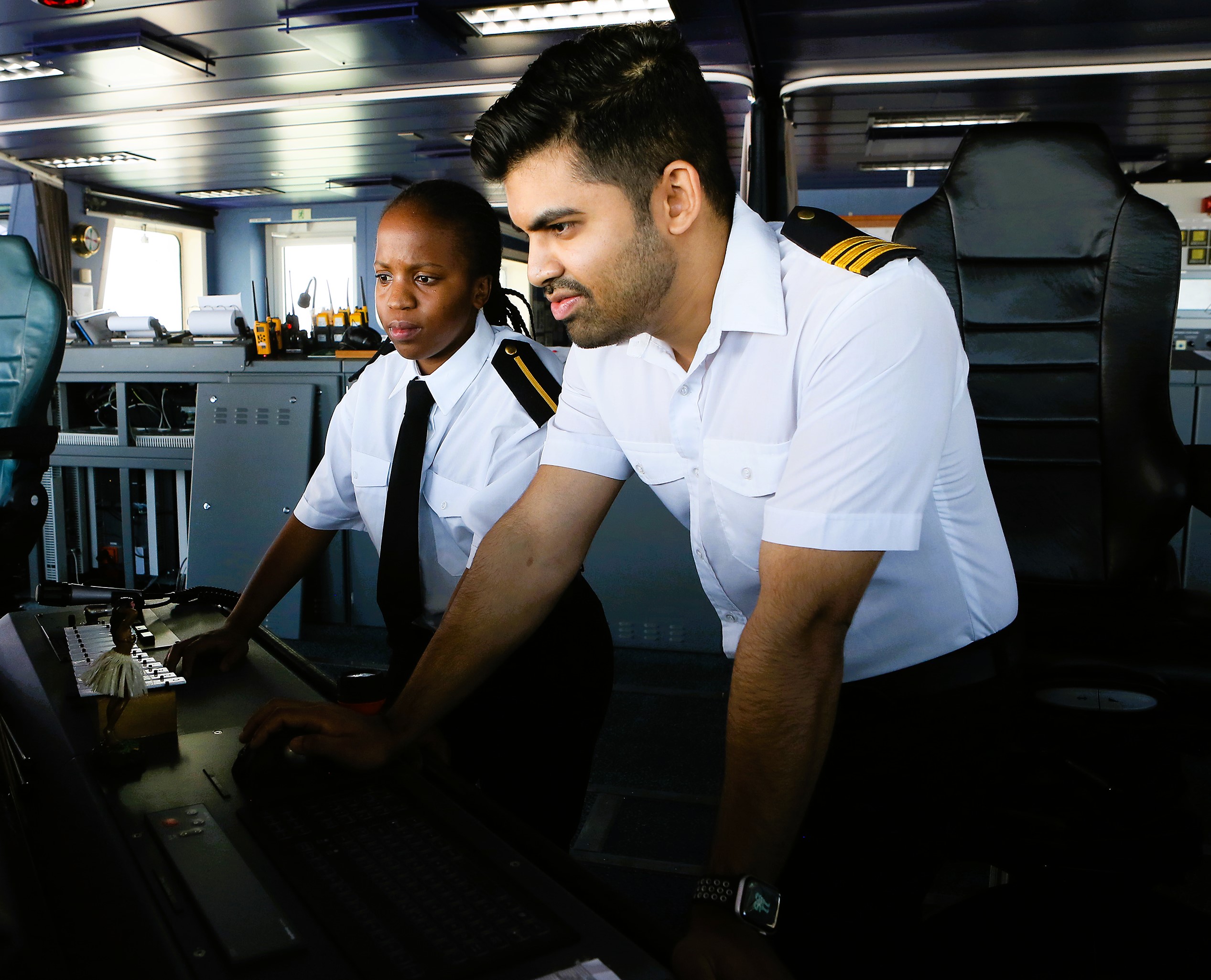
Recently, the promotions of 29 seafarers were announced at the company, and the absorption of 15 bunker barge crew into the broader fleet represents the impact of this focus. With 76% of training spend invested in developmental training, improving skills and competencies is not just about ensuring updated statutory certifications. It is also about creating opportunities for advancement.
This is reflected in the increased employment of women in management roles, with 44% of all shore-based positions held by women.
For Technical Services Executive Musa Mbakaza, accountable for the development of a South African seafarer pool at AMSOL, addressing the skills shortage in the industry can be achieved through close collaboration between employers, training service providers and relevant Maritime Authorities: “In 2025, specialist training to support specific operational requirements and fleet growth saw a number of AMSOL seafarers completing programmes in Dynamic Positioning, Azimuth Stern Drive (ASD) Tug Handling and Polar Navigation. In addition, the need to establish a talent pipeline for Electro-Technical Officers led to the employment and development of Electro-Technical Ratings across the fleet. It is only through adopting a long-term, strategic approach that we are able to meet the crewing needs of our diverse fleet of 19 vessels operating in the offshore, fuel logistics and marine services markets.”
The company’s South African Maritime Safety Authority-accredited accelerated On Board Cadet Training Programme remains a consistent pathway to certification for young seafarers in the industry. Since 2020, 49 Navigation, Engineering and Electro-Technical Cadets have been placed in the multi-year programme, on a path to acquiring the required sea time and completing prescribed Workshops and STCW training to attain their respective qualifications.
With 16% growth in the workforce in 2025 reflecting the success of AMSOL’s strategy implementation, the company remains an employer of choice in the maritime industry; where it provides specialist marine services to clients in the Ports, Maritime, Mining and Energy sectors.
For more information, visit www.amsol.global