South Africa plans to expand exports to Europe through stronger trade and investment relations with Czechia, Poland and Germany.
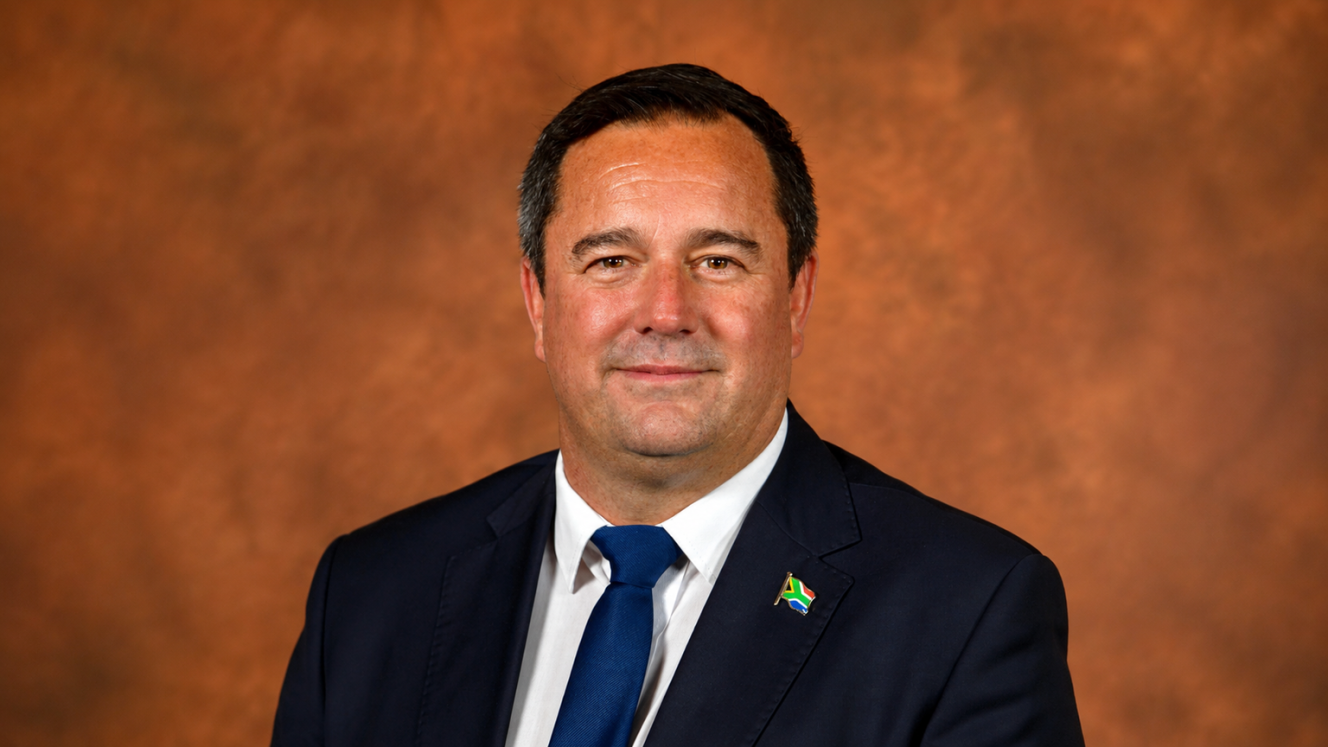
Deputy Minister of Trade, Industry and Competition John Steenhuisen is visiting the three countries this week as South Africa works to diversify its export markets following the imposition of higher US import tariffs amid wider global trade uncertainty.
Steenhuisen will chair the sixth session of the South Africa-Czechia Joint Committee on Economic Cooperation and meet businesses to discuss export opportunities, industrial cooperation and investment.
Czechia was South Africa’s ninth-largest trading partner in the European Union (EU) in 2025 with bilateral trade valued at US$1.1 billion (R17.8 billion).
Czech companies have invested in South African sectors including renewable energy, electronic components, boat building, textiles, communications, hospitality and services.
The Department of Trade, Industry and Competition (dtic) said the visit will explore opportunities to diversify South African exports and attract investment in renewable energy, defence, critical mineral beneficiation, chemicals, advanced manufacturing, rail and electric vehicles.
Discussions are also expected to cover the Southern African Development Community-EU Economic Partnership Agreement and Clean Trade and Investment Partnership projects.
Polish trade grows 7%
In Poland, Steenhuisen will co-chair the inaugural session of the South Africa-Poland Joint Commission for Economic Cooperation with Polish Deputy Minister of Economic Development and Technology Michał Baranowski.
His programme includes government and business engagements through the South Africa-Poland Business Roundtable.
Bilateral trade increased by 7% from US$1.5 billion (R24.2 billion) in 2024 to US$1.6 billion (R25.8 billion) in 2025, making Poland South Africa’s seventh-largest trading partner in the EU.
The dtic said the engagements will focus on increasing and diversifying South African exports and attracting Polish investment in renewable energy, advanced manufacturing and the automotive sector.
Potential areas of industrial cooperation include green manufacturing, mineral processing, robotics, industrial automation, tooling, precision engineering and research and development.
German trade reaches $16.5bn
Steenhuisen will conclude the visit in Munich and Frankfurt.
In Munich, he is scheduled to meet State Secretary in the Bavarian State Ministry of Economic Affairs, Regional Development and Energy Tobias Gotthardt and representatives of BMW and Siemens. He will also visit UnternehmerTUM, an innovation and business development centre.
His Frankfurt programme includes a roundtable discussion with the city’s chamber of commerce, industrial site visits and a visit to the South African pavilion at the Automechanika automotive trade exhibition.
Germany is South Africa’s third-largest trading partner globally, after China and the United States, and its largest within the EU.
Bilateral trade increased by approximately 14% from US$14.3 billion (R230.8 billion) in 2024 to US$16.5 billion (R266.3 billion) in 2025.
The dtic said Germany remains an important partner in South Africa’s industrial development. Existing initiatives include the Global Eco-Industrial Parks Programme, which supports energy and water efficiency projects in industrial parks and special economic zones.
The Partnering in Business with Germany programme also provides mentorship and international exposure to small and medium-sized enterprises seeking to compete in international markets.