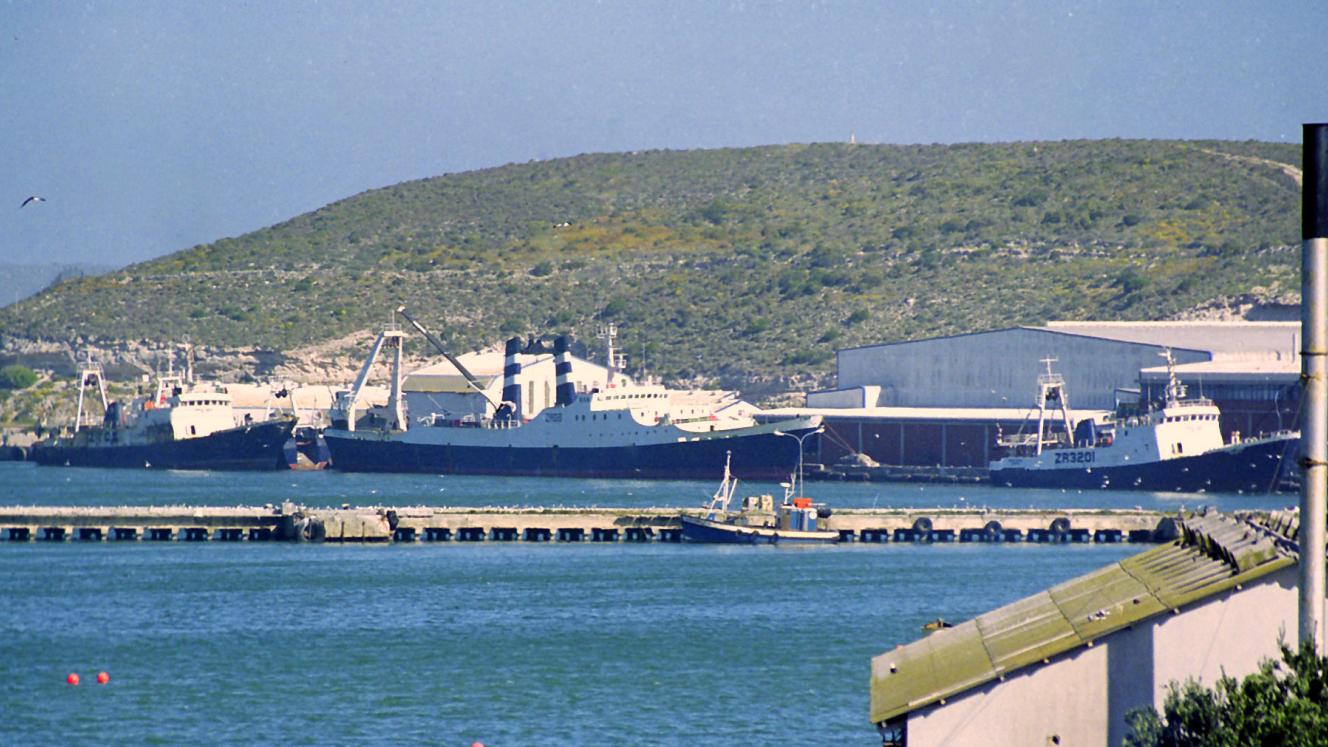
Average port call time at Saldanha increased by 50.5% during the week of August 24-30, placing further pressure on the mineral export corridor linking Kuruman with the port.
According to the latest RSA Corridor Pulse Report by Crickmay, the average time vessels spent at Saldanha in the preceding week increased from 5.21 days to 7.83 days.
Vessel anchorage time rose by two days and 13 hours to four days and 18 hours while berth time increased by two hours and 12 minutes to three days and two hours.
Despite a 5.5% week-on-week improvement in end-to-end transit time, the Kuruman-Saldanha corridor remained classified as “at risk”.
Its average transit time declined from 18.1 hours to 17.1 hours during the reporting week. However, its year-to-date performance remained approximately 47% slower than in 2025, a gap that has persisted for eight consecutive weeks.
Crickmay advised operators to plan according to the corridor’s slower 2026 performance and allow additional time for vessel-related movements.
Vioolsdrif delays increase
Four of the eight South African corridors assessed in the report were experiencing pressure.
The Walvis Bay-Cape Town corridor was placed on “watch” after the typical crossing time at the Vioolsdrif border increased by approximately 35%.
The report says the border was the main constraint while road and port conditions on the corridor remained comparatively stable. Operators were advised to allow additional time for Vioolsdrif crossings until conditions improved.
The Ermelo-Richards Bay corridor also remained on “watch” as vessel anchorage time at Richards Bay remained above approximately three and a half days for a third consecutive week.
Richards Bay’s total port call time increased by 6.2%, from 7.03 to 7.46 days, although road performance remained stable.
Maputo corridor improves
The Pretoria-Maputo corridor recorded the strongest weekly improvement with end-to-end transit time declining by 18% from 23.3 to 19.1 hours.
However, it remained on “watch” because the time vehicles spent in the Lebombo queue continued to increase even as the queue shortened.
Durban port conditions also improved after five weeks of increasing vessel delays. Average port call time declined by 8.1% from 7.47 to 6.86 days.
The Johannesburg-Durban corridor remained clear with an average end-to-end transit time of 13.9 hours.
Cape Town-Beitbridge and Bloemfontein-Nakop were also classified as clear. The Cape Town-Beitbridge transit time improved by 10.6% while the Bloemfontein-Nakop corridor improved by 9.2%.