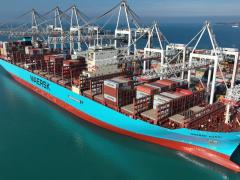
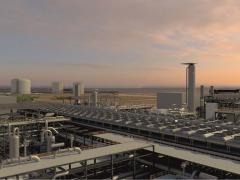
Disruptions to fossil fuel supplies caused by the Middle East conflict centred on Iran could speed up the shipping industry’s transition to renewable and alternative fuels – and, with it, the marine fuel map. Instead of a single dominant region (such as the Middle East for oil), a multipolar fuel system is emerging, with regions focusing on their natural strengths. “Fuel flexibility is important because no single fuel will dominate the market, and vessels may need to switch fuels during their lifetime,” according to Wärtsilä, a global leader in innovative technologies. Before the conflict, the emphasis was on price and efficiency. The closure of the Strait of Hormuz has been a wake-up call, with the focus now on security of supply, with the priority being supply chain control through domestic or regional production. The 2023 IMO GHG Strategy targets net-zero shipping emissions by 2050, relying on more low- and zero-carbon fuels. Green ammonia has been identified as one of the more promising future fuels. Production is expected to be centred in the Middle East, Australia and Africa, with South Africa, Namibia and Mauritania identified as potential hubs. All have abundant wind and solar energy potential. Shipping companies are likely to reduce their reliance on Middle Eastern suppliers, which will create opportunities for African and Australian producers. Namibia is among the leaders. In December, the African Development Bank approved a $10 million loan to Hyphen Hydrogen Energy to support a green ammonia project valued at more than $10 billion and with the potential to position Namibia as a pioneer in the global green hydrogen economy, according to a joint media release. In South Africa, Hive Energy has announced plans to establish a green ammonia plant in the Coega special economic zone. Africa is also listed as a potential supplier of methanol, although the market is currently controlled by China, which is scaling fast from coal-based to green methanol. Operators of vessels using liquid natural gas (LNG) will be looking for alternative suppliers, as around 17% of Qatar’s LNG capacity will take three to five years to rebuild, according to Rajesh Verma, deputy director of shipping research at Drewry. Qatar currently supplies 20% of the world’s LNG – a gap which United States producers are likely to fill. “The lingering structural uncertainty over the security of Middle Eastern energy infrastructure and the lasting vulnerabilities to shipping through the Strait of Hormuz could create opportunities for countries with large-scale resources outside the Gulf to attract new investment in both the upstream and broader infrastructure,” says David Goldwyn, president of Goldwyn Global Strategies, LLC and chairman of the Atlantic Council Global Energy Centre’s Energy Advisory Group. The United States LNG industry is poised to fill the gap left by extensive, multi-year damage to Qatari LNG facilities, adds Andrea Clabough, non-resident fellow at the centre. ER
Redrawing the marine fuel map
Comments | 0
© Now Media. This content is protected by copyright and may not be adapted or republished. If you would like to discuss cooperation opportunities, please contact: editor@freightnews.co.za.