Cost remains one of the
biggest challenges for the
African project cargo sector
which sometimes has to operate
in extremely difficult conditions
with very limited equipment
available.
African project cargo experts
told FTW that often ports
did not have all the necessary
equipment which meant it
needed to be sourced from
elsewhere, adding significantly
to costs.
“Many ports have the ability
to berth a charter vessel with
roll-on/roll-off functions, but the
equipment required for the rolloff
needs to be mobilised from
elsewhere. In southern Africa
this usually has to be done from
South Africa at a very high cost.
Sometimes manufacturers are
advised to rather ship the cargo
in parts and then assemble in the
country of destination, but that
has its own cost challenges as
teams of technicians have to be
sent to oversee this process.”
An industry specialist said
the major challenge for project
cargo was therefore still the cost
of getting the cargo to and from
African ports.
“Currently, finding a breakbulk
service – especially from the
Far East and from South Africa
northbound along East and
West Africa – is particularly
challenging.”
He said the lack of
infrastructure in general along
West and East Africa often made
the movement of project cargo
difficult.
“Some ports will require that
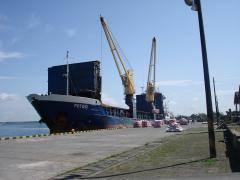
cargo is shipped with a geared
vessel. Others don’t have access
to cranes or crane capacity is not
suitable for the cargo. This all
causes the cost to increase with a
ripple effect on the final costing
for the project,” he said.