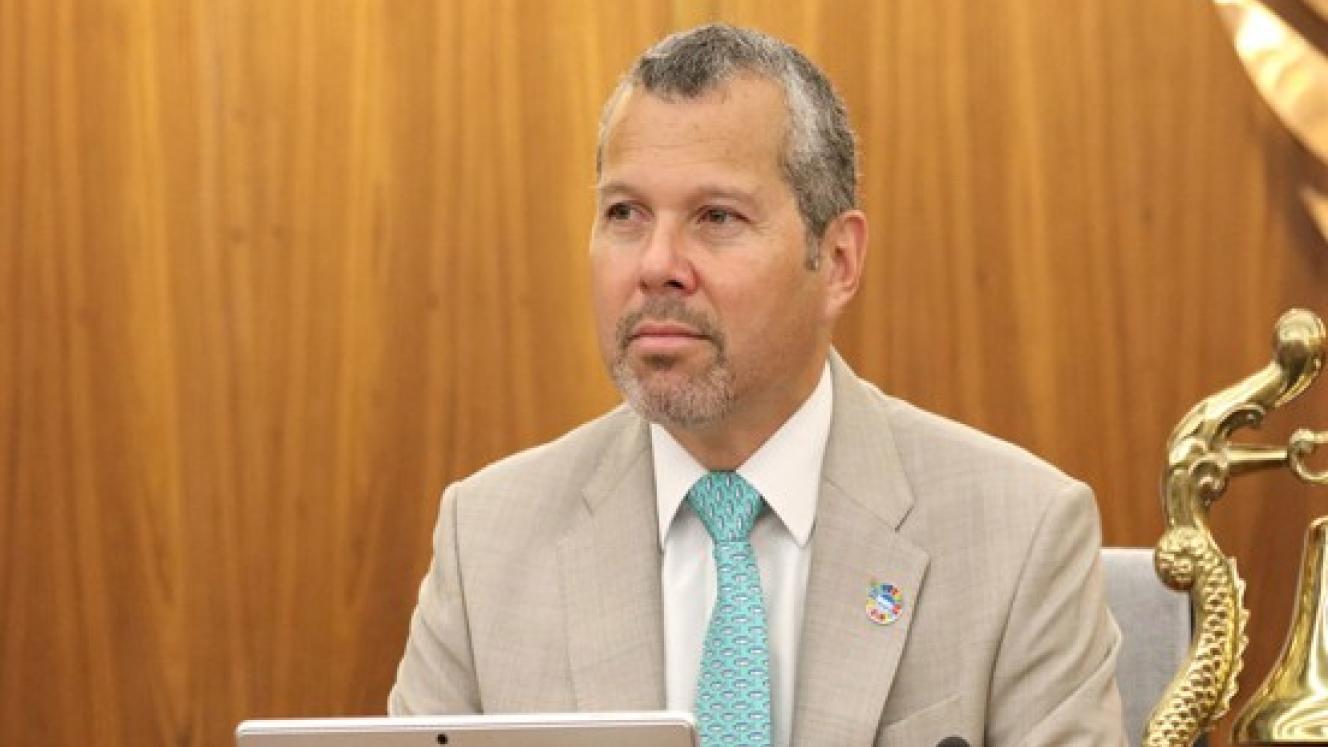
Up to 20 000 seafarers remain stranded on some 2 000 vessels in the Persian Gulf since the conflict began with the US-Israeli bombing of Iran in late February, Arsenio Dominguez, Secretary-General of the IMO has told parent body, the United Nations.
The unfolding humanitarian crisis, he said, highlighted the importance of securing the safety of seafarers on top of related maritime protection concerns – ships, ports, infrastructure from any type of security threat.
He emphasised that piracy, terrorism and cyberattacks posed an ever-present threat to the industry, heightened by the high level of risk exposure currently seen in the Persian Gulf.
For states with a coastline, it also encompassed a wide range of illicit activities that might involve the sea, ships, ports or coasts, including arms and drug trafficking, the illegal trade in wildlife, crude oil theft, human trafficking, smuggling and the illegal dumping of toxic waste, said Dominguez.
The current crisis around the Strait of Hormuz, “shows that ships and crews are highly exposed in conflict zones, often becoming leverage in geopolitical disputes,” he said.
“Commercial shipping has been unjustifiably targeted, detained, or attacked, highlighting how fragile freedom of navigation can be.”
Asked what mechanisms could realistically protect seafarers caught in geopolitical conflicts, he stressed that information sharing was crucial.
“Disinformation and misinformation can make it extremely challenging for risk-based voyage planning.
“Ship operators and companies must ensure risk assessments are taken before any voyage through or in a conflict area.”
Dominguez stressed that diplomacy and de-escalation of conflict was essential, while the case for naval escorts was limited.
“Naval escorts are never a sustainable solution.”
The need for cooperation, capacity building and information sharing in the wider shipper trade was more important than ever, he said.
Asked what the new emerging challenges were and how vulnerable the shipping industry was, Dominguez said: “There are a number of new challenges including cyberattacks on navigation, cargo systems, and port operations, the sabotage of undersea cables, pipelines, and port infrastructure, drone attacks on vessels and vulnerabilities related to autonomous vessels.
“Increasing sophistication by criminals operating in the supply chain continues to present unique challenges to the global maritime trading environment.”
Referring to the risk maritime employees and cargo owners, be it vessel proprietors or shippers, have faced in the Red Sea since November 2023, when Houthi rebels in Yemen started attacked commercial ships, Dominguez lamented the impact global flashpoints had on the industry.
He said international shipping and seafarers had become caught in geopolitical conflicts which were not their responsibility.
“Ships of different flags and seafarers of many different nationalities have been caught up.
“Ships have been subject to uncrewed aerial and surface projectiles. These are civilian merchant vessels without the capabilities to defend themselves from these attacks.
“Civilian seafarers are not combatants and should never be a target.”
Maritime chokepoints across the globe that could be vulnerable in a time of conflict, are the Suez Canal, Bab el‑Mandeb Strait, Strait of Hormuz, Straits of Malacca and Singapore, the Strait of Istanbul, Strait of Çanakkale, the Marmara Sea, and the Panama Canal.
Any disruption in these areas would have major global consequences for trade and the shipping industry, Dominguez warned.