Cross-border hauliers dealing with Copperbelt supply chain loads are pleading with authorities to urgently assist with one of the most congested chokepoints in the sub-Saharan region – the Groblersbrug Border Post on the N11 into Botswana.
The desperate situation on the frequently congested transit to copper mines in Zambia and the Democratic Republic of the Congo, was again highlighted last week ahead of South Africa’s Freedom Day long weekend.
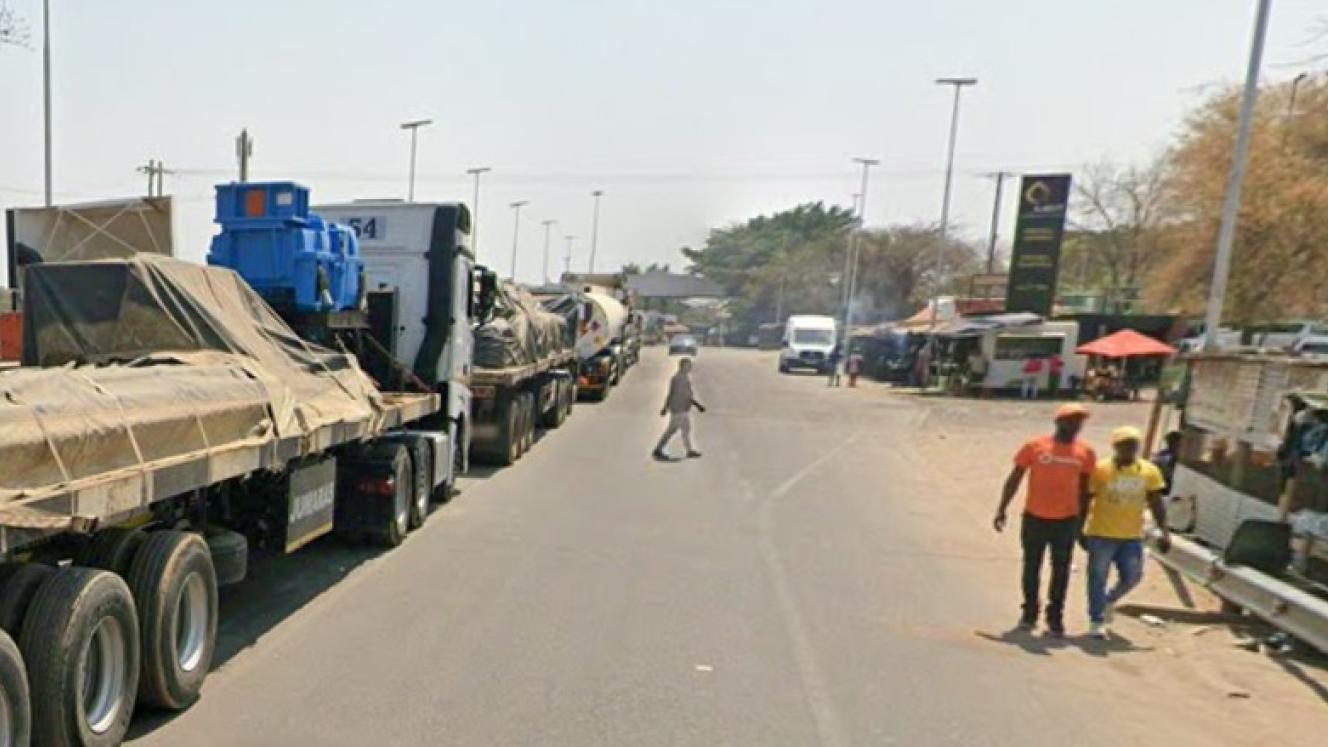
A transporter from Pretoria, whose name is withheld, said he had drivers in the north‑bound queue since Monday, still waiting to pass through to Martin’s Drift Border Post in Botswana by the following Friday.
He said the queue was more than five kilometres long and that his company had 25 loaded trucks on the way north.
The days-long waiting time, he said “is a health risk for the drivers” as they have “no ablution or food”.
The humanitarian plight of long-distance drivers in this queue has been exposed before, among others by Mike Fitzmaurice of the Transit Assistance Bureau (Transist) and Kage Barnett of the Trans-Africa Border Hub.
On the morning of April 28, the situation at Groblersbrug hadn’t improved and transporters stuck in what seems like an immovable queue, complained about not knowing the reason for the frustrating delay in cargo processing.
Barnett said because of the long weekend there appeared to be a personnel issue, although this could not be confirmed.
Shift changes, particularly over long weekends, have been cited before as a primary reason for playing havoc with busy borders.
Last week the Pretoria transporter said standing time at the border would eventually result in waiting-time costs being passed on to clients and ultimately to end users.
On Tuesday morning the flurry of complaints Transist had fielded seemed to suggest that non-compliance by some transporters was a major issue, and that authorities were caught off guard in dealing with trucks arriving at the border without pre-cleared cargo documentation.
This was confirmed by Barnett.
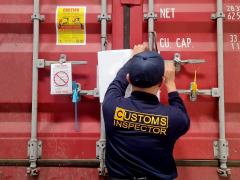
He said: “Some drivers either arrive at the border with incomplete paperwork or none at all.”
He added that payment processing by customs takes too long.
Also, not for the first time has it been recommended that various truck parks on either side of the Limpopo River crossing be used to manage the queue.
Both Barnett and Fitzmaurice agree that this should be standard operating procedure (SOP).
A concerned fuel trucker and member of Transist warned that unless a better effort was made to separate complying operators from those who don’t, especially through SOP interventions such as progressive truck-park involvement, law enforcement at the border would resort to vigilantism.
Last year in the queue on the N11, scenes of open truck-queue disorder, violence, intimidation and brazen extortion characterised the Groblersbrug queue when the Border Management Authority failed to exert law and order within its 10-kilometre radius area of jurisdiction.
The Cross-Border Road Transport Agency was also none the wiser as to effectively taking control of the queue, saying it was the responsibility of traffic officers and the SA Police Service to apply law and order.
Reasons for sporadic bottlenecking at the border include demand spikes in the Copperbelt and home-haul trips rerouting south through Botswana as opposed to Zimbabwe.
Because of persistent transit transport issues in Zimbabwe, Fitzmaurice has said that “even empty loads now avoid Zim, preferring to bypass through Botswana”.
While private-sector stakeholders try to resolve Groblersbrug’s nagging issues, industry’s pleas about the border on Tuesday coincided with a media event hosted by the Department of Home Affairs and the BMA.
Much excitement was being generated around announcing “the winning bidders for the strategic redevelopment of six key ports of entry across South Africa”.
Curiously, Groblersbrug is not one of the six borders – a “glaring omission” to paraphrase Fitzmaurice when he initially discussed the upgrades with Freight News.
Although at least five of the six borders are busy transits – Beitbridge, Lebombo, Oshoek, Kopfontein and Maseru – questions remain why Ficksburg is also on the list, bringing to two the amount of SA-Lesotho border upgrades.
“Something has to be done about Groblersbrug,” Barnett said.
“Some people are saying if they allow the southbound entries through, for example, it could help to speed up processing of trucks going north.”