Mozambique’s ports and transport corridors are becoming increasingly important to regional supply chains as investment in port and rail capacity strengthens the country’s position as an Indian Ocean gateway for southern Africa.
The country has the potential to develop into a broader manufacturing and logistics platform serving its domestic economy and landlocked regional markets through the Maputo, Beira and Nacala corridors, according to an analysis by law firm Webber Wentzel.
The three corridors connect Mozambique’s ports with markets that include Zimbabwe, Zambia and Malawi, while serving different hinterlands and trade flows.
Mozambique’s corridor position was becoming increasingly important as southern and central African countries develop multiple routes to global markets, Webber Wentzel said. It pointed to the development of the Lobito Corridor as part of the broader trend towards diversified regional gateways rather than as direct competition to Mozambique’s Indian Ocean routes.
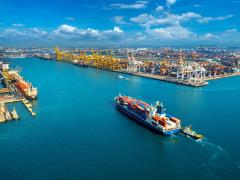
The Port of Maputo handled a record 32 million tonnes of cargo in 2025, an increase of 3.4% year on year, according to the Maputo Port Development Company.
Rail volumes increased 17%, from 9.7m tonnes in 2024 to 11.7m tonnes last year, while cargo handled directly by MPDC reached a record 15.2m tonnes, up 6.4%.
Further capacity is being added at the port through DP World’s $165 million expansion of the Maputo container terminal, which will more than double annual capacity from 255 000 TEUs to 530 000 TEUs.
The project includes extending the quay from 308 metres to 650 metres, deepening the berth from 12m to 16m and increasing reefer capacity from 450 to 715 plugs.
The expansion would enable the terminal to accommodate larger post-Panamax vessels and increase its capacity to handle cargo moving to and from landlocked southern African markets, DP World said.
Mozambique’s logistics potential extends beyond port throughput, with opportunities in warehousing, mineral and agricultural processing, component supply and manufacturing linked to regional supply chains, according to Webber Wentzel.
Rather than competing directly with South Africa’s established industrial base, Mozambique could complement it through activities where its geographic position, raw materials and corridor infrastructure provide an advantage, the firm said.
However, infrastructure constraints remain significant.
Much of Mozambique’s road network is constrained outside the main corridor routes, while inland connectivity remains uneven. This can add time, cost and unpredictability to supply chains moving inputs and finished goods, making location particularly important for industrial operations, Webber Wentzel said.
Operations located in established industrial zones with direct access to ports and major transport corridors were consequently better positioned than those dependent on secondary road networks, the firm said.
Mozambique’s longer-term industrial opportunity will depend on using its corridors to access SADC markets and positioning manufacturing operations to serve the wider southern African economy rather than relying on its domestic market alone.
“As southern African economies become more integrated and supply chains increasingly organised around regional production networks, countries that sit astride critical logistics corridors are likely to play an outsized role in future industrial development,” Webber Wentzel said.
Mozambique’s ports, transport links and geographic position placed it at the centre of that development, the firm added.