Global markets reacted positively to Monday’s announcement by the Trump Administration of a postponement of attacks on power plants and energy infrastructure in Iran, although the oil price increased slightly on Tuesday morning, March 24.
The latest Brent crude development came amid ongoing fears that the Strait of Hormuz will remain closed to some 94% of supply chain traffic needing the waterway, while ongoing Israeli attacks on Lebanon didn’t help to quell volatility in the Middle East.
Reuters reported that futures inched up on the back of fragile optimism following President Donald Trump’s expressions of a deal with Tehran showing promising signs, although this was denied by the government of Iran’s Supreme Leader, Mojtaba Khamenei.
Immediately after a postponement of US attacks on critical infrastructure in Iran was announced, Trading Economics reported that Brent dipped to $99.57 per barrel (p/bbl), while the other benchmark price for West Texas Crude (WTI) fell to $87.88.
However, on Tuesday morning the decreases of 10-11% had not survived next-day futures volatility, pushing Brent to $104 p/bbl before slightly down to intraday levels of $103.50.
WTI was at $91.60.
Despite efforts by the US to de-escalate the situation in the Persian Gulf, especially aimed at reopening Hormuz, Iran has said that neither have decisive talks taken place nor has anything definitive been tabled.
This is despite Trump claiming to CNBC that, following talks with Tehran, “we are very intent on making a deal with Iran”.
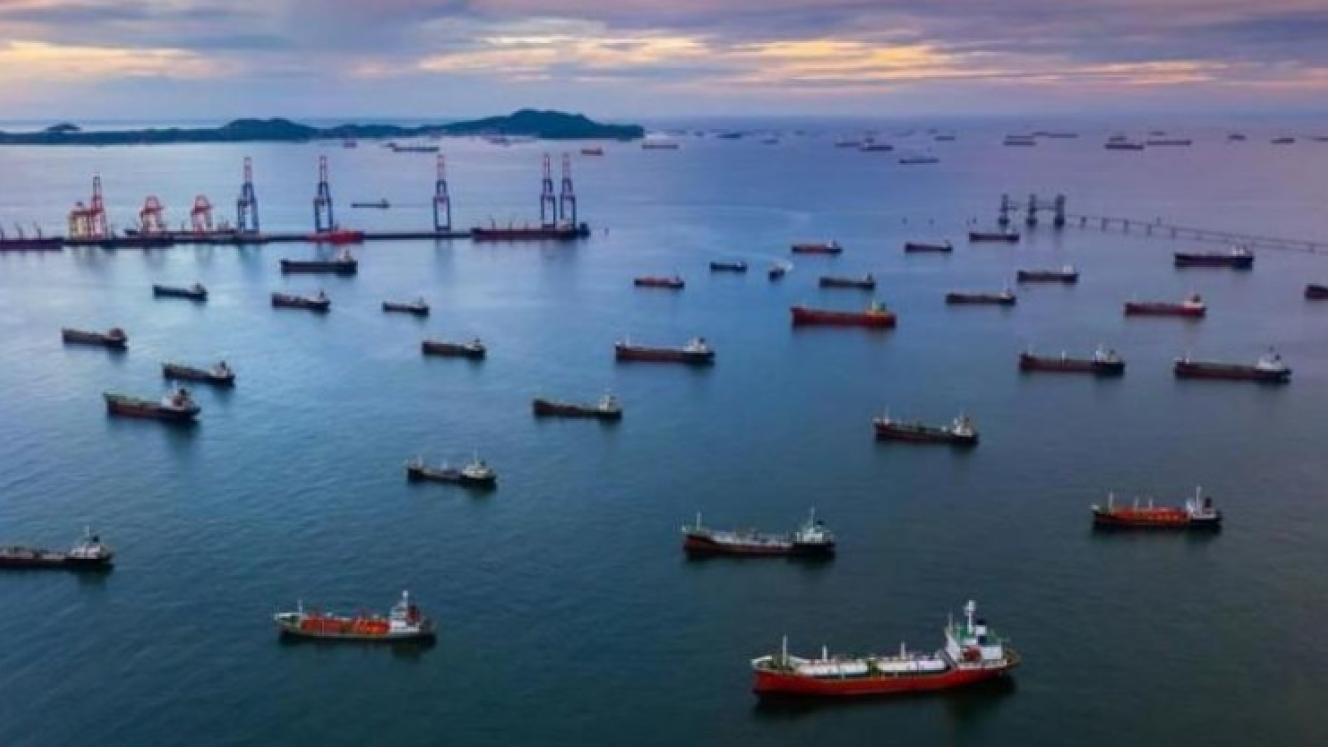
In the absence of certainty, vessel traffic in the Gulf remains largely unwilling to use the Strait, as fears of retaliation by the Islamic Revolutionary Guard Corps have not been dispelled by indications of tentative talks between the US and Israel.