A decision by shipping lines
to charge no-show fees or late
cancellation penalties has
resulted in major improvements
in cargo ‘drop-offs’ locally.
While the growing practice
among ocean freight carriers
to charge for what is often also
referred to as
deadfreight
has met some
resistance
internationally,
South African
shippers and
forwarders have
seemingly been
more accepting
of the practice
which has seen
a 50% improvement in dropoffs
in some cases.
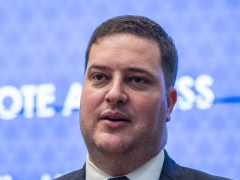
“It’s a decision that seems
to be working at this point,”
Jonathan Horn, Maersk
managing director southern
Africa, told FTW.
He said the company
had introduced the practice
towards the end of March on
the Far East and Middle East
routes to address an issue that
was becoming of increasing
concern.
“We were seeing 20 to 30%
no shows or late cancellations
on some routes – and in
some instances on particular
voyages it was even higher,”
he said. “The crucial thing to
understand is that this is not
a fee, but a penalty. It is about
behaviour change.”
French carrier CMA CGM
and German Hapag-Lloyd
introduced the no-show or
cancellation fee recently with
both companies saying the
shortfalls
due to late
cancellations
were preventing
them from
accepting
bookings from
customers with
cargo ready
to go.
Horn said
that a 20-30%
cancellation on a voyage
severely affected a shipping
line’s ability to deliver a reliable
product, indicating that the
practice was here to stay.
Freight forwarder Mike
Walwyn said he believed as
long as shipping lines were
reasonable in this
approach they
would continue
to see improved
behaviour from
shippers and
forwarders.
“If a
shipper
has a good
reason for
missing the boat,
like a truck or a packhouse
breakdown, then I would
expect the line to waive the
charge.”
He said it was commonly
understood that shipping lines
were operating on the edge and
needed every cent of revenue
they could get. Booking cargo
with no intention of using the
service ultimately played havoc
with their schedules, revenue
and ability to deliver a service
to the rest of industry.
“Personally I would rather
they got their revenue from
legitimate charges like
deadfreight than from a
wide range of manufactured
surcharges and extortionate
mark-ups of
other service
providers’
charges,” said
Walwyn.
This is not a fee, but
a penalty. It is about
behaviour change.
– Jonathan Horn