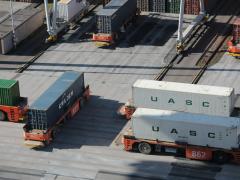
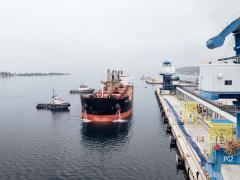
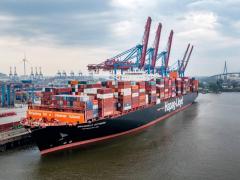
When the world’s major container carrier, Maersk Line, announced it had slipped into the black, if only just – making US$227-million profit in the second quarter of 2012 – the question arose whether this was a general industry trend, or were others still bleeding badly. Maersk said that this small profit was not enough to counteract the losses from Q1, but it was a big step in the right direction, it added. Its result was positively affected by an increase in total volumes and higher freight rates, but negatively affected by higher fuel prices. Volumes increased by 11% to 2.2-m FFE, compared to 2.0-m FFE in Q2 2011. The average freight rate increased by 4% to US$3 014/FFE, compared to US$2 892/FFE in Q2 2011. And the total unit costs per transported FFE decreased by 1%, mainly caused by a decrease in bunker consumption through the introduction of super-slow steaming. But FTW’s efforts to find out information on the local scene from other lines, and gauge whether a trend or not, was a frustrating task. Many of the lines will only be releasing second quarter results in October. Just too many of the lines, like MSC, Hamburg Sűd and DAL, are private companies. And most of the Far Eastern lines are very cagey about releasing results. But Tim Phillips, Hapag Lloyd’s local operations manager, did speak to FTW. He pointed out that the line had had a better second quarter, but still remained in the red. However, it was notably less in the red than in the seasonally weak first quarter. But the world’s fourth largest ocean carrier had actually finished 2011 in a lot better fettle than most of the other lines. It bucked an industry-wide trend by becoming one of the few shipping lines to end the year in profit. A local agent for another line, who wished to remain anonymous, told FTW that most of the reports he had seen showed that there had been an improvement in the second quarter. “This,” he added, “is related to the moves made by the lines – adjusting capacity and trying to push up rates. Slow steaming has also played a big role, particularly with the rocketing bunker prices, but it’s still tough going. “Not all the lines have showed an improvement. It’s still a battle out there. “Other lines we’ve talked to say things may be improving somewhat, but nowhere near what they want to see.” Getting back into the black is not something that all the lines are anywhere likely to achieve, so it is not a trend. Rather it’s a better bandaging of the bleeding wounds of the last 18 months. CAPTION Getting back into the black, like Maersk, is not something that all the lines are anywhere likely to achieve.
Lines continue to nurse bleeding wounds
Comments | 0
© Now Media. This content is protected by copyright and may not be adapted or republished. If you would like to discuss cooperation opportunities, please contact: editor@freightnews.co.za.