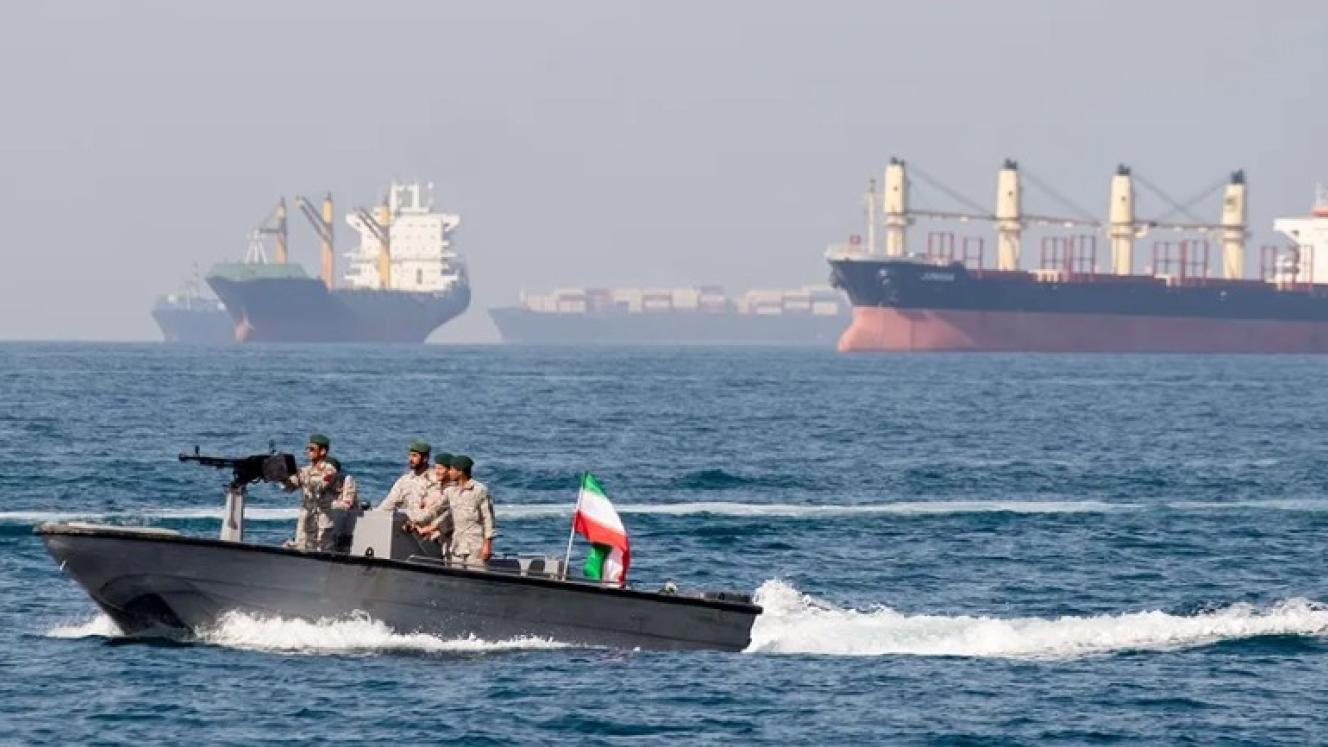
Reports circulating earlier this week that some shipowners’ war risk insurance had been cancelled at short notice while they were operating in the Persian Gulf and Gulf of Oman were incorrect, Lloyds List reports.
The publication’s law and marine insurance editor, David Osler, says the claim spread rapidly after two general news reporters misinterpreted developments in the marine insurance market.
War risk cover is still on offer, Osler says.
“It’s just that it is now eye-wateringly expensive.
“In many cases, assureds are now being asked to pay a minimum of about $30 000 a week for insurance that previously cost around $25 000 a year.”
Osler’s take on higher premiums for war-risk insurance aligns with what Mike Brews, chairman of the Cargo Committee at the International Union of Marine Insurance (IUMI), explained to Freight News.
On Thursday he said that some London mutuals were offering reinsurance premiums at up to ten times the usual rate.
Osler says misinterpretation around cover for vessels sailing through the Strait of Hormuz was widely broadcast and repeated by business publications.
“According to the Lloyd’s Market Association and IUMI, underwriters honoured the terms of all existing contracts, meaning no shipowner suddenly found themselves uninsured while operating in a high-risk area,” Osler says.
“The confusion arose after affiliates of the International Group of P&I Clubs issued 72-hour notices of cancellation on fixed-premium and charterers’ war risk cover following US and Israeli military action against Iran on Saturday.
“For those unfamiliar with the technicalities of marine insurance, the notices appeared to signal a withdrawal of cover.”
Osler explains that in practice, the move was a procedural step prompted by reinsurers seeking higher premiums to reflect the sudden escalation in geopolitical risk.
He adds that the notices applied only to specific and relatively narrow classes of business.
“Adjusted reassurance specifications also come with strict conditions,” Osler says, “including no US or Israeli nexus and no port calls in either Israel or Iran.
“For charterers such as oil majors and large trading houses, the higher premiums are unlikely to be a major obstacle. With crude prices rising towards $85 a barrel, the additional insurance costs are expected to have only a limited financial impact.”
However, smaller operators face a more difficult calculation, he says.
“For companies running a single anchor-handling tug, the higher premiums could prove uneconomical.”
“The developments have also placed significant pressure on underwriters, many of whom have worked extended hours in recent days to stabilise the market and ensure continuity of cover.”
Ultimately, “the fundamental principle of the marine insurance market remains intact; underwriters have honoured their commitments and cover is still available”, Osler says.
It’s the exorbitant premium increases that have become an insurance quandary.