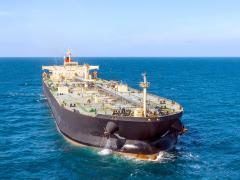
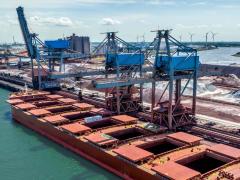
For shippers, the new normal includes upheavals caused by climate change, regional conflicts and rising costs. “The Iran conflict is the latest in a long series of increasingly frequent geopolitical disruptions,” Philip Damas, managing director, head of Drewry Supply Chain Advisors, told a seminar attended by Freight News. “The long sequence of disruptive events has pushed ‘just in time’ out, replacing it with ‘just in case’. “We expect more diverse trading routes so that the eggs are placed in more baskets.” He advised shippers to monitor and compare main routes, back-up routes and costs as the situation changes. “Do not plan for a return to short lead times for now.” They also need to manage much higher fuel costs. “Operationally, they can slow down ships to preserve bunkers, increase blank sailings and even idle ships on a longer-term basis. “From a cost perspective, they have no choice but to pass them on to shippers with higher BAF (bunker adjustment factor) surcharges,” he said. The major shipping alliances have been affected in that “they are having to redraw liner networks and call upon contingency plans as well as dealing with substantial cost inflation”. Simon Heaney, senior manager at Drewry Container Research, added: “Prior to the start of the conflict, Drewry was expecting a phased return to Suez transits, with full normalisation by March 2027. “The conflict has delayed that return indefinitely. “If a lasting peace deal can be established, we would expect Suez transits to return in large numbers, but for the sake of supply-chain resilience, it could be that carriers look to diversify routings, meaning that Suez will lose some of its previous share.” This could lead to investment in alternative ports and supply routes, according to Damas. They would include Red Sea and Eastern Mediterranean ports such as Aqaba in Jordan and others in Turkey to serve the north and north-western regions of the Gulf. “I think Jeddah could get a bigger foothold in the Gulf market in terms of logistics, and we think the Gulf Cooperation Council (GCC) should go ahead and build the east-west container corridor railway to provide a strategic alternative to the Gulf of Hormuz.” Due for completion in 2030, the 2 100-km line will connect all six GCC countries: Saudi Arabia, UAE, Qatar, Kuwait, Bahrain and Oman. Outside of the Middle East, Drewry is forecasting an overall reduction in freight rates in 2026 compared to 2025, according to Heaney. “There is no prospect of Asia-Mediterranean capacity decreasing because of the Iran conflict,” he said. Operationally, the Middle East represents around 5% of global container shipping, and direct services have been replaced by land solutions, allowing critical supplies such as food to flow into the region. ER
Just in time becomes just in case
Comments | 0
© Now Media. This content is protected by copyright and may not be adapted or republished. If you would like to discuss cooperation opportunities, please contact: editor@freightnews.co.za.