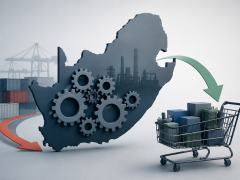
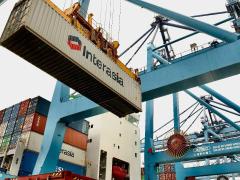
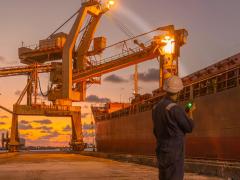
The Western Cape could save R5.2 billion in logistics costs by just moving freight more efficiently. Considering the high freight demand in the province and the long distances that need to be covered for very low returns, shifting more cargo from road to rail would bring about major gains, according to Professor Jan
Havenga of the Gain Group. Speaking in Cape Town recently, Havenga said shifting 9.9 million tons of freight from road to rail would result in cost savings of R5.2 billion. “At least a half a million tons of freight emissions can also be saved which is a significant chunk of the saving the country has to make,” he said. High transport costs combined with the very high demand for freight in the province was currently adding significant cost and challenging the overall competitiveness of the province. “The cost is high because the demand is high,” he said. At the same time, very long distances were being covered for very low returns, far lower than that of the first world and the Brics countries. “Trade distances with other provinces are also the highest for South Africa. All of this increases the costs and is a challenge to competitiveness. It is also causing high freight externalities. Yet rail contributes very little to longhaul solutions.” Havenga said whilst the Western Cape was a railfriendly corridor, it continued to be dominated by road
freight. Moving more cargo to rail, he said, would bring about immediate savings. But, he said, these calculations had all been done on what rail tariffs should be rather than what they currently were. “A total of 16% of South Africa’s freight touches the Western Cape but 6% of that is iron ore and a little bit of manganese that in reality only traverses the province and does not add any value,” said Havenga. “While rail in the Western Cape has grown much faster than the South African average it has been driven by the three main bulk mineral exports. It becomes a very different picture if the bulk exports are removed and only general freight is considered.”
CAP
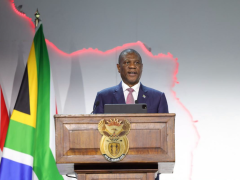
Shifting 9.9 million tons of freight from road to rail would result in cost savings of R5.2 billion. – Jan HavengaTION: