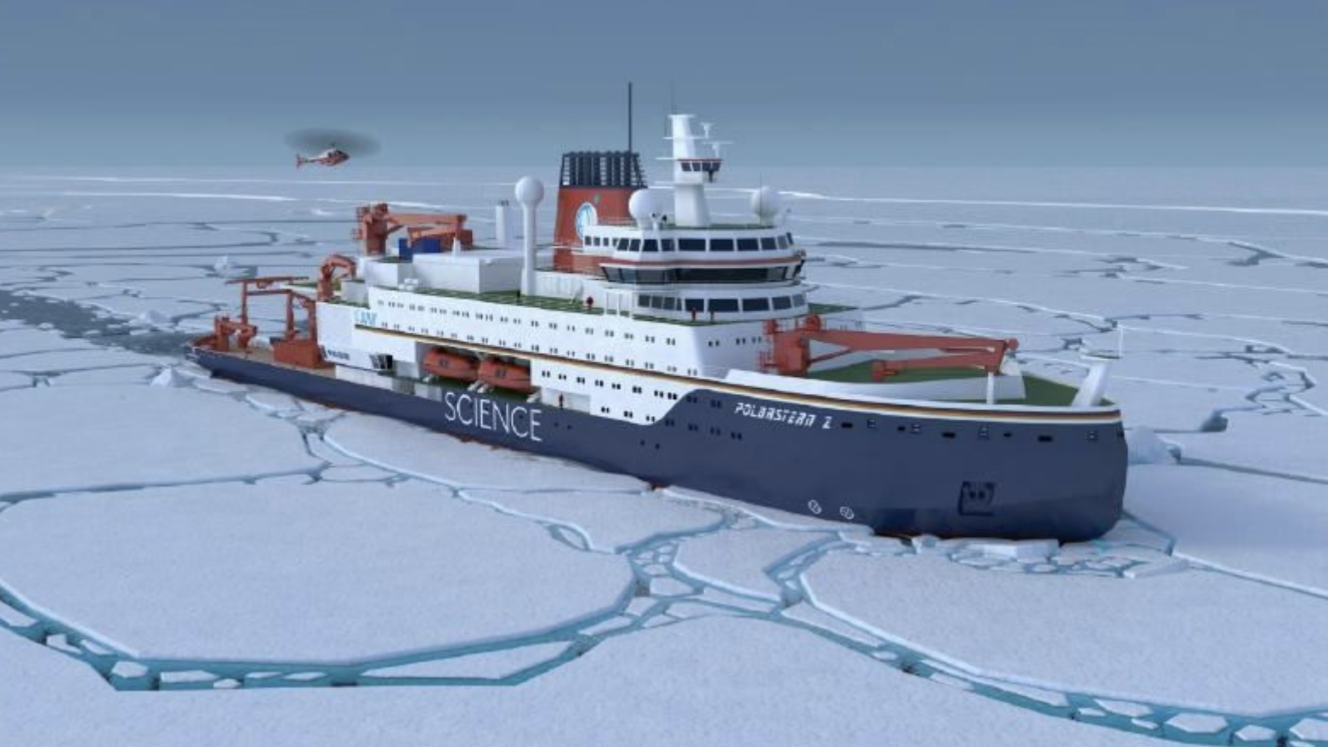
Finnish technology group Valmet has won the contract to supply automation systems for Germany’s next-generation polar research vessel, the new Polarstern.
The vessel is being built for the Alfred Wegener Institute, Helmholtz Centre for Polar and Marine Research (AWI) by ThyssenKrupp Marine Systems. Delivery is scheduled for 2030.
The order covers an integrated automation system that includes machinery controls, power management, emergency shutdown and vibration monitoring. Lifecycle services ranging from predictive maintenance to system upgrades are also part of the scope. The value of the contract has not been disclosed.
“The polar ice conditions of the Arctic and Antarctic are among the harshest in the world and demand absolute reliability,” said Valmet Sales Manager for Energy, Process and Marine Systems, Heikki Tanner.
“As the new Polarstern will sail at the forefront of international research for decades to come, we are ready to support the vessel throughout its lifetime and keep the automation system updated,” Tanner said.
The vessel will replace the existing research icebreaker of the same name, which has been in service since 1982. It will accommodate a crew of 50 and provide laboratory space for up to 90 scientists. The ship will continue the logistical task of resupplying Germany’s year-round Neumayer Station III in Antarctica.
Propulsion will be capable of running on green methanol, with an integrated battery system that enables silent, emission-free operation during scientific measurements.
“The new Polarstern will be more than a ship. It’s a platform for understanding climate and our planet. We are proud to support AWI’s mission with automation that improves operational efficiency and contributes to responsible use of resources in the most demanding environments by reducing fuel use and optimising energy flows,” said Valmet Vice President, Hédi Azzouz.
The current Polarstern has served as a key platform for international studies in climate science, oceanography and marine biology over the past four decades. Its successor is expected to maintain that role with updated capabilities.