In a bid to escalate a modal
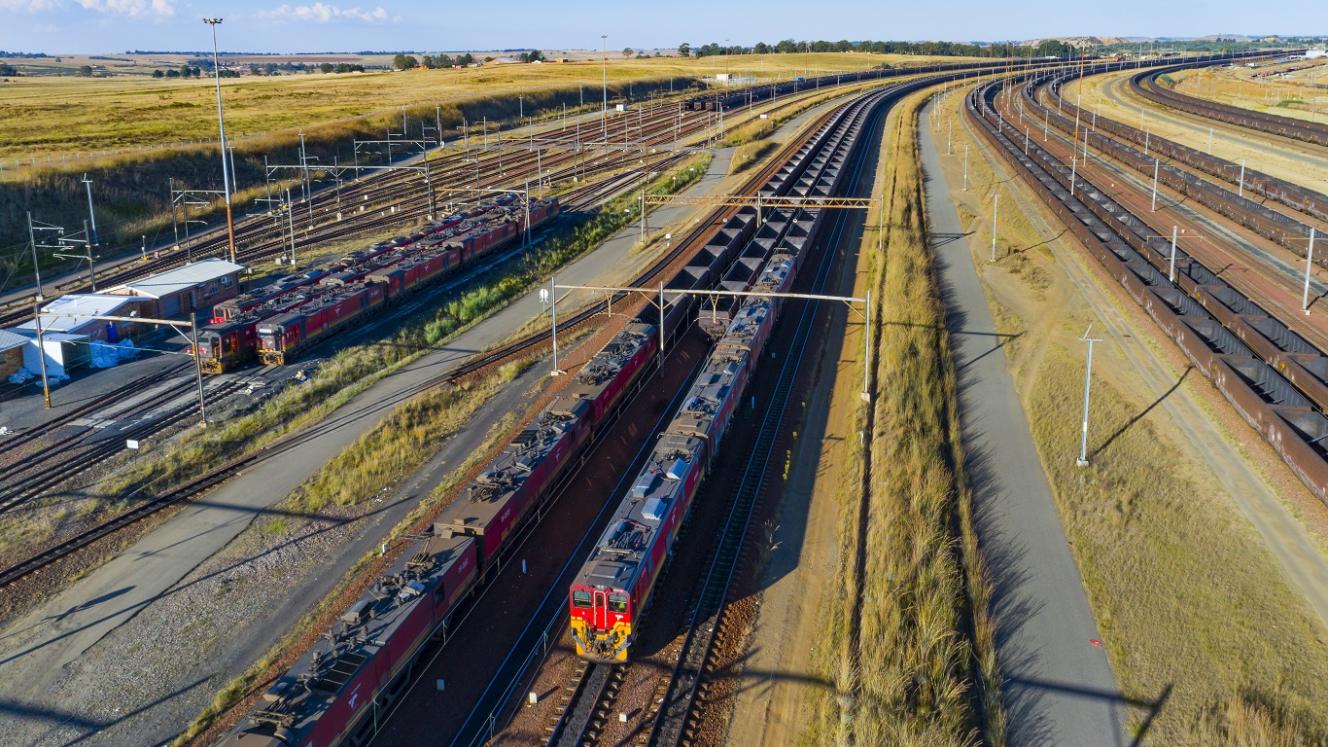
shift in the transport of
perishable products from
fruit production regions
to the ports, exporters will
draft a strategy to present
to Transnet that will
address some of the issues
holding back a greater
migration from road to
rail.
Speaking at a logistics
breakfast jointly hosted
by the Johannesburg
Chamber of Commerce
and Industry and the
SA Shippers Transport
and Logistics Council in
Johannesburg last week,
Fruit SA’s Mitchell Brooke
told delegates he believed
that the joint operations
of Transnet had the ability
to become global leaders
in refrigerated intermodal
transportation.
“We are the third largest
exporter of fruit in the
world,” said Brooke. “We
transport a lot of our fruit
great distances, with some
of the fruit production
regions more than 1000
km from the ports. With
around
70% of our
product
transported
to the greater
Europe
region we
have the
density, the
distances
and the will
to migrate to
rail. However
the cost
aspect is an
area we need
to address.”
Ten years
ago, rail was the mode of
choice. But a shift from
conventional vessels to
containers saw perishable
shippers adding a few
layers of cartons to their
pallets. Traditional rail
wagons were unable to
transport these extra-high
containers which made the
service redundant.
But the
wheel is
turning.
“This
year we’ve
managed to
transport
900
containers
from Tzaneen
to Durban
and Cape
Town – a
300%
increase in
the last three
years – so
we’re making
great strides in getting
fruit back on trains,” said
Brooke.
“We believe there’s huge
potential to increase this to
12 000 containers a year –
but there are two dilemmas.
First the seasonality of our
business. For Transnet to
make the investment over
a seasonal period is quite
risky. The second issue is the
one-directional nature of
the business, which applies
to a lot of commodities.”
The answer, in Brooke’s
view, is to try to find
commodities that are
complementary to the fruit
business.
“Since 70% of our fruit
goes to Europe we need to
try to link complementary
commodities – get our
fruit down to Cape Town
to ship to the European
markets and find what
cargoes we can bring back
to Cape Town and move to
Gauteng where they can be
distributed to intermodal
hubs. This would address
the issues of seasonality
as well as one-directional
traffic f low.”
A road to rail migration
would clearly be a win-win
solution. “It would address
the road/rail imbalance
as well as the catastrophic
congestion at Bayhead road
as trucks line up to enter
the Port of Durban. It would
also give fruit exporters
the edge in the European
market. “If we ship from
Cape Town rather than
Durban we reach the market
10 days earlier which is a
huge benefit in our industry.
“Two-directional traffic
f lows will not only stimulate
more demand but will go a
long way in addressing the
cost issue.”
The fruit industry held
a high-level meeting with
Transnet last week and the
next move will be to present
its strategy on increasing
rail utilisation by the fruit
export industry.
INSERT & CAPTION
The answer to the
one-directional
nature of the
business is to try to
find commodities that
are complementary
to the fruit business.
– Mitchell Brooke
Fruit exporters devise strategy to address rail cost issues
Comments | 0
© Now Media. This content is protected by copyright and may not be adapted or republished. If you would like to discuss cooperation opportunities, please contact: editor@freightnews.co.za.