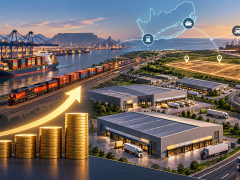
Arise in “friendshoring” is reconfiguring global logistics value chains. The strategy of moving production from lowest-cost to most trusted locations was introduced in 2022 by then United States Treasury Secretary Janet Yellen at a meeting of the Atlantic Council. In response to the impact of the Covid-19 lockdowns and the Russian invasion of Ukraine, Yellen said: “We need to modernise the multilateral approach we have used to build trade integration. “We cannot allow countries to use their market position in key raw materials, technologies or products to have the power to disrupt our economy or exercise unwanted geopolitical leverage.” She called on American companies to do business “with the countries we know we can count on. “Favouring the ‘friendshoring’ of supply chains to a large number of trusted countries, so we can continue to securely extend market access, will lower the risks to our economy, as well as to our trusted trade partners”, she said. The concept has spread, with the Central Commission for the Navigation of the Rhine noting in its 2025 Annual Report: “ Recent years have seen a marked interest in friendshoring and onshoring. “The underlying reasons behind this are not only linked to the pandemic and the war in Ukraine, and to the concerns they caused regarding the apparent weakness of supply chains, but also to environmental concerns. “Whether friendshoring will last and change the face of world trade in the long run is difficult to say. “If it does, it will certainly cause an increase in container trade within Europe, as most European countries are geographically close to each other and generally enjoy cordial diplomatic relations within the EU, making friendshoring and onshoring in the future likely.” A Capgemini Research Institute study found that around 60% of United States and European business leaders “are determined to continue their efforts”, despite higher costs, and most organisations (65%) are reducing reliance on Chinese products. “Instead, they are planning to invest in ‘friendshoring’ over the next three years to de-risk their supply chains”. “Friendshoring is changing the way global supply chains work. Instead of collapsing the existing flows, it’s redirecting them,” says the Translindo logistics group in its analysis of the trend. “Some supply chains will shift only slightly, while others will reroute more dramatically. Trade volumes won’t shrink overall, but the map of where goods come from and how they move will look different. “For businesses, it means shifting production and sourcing away from politically sensitive or high-risk countries and toward trusted trade partners. “The goal isn’t always to find the absolute lowest cost, but to reduce the risk of tariffs, sanctions or sudden policy changes that could cut off access to key markets.” ER
Friendshoring trend gains traction
Comments | 0
© Now Media. This content is protected by copyright and may not be adapted or republished. If you would like to discuss cooperation opportunities, please contact: editor@freightnews.co.za.