Freight rates for spot allocations on key North Europe and Mediterranean sea freight routes remain elevated, hovering around 15% above the most recent rates dip in October when demand was measured at its lowest level for the last six months.
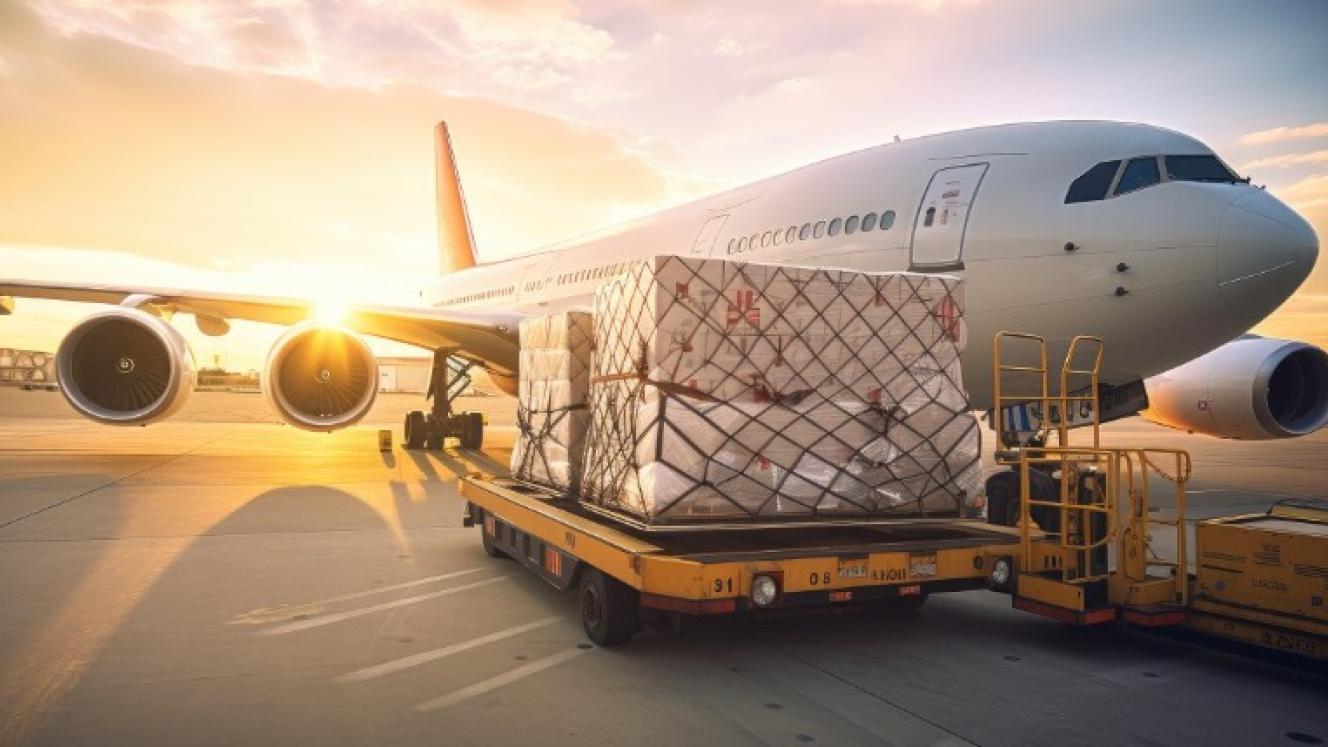
At the same time, airfreight rates have soared to about 30% above pre-conflict levels.
According to Air Cargo Week (ACW), North Europe sea rates on April 29 stood at US$2 668 per 40-foot equivalent unit (FEU).
This was approximately 8% above levels measured before February 28 when the United States and Israel started its bombardment of Iran, and the Strait of Hormuz was turned into a supply-chain bargaining chip.
However, on Wednesday around noon, Mediterranean sea rates were at $3 527 per FEU, slightly below late-February figures.
ACW reported that carriers like Maersk were resorting to tried and trusted techniques to cut back on capacity and increase rates – blank sailings.
In the Transpacific trade, West Coast rates have climbed to $2 675 per FEU – 45% higher since Persian Gulf disruptions began – while East Coast rates sit near $4 000 per FEU.
Gulf region container flows face rerouting via alternative corridors, with reports of congestion and uneven equipment availability. Additional services are funnelling through hubs like Jeddah to ease pressures, ACW reports.
Amid all the sea freight volatility, airfreight markets reflect rising costs, with jet fuel prices up and short-haul flight cuts by Lufthansa and KLM feeding into rising costs.
United Airlines has introduced cargo surcharges, while Southeast Asia operations incorporate extra refuelling stops on long-haul routes, contributing to cost increases.
At the same time, global air cargo capacity has dipped slightly below pre-conflict levels, but the Freightos Air Index shows that rates are holding steady.
China-North America rates were at $6.40 p/kg on Wednesday afternoon, while China-Europe rates were at $5.07 p/kg, and South Asia-Europe at $4.94 p/kg.
ACW added that Southeast Asia-Europe rates rose modestly but stayed below recent peaks.
Overall, airfreight rates are almost a third higher than they were ahead of the current conflict in the Middle East, the UK airfreight site reports.