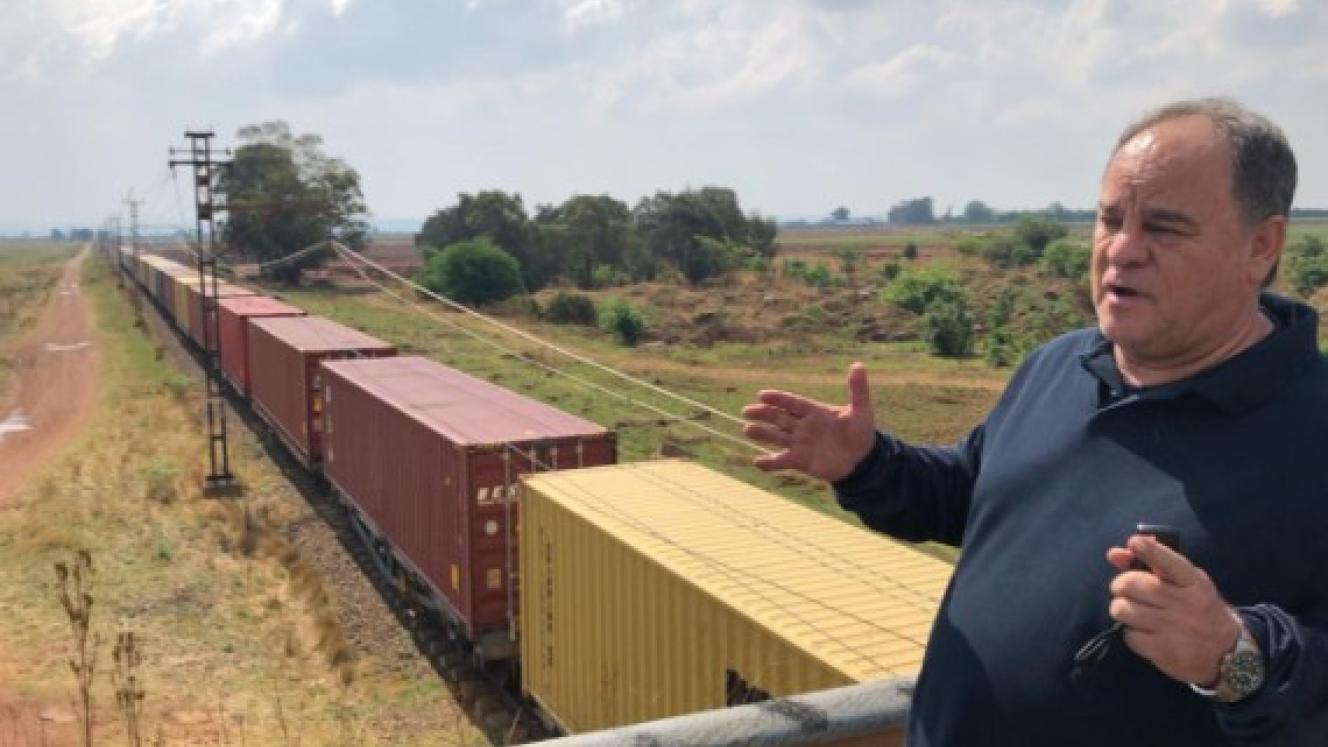
Port of Gauteng developer NT55 Investments has won its legal battle against the Gauteng Department of Transport and Roads (Gautrans) in the Johannesburg High Court, which has set aside two environmental authorisations granting it permission to develop the K148 Tambo Springs access road.
Gautrans regards the proposed road as a key link to the Tambo Springs logistics gateway and as a route to the Tambo Springs Freight Hub and surrounding communities.
However, NT55 and its CEO Francois Nortjé objected to the development of the proposed 5km road through a sensitive natural ecosystem, without proper environmental assessments, and filed a court application for the authorisation and an amendment to the environmental approval to be reviewed and set aside. Both applications were dismissed with costs on April 15, 2024.
The environmental impact assessment (EIA) record of decision applied for by the Gauteng Department of Agriculture and Rural Development was granted in 2016 with a 30m buffer around the sensitive floodplain. But this buffer was later removed from an amended record of decision.
A full bench of the High Court upheld the appeal by NT55 Investments and Francois Nortje, setting aside the environmental authorisation (EA) granted in 2016 for the construction of the K148 road, as well as its 2021 amendment.
The court found that the authorisation process was fundamentally flawed due to defective public participation, the omission of directly affected landowners and key stakeholders such as Total and Transnet and the failure to properly assess environmental risks, including impacts on wetlands, floodplains and a petroleum pipeline.
“The failure to identify Transnet as an interested and affected party and to assess the potential impacts on the petroleum pipeline in the EIAR rendered the public participation process defective and the environmental authorisation unlawful,” the judges found.
The judges ruled that both the original environmental approval and the subsequent amendment were unlawful. They criticised the Gauteng Department of Agriculture and Rural Development (GDARD) for attempting to correct major defects through an overly simplistic amendment process and for unilaterally removing protective conditions relating to the sensitive floodplain without proper procedure.
“In the result, both the original EA and the purported amended EA”, must “be reviewed and (has been) set aside. GDARD had no power to amend the EA mero motu (of its own accord) by removing the condition that prohibited development on the floodplain. Deleting the floodplain protection condition fundamentally altered the scope and environmental impact of the authorised activity,” the judges found.
“The appeal must succeed. The appellants have shown good cause for the delays in launching the review applications, particularly given the respondents’ failure to notify them of the EA and the defective public participation process. The merits of the review are strong.”
The court upheld the appeal with costs against the respondents.
Reacting to the ruling, Nortjé said the ruling was a complete vindication of the long battle the company had fought against the development.
“It shows how abusive the Gauteng Government is; this matter should never have gone to court … it’s a disgrace,” he said.
Nortje said it was possible Gautrans could try to rescue the project.
“They might try another EIA application, but how the road can be built over the Total Petro Ports sewer plant is a question I do not have an answer for,” he said.