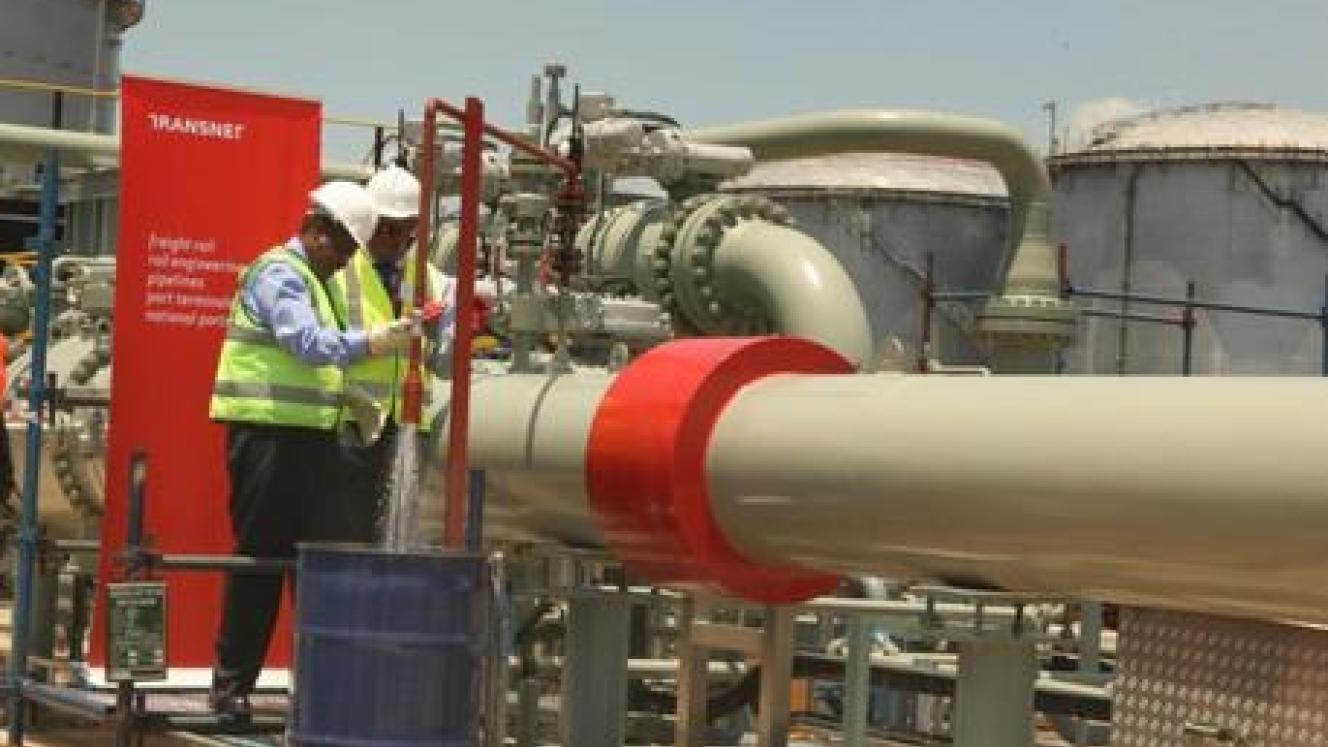
There are new words in the lexicon of the Mozambican logistics sector which reflect the long-awaited investment in the country’s enormous northern gas fields. One of the terms heard most often by FTW was “Christmas trees”. From a logistics perspective, they are just one of the many heavy components that will be used to build LNG “trains” (another new word) in the Cabo Delgado province. The removal of impurities such as water and non-methane gases is done using a “train” of compressors. Once treated the gas is compressed through cryogenic refrigeration, which brings it down to around -162 degrees Celsius. It is stored and transported on specialised vessels in refrigerated tanks at sub-zero temperature in refrigerated tanks. Each plant typically consists of two trains. At destination the liquid is warmed to expand into gas at a dedicated LNG import terminal. There are two onshore plants planned for Mozambique, and one floating platform. It is the onshore projects that are already having an impact on the Mozambican logistics industry. There is a flurry of joint ventures being signed with international companies that have experience in LNG projects of this size. The Mozambican government has made it a condition that the investors use Mozambican companies which have been registered in the country for more than five years as suppliers in areas such as logistics. Standard Bank estimates that the value of local content will be around US$3 billion. In a report released in March this year Standard Bank said revenue from the gas investments could lift annual economic growth past 5% and household per capita income by 50% over the 2018 average between 2024 and 2049. Growth will not be exclusively in the oil and gas sector – around 60% of the gross domestic product (GDP) benefits will be in other sectors, according to the Standard Bank report. As with any development of this magnitude, significant risks come with the potential rewards.
Decades of Christmas trees in Mozambique’s future
Comments | 0
© Now Media. This content is protected by copyright and may not be adapted or republished. If you would like to discuss cooperation opportunities, please contact: editor@freightnews.co.za.