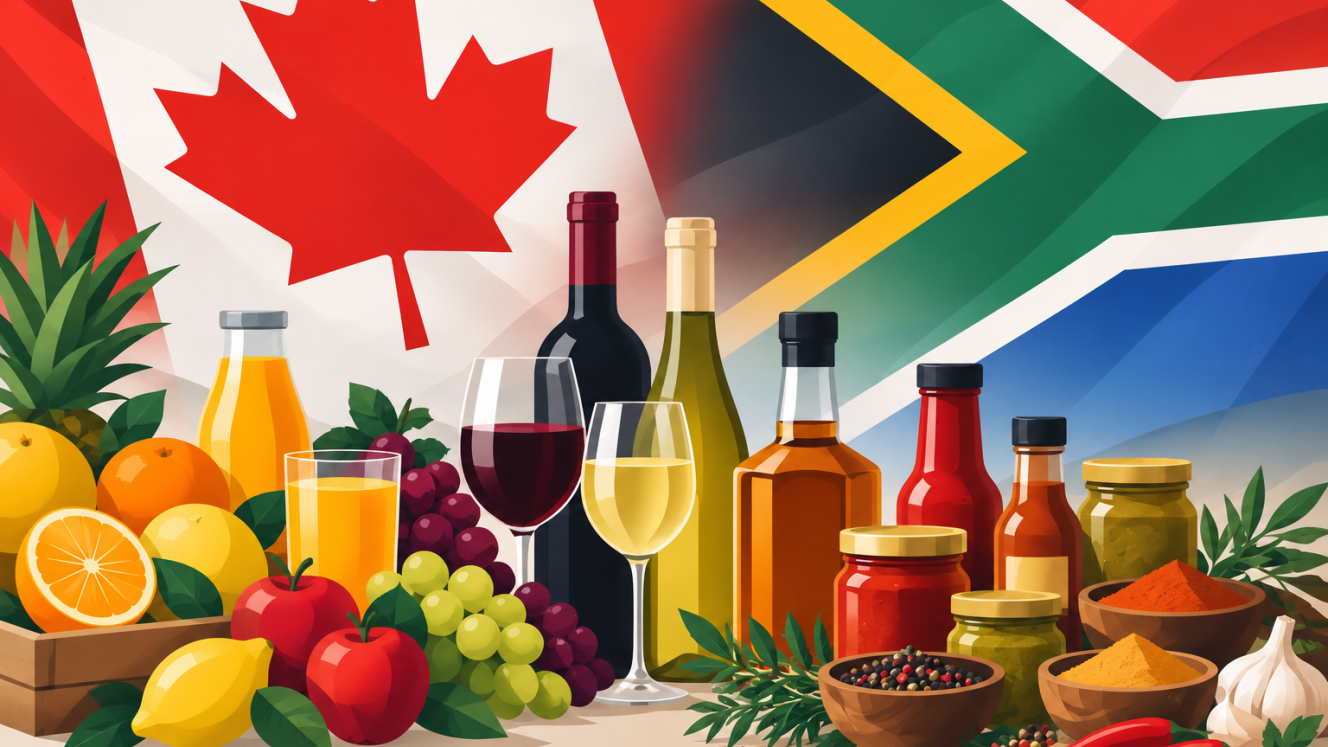
Canada’s strained trade relationship with the United States could open opportunities for South African food and beverage exporters, although market-entry costs and regulatory requirements need careful consideration.
Canadian consumers and retailers were looking for alternatives to American products, Canadian market-entry consultant Scott Miller said during an Eastern Cape Development Corporation webinar on October 16.
“Citrus, fresh fruit and juices, wine and spirits, sauces, condiments, spice blends, speciality teas and biltong are all potential opportunities for South African suppliers,” Miller said.
The commercial opportunities would need to be assessed alongside the import requirements applicable to each product.
Getting products onto Canadian shelves also comes with substantial costs. Retailers typically took margins of 25% to 40%, while importers and distributors added 15% to 30%, Miller said. Brokers could charge a further 3% to 8%, depending on the sales channel.
Exporters needed to factor in ocean freight, duties, customs brokerage and retailer charges for product listings, opening stock, promotions and supply chain services.
Some ongoing fees ranged from 1% to 3%, while smaller retailers could charge between C$500 (approximately R5 800) and C$5 000 (approximately R58 000) per product, he said.
Canada should not be treated as an extension of the US market, Miller cautioned. Exporters needed to understand its linguistic and regulatory requirements before shipping.
He highlighted the need to establish the applicable Canadian Food Inspection Agency requirements, including Safe Food for Canadians licensing arrangements for the importer, and to ensure documentation and labels complied with Canadian rules. These included English and French labelling requirements.
For wine exporters, sales were concentrated in two provinces. More than 80% of South African wine sales in Canada were in Quebec and Ontario, Wines of South Africa’s Laurel Keenan said.
“Quebec accounts for roughly twice Ontario’s sales by value,” Keenan added.
Ontario’s Liquor Control Board operated as both a retailer and wholesaler, while importers were becoming more selective about unfamiliar brands, she said.
“I would advise South African wine producers to work with agents familiar with the market, particularly in Quebec.”