DURBAN, November 12 (ANA) – A challenge the BRICS countries faced was how to ensure they were able to engage in fair trade with each other without losing their unique competitive edge within the global economy.
Delegates at the fourth BRICS International Competition Conference taking place in Durban heard how cooperation agreements should focus on unlocking further economic growth and creating opportunities for meaningful partnerships.
KwaZulu-Natal Premier Senzo Mchunu welcomed over 500 delegates, including thought leaders in competition law, to the Inkosi Albert Luthuli International Convention Centre.
Mchunu said it was important that the countries’ efforts were “directed at unlocking untapped economic opportunities” that allowed them to take into account their respective country’s unique realities and needs, while remaining relevant within global markets.
The way the BRICS countries crafted cooperation agreements and shared their technical expertise and know-how would “deepen our interventions in an effective way in the area of competition policy and regulation”, said Mchunu.
South Africa’s entry into the BRICS bloc illustrated the impact working together had on a country’s economy. Before 2011, when the country joined BRICS, exports within the BRICS bloc stood at only 6.2 percent. However, after the country became a BRICS member, exports jumped to 16.8 percent.
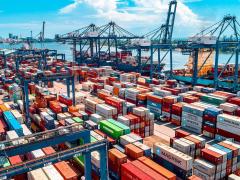
Durban Mayor James Nxumalo noted how South Africa’s total trade with BRICS partners had leapt upwards from R268 billion in 2011 to R328 billion in 2014.
Furthermore, he noted that a year after joining the BRICS, in 2012, Africa had doubled its total trade with BRICS since 2007 to $340 billion (R4.2 trillion). This amount was projected to reach $500 billion this year.
South African Competition Commissioner Tembinkosi Bonakele said: “We have also seen renewed focus on the understanding of the link between competition policy and the socio-economic objectives of ending poverty and reducing inequality and unemployment.
“The OECD (Organisation for Economic Co-operation and Development) is doing some work in this area now, and the World Bank earlier this year held a competition conference on these matters. It is clear though that this is an area that still needs a lot of research.”
He added that although the BRICS countries were faced with many different challenges, including being home to a high percentage of the world’s poor, the BRICS bloc represented solutions to these challenges.
“It is for this reason that we are unable to talk of competition policy in BRICS outside of this context. BRICS represents an important voice for the developing countries in the global antitrust policy discourse. But they can only play this role by developing their capacity for thought leadership in this area,” Bonakele added.
Mchunu pointed out that against the backdrop of a rise in bigger company mergers and acquisitions, it was important for the BRICS countries to stand their ground and ensure that small and medium businesses were not muscled out of the playground, especially in the manufacturing, retail, services, agriculture and mining sectors.
It was important to bear in mind how competition policy and laws could serve as a catalyst in the move towards transformation in these industries to ensure these small and medium enterprises were able to access global value chains within these bigger companies, and in ending poverty, and reducing unemployment and inequality. – African News Agency (ANA)